Shredded scrap is a valuable source of non-ferrous metals, including aluminum, copper, brass and other conductive materials. After shredding, these metals may remain mixed with plastics, rubber, wood, glass and other non-metallic residues. Recovering them efficiently is important for improving material value and reducing waste sent to disposal.
An eddy current separator is widely used in recycling plants to recover conductive non-ferrous metals from prepared mixed material streams. However, choosing the right machine requires evaluating particle size, feed composition, throughput, separation targets and upstream preparation.
How Does an Eddy Current Separator Recover Non-Ferrous Metals?
An eddy current separator uses a rapidly rotating magnetic rotor to create a changing magnetic field. When conductive non-ferrous metal particles pass through this field, electrical currents are induced inside them. The interaction produces a repulsive force that helps deflect metal particles away from non-conductive materials.
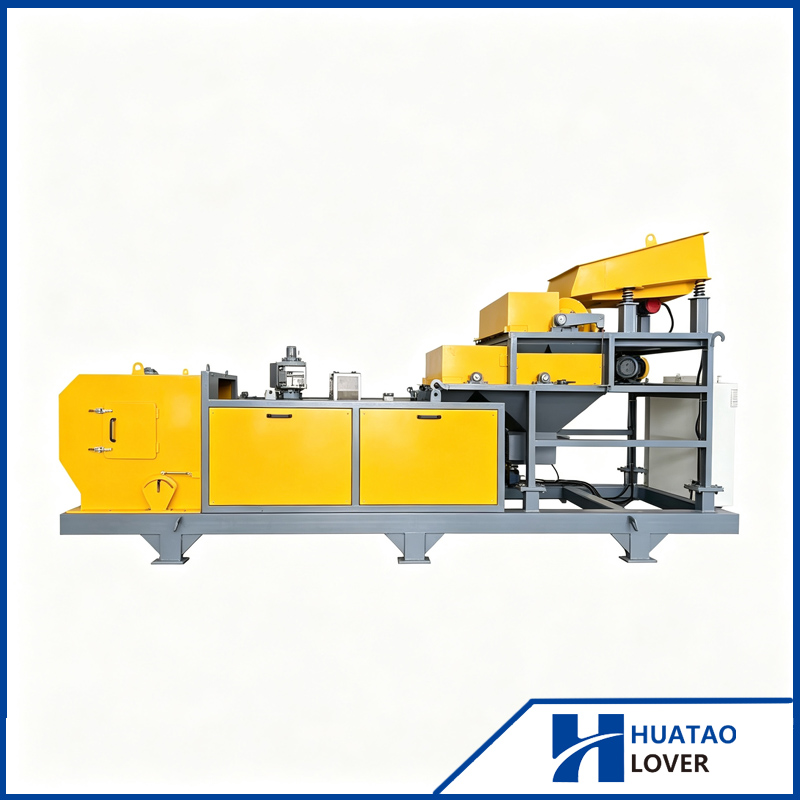
The Eddy Current Separator is commonly used for aluminum, copper, brass and other conductive metal recovery applications. Its effectiveness depends on the material properties and how the feed is presented to the separator.
1. Which Rotor Configuration Should You Choose?
Rotor configuration is one of the most important selection factors. Standard concentric rotor designs are often considered for relatively coarse, well-prepared material streams. High-intensity eccentric configurations may be more appropriate for smaller or more difficult particles. Fine-fraction applications may require specialized rotor designs and higher-frequency magnetic field characteristics.
The Automatic Plastic and Non-Ferrous Metal Sorting Machine is a relevant equipment reference for recycling processes that separate conductive metals from non-metallic materials.
Buyers should not assume that the strongest rotor or highest pole count is always the best. The rotor must be matched to particle size, shape, conductivity, material thickness and separation objective.
2. Why Does Particle Size Matter?
Particle size affects the response of conductive material to the magnetic field. Larger particles generally have different mass and separation behavior from smaller fragments. Thin, irregular or fine particles may be more difficult to recover consistently.
A broad particle-size distribution can also create inconsistent separation trajectories. Large particles may travel farther than small particles, while overlapping fragments may reduce the opportunity for individual separation.
Screening before ECS can help create more uniform material fractions. For electronic scrap applications, the High-Precision E-Waste Eddy Current Separator can be reviewed when finer and more complex particles require specialized separation consideration.
3. How Should Throughput Be Matched to the Separator?
Throughput should be based on the actual mass of material entering the ECS, not simply the rated capacity of the upstream shredder. Average and peak feed rates, belt width, belt speed and burden depth all affect operating performance.
Feeding too much material at once may cause particles to overlap, reducing separation opportunities. A stable and evenly distributed feed layer is generally preferable to overloading the belt in an attempt to maximize throughput.
The Eddy Current Separator for Scrap Shredder Residue is a relevant application reference for processing mixed residue streams from scrap shredding.
4. What Pretreatment Should Be Included?
A reliable separation process normally considers the following upstream stages:
-
Ferrous removal: Remove iron and steel using an appropriate magnetic separator before ECS.
-
Screening: Divide material into suitable particle-size fractions when necessary.
-
Feed control: Use a conveyor or vibrating feeder to create a stable feed layer.
-
Moisture control: Avoid wet or sticky material that may affect movement and separation.
-
Shredding control: Produce particles suitable for downstream separation without creating excessive fines.
A Double Shaft Shredder for E-Waste Recycling may be considered for primary size reduction in electronics recycling. Shredder configuration should support metal liberation and the requirements of the downstream sorting equipment.
5. Recovery Rate or Product Purity: Which Is More Important?
Recovery rate indicates how much of the target metal is captured from the incoming feed. Purity describes how much of the recovered product is actually the desired metal.
These metrics should be evaluated together. A machine may achieve high recovery while also collecting non-metallic material. Alternatively, a setting that produces a cleaner concentrate may send more valuable metal to the reject stream.
The E-Waste Eddy Current Separator for Non-Ferrous Metal Recovery provides a relevant process reference for assessing non-ferrous metal recovery in complex electronic waste streams.
Request a material test that records feed composition, recovered metal mass, reject material, recovery rate, product purity and operating conditions.
6. How Can ECS Be Integrated into a Complete Recycling Plant?
A typical scrap processing system may include primary shredding, ferrous separation, screening, controlled feeding, eddy current separation and additional sorting stages where required.
A Scrap Metal Recycling Production Line can be used as a broader process reference. In some plants, a Double Shaft Shredder for Metal Recycling is used for primary size reduction, followed by downstream separation.
For finer material preparation, a Single Shaft Shredder for Secondary Size Reduction may also be evaluated where the material and process require additional size reduction.
7. What Should Buyers Ask Before Purchasing?
Before requesting a quotation, prepare:
-
Feed material photographs or samples
-
Particle-size distribution
-
Estimated aluminum, copper and other non-ferrous content
-
Ferrous contamination level
-
Required throughput in tonnes per hour
-
Recovery rate and purity targets
-
Material moisture and contamination
-
Upstream shredding and screening details
Ask the supplier to explain rotor configuration, belt width, feed layer, operating adjustments, maintenance requirements and available test procedures.
Related Products
-
Eddy Current Separator
-
Automatic Plastic and Non-Ferrous Metal Sorting Machine
-
High-Precision E-Waste Eddy Current Separator
-
Double Shaft Shredder for Metal Recycling
-
Scrap Metal Recycling Production Line
Frequently Asked Questions
Which eddy current separator is best for aluminum recovery from shredded scrap?
The most suitable configuration depends on aluminum particle size, shape, thickness, feed rate and separation conditions. A standard rotor may be suitable for larger, well-prepared particles, while fine or difficult fractions may require a specialized high-intensity configuration. Testing representative material is essential before confirming equipment selection.
Can an eddy current separator recover copper and brass?
Yes. Eddy current separators can recover conductive non-ferrous metals including copper, brass and aluminum from suitable mixed material streams. Recovery performance differs by metal properties and particle characteristics. If the goal is to separate individual non-ferrous metals from one another, additional sorting stages may be necessary.
Why should ferrous metals be removed first?
Ferrous particles can interfere with ECS operation and may pose a risk to belt or rotor components. Upstream magnetic separation removes iron and steel before the non-ferrous recovery stage, helping prepare the feed and improving separation consistency.
Does screening improve eddy current separator performance?
Screening can improve feed consistency by dividing broad particle-size distributions into more uniform fractions. This allows more appropriate operating adjustments and reduces the variation in particle trajectories. Whether screening is required depends on the material and target recovery results.
How can buyers verify an ECS supplier's performance claims?
Ask for a test report using representative material. The report should identify the feed composition, particle size, throughput, recovery rate, recovered product purity and operating conditions. Avoid comparing recovery percentages from different tests unless the material and test conditions are similar.
Conclusion
The best eddy current separator for shredded scrap is the configuration that matches your feed composition, particle size, throughput and recovery objectives. Proper ferrous removal, screening and controlled feeding are essential parts of the process. A representative material test is the most reliable way to confirm machine suitability before investment.
Contact
Email: marketing@huataogroup.com
Tel/WeChat/WhatsApp: 008613383116640
Website: www.huataoshredder.com
WhatsApp: http://wa.me/13383116640
#EddyCurrentSeparator #ScrapMetalRecycling #NonFerrousMetalRecovery #MetalSeparation #ShreddedScrap #AluminumRecycling #CopperRecovery #RecyclingMachinery #WasteProcessing #MetalSorting #EWasteRecycling #ASRRecycling #RecyclingPlant #ScrapProcessing #CircularEconomy #MetalRecoveryEquipment #MagneticSeparation #IndustrialRecycling #MaterialRecovery #WasteRecycling



 WhatsApp