1. What Is Metal Baling Equipment?
Metal baling equipment uses hydraulic force to compress suitable scrap metal into dense, manageable bales. A typical system includes a compression chamber, hydraulic cylinders, pressing ram, power unit, control system, and bale discharge arrangement.
Explore the HYDRAULIC BALING MACHINE for an overview of industrial baling equipment.
2. Working Principle
The typical process includes:
-
Receive and sort scrap metal.
-
Remove unsuitable or hazardous items.
-
Prepare oversized material if necessary.
-
Load suitable scrap into the chamber.
-
Apply hydraulic compression.
-
Discharge the bale for storage or shipment.
The actual process depends on the machine design and material characteristics.
3. How Metal Baling Improves Yard Efficiency
Storage management: Compact bales are easier to arrange in designated storage areas.
Material handling: Regular bale shapes can simplify forklift and crane movements.
Loading: Compact material units can help make better use of available transport volume, subject to payload limits.
Inventory organization: Separate bales can help maintain material identification and sorting discipline.
Workflow coordination: Baling creates a defined processing stage between material preparation and final shipment.
4. Applications and Material Comparison
| Material |
Important Consideration |
| Aluminum sheet scrap |
Thickness and springback |
| Steel offcuts |
Strength and dimensions |
| Copper scrap |
Shape and bale stability |
| Stainless steel |
Hardness and compressibility |
| Mixed metal |
Sorting and grade separation |
Fine metal chips or copper foil may require a briquetting solution. Review the HYDRAULIC COPPER FOIL BRIQUETTING MACHINE.
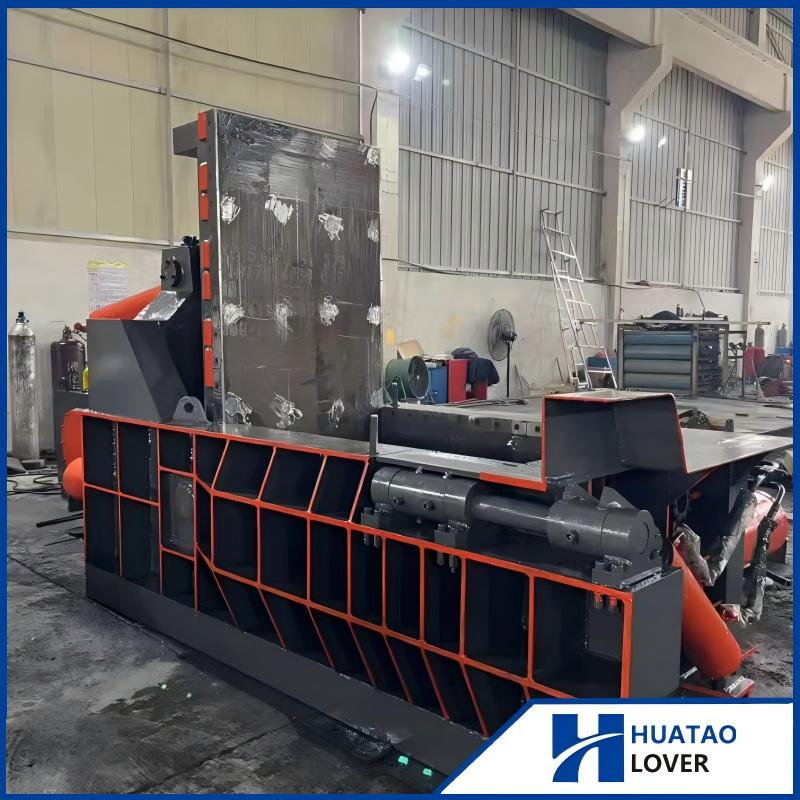
5. Vertical vs. Horizontal Baling Equipment
| Factor |
Vertical Baler |
Horizontal Baler |
| Typical layout |
More compact |
Larger installation footprint |
| Feeding |
Often top loading |
May support conveyor feeding |
| Application |
Smaller or segregated streams |
Larger or more continuous flows |
| Selection |
Based on site and material |
Based on site and material |
Compare VERTICAL AND HORIZONTAL HYDRAULIC BALERS according to your workflow.
6. Integrating a Baler into a Scrap Yard
A baler may operate independently or as part of a broader recycling system. Depending on the incoming scrap, the workflow may include:
Receiving → Sorting → Cutting or Shredding → Separation → Baling → Storage → Shipment
A SCRAP METAL RECYCLING PRODUCTION LINE can help buyers understand how different processing stages work together.
Other related equipment includes a DOUBLE SHAFT SHREDDER, conveyors, magnetic separators, and non-ferrous separation equipment.
7. Selection and Procurement Guide
Before requesting a quotation, prepare:
-
Material photos and videos
-
Maximum length, width, and thickness
-
Daily and peak processing volume
-
Required bale dimensions and weight
-
Loading and discharge preferences
-
Yard layout and installation drawings
-
Power supply and operating conditions
Ask suppliers to clarify chamber dimensions, hydraulic force, cycle conditions, safety systems, spare parts, MOQ, lead time, packaging, and shipping.
Confirm whether the supplier can provide technical drawings, inspection records, and support for replacement components. For a wider project, review METAL RECYCLING LINE ENGINEERING.
8. Failure Analysis
| Problem |
Possible Cause |
Recommended Solution |
| Low compression force |
Hydraulic leakage or incorrect settings |
Inspect circuit and pressure settings |
| Slow cycle |
Pump, filter, or valve issue |
Check hydraulic flow |
| Uneven bale |
Poor material distribution |
Improve loading practice |
| Bale springback |
Material properties or retention method |
Test material and bale arrangement |
| Bale springback |
Poor inspection or delayed maintenance |
Apply preventive maintenance |
9. Maintenance and Safety
-
Daily: Check leakage, abnormal noise, chamber condition, and emergency stops.
-
Weekly: Inspect hoses, fittings, guides, and fasteners.
-
Monthly: Review oil condition, filters, seals, and electrical connections according to the manufacturer's schedule.
Follow lockout/tagout and stored-energy release procedures before maintenance. OSHA's metal scrap recycling guidance highlights hazards associated with balers and the need for guarding and safe operating procedures. OSHA guidance
Read the HYDRAULIC BALER MAINTENANCE GUIDE.
10. Illustrative Case Study
Customer Type: Medium-sized scrap metal yard
Material: Aluminum offcuts and sorted steel scrap
Problem: Loose scrap occupied large storage areas and required repeated movement.
Solution: The operator evaluated a hydraulic baler after sorting materials and checking their dimensions.
Expected Result: More organized storage and easier movement of compacted scrap.
This is an illustrative scenario, not a verified customer case or quantified performance claim.
11. FAQ
Q1. How does metal baling equipment improve scrap yard efficiency?
It compresses suitable loose metal into more manageable bales. This can improve storage organization, simplify handling, and support loading plans. The benefits depend on the incoming material, bale dimensions, yard layout, and handling equipment. Review the complete workflow rather than evaluating the baler as an isolated machine.
Q2. Which metals can be baled?
Suitable materials may include aluminum scrap, steel offcuts, copper scrap, and selected stainless steel waste. Material thickness, hardness, shape, contamination, and springback affect suitability. Provide representative photos and dimensions to the supplier and request a material test for unusual or mixed scrap.
Q3. Does baling reduce transportation costs?
Baling may improve the use of available cargo volume by making scrap more compact and organized. However, actual transport costs also depend on payload limits, freight rates, bale weight, container dimensions, and loading restrictions. Compare both weight and volume before estimating savings.
Q4. How do I choose between vertical and horizontal balers?
Consider daily material volume, available floor space, feeding method, labor arrangement, and required bale dimensions. Vertical machines may suit smaller or segregated material streams, while horizontal machines may fit larger or more continuous workflows. The machine layout should also match the forklift and bale collection route.
Q5. Can one baler process different metal types?
Some machines may handle more than one suitable material type, but the operating conditions and bale results can vary. Aluminum, steel, copper, and stainless steel have different compression characteristics. Evaluate each material separately and avoid mixing grades when material identification is important.
Q6. What is the difference between a baler and a briquetting machine?
A metal baler generally compresses larger scrap pieces into bales. A briquetting machine is commonly used for fine chips, turnings, or small particles. The correct equipment depends on feed size, shape, moisture or oil content, and the required output form.
Q7. What should buyers check before ordering?
Confirm material dimensions, daily quantity, chamber size, hydraulic force, bale requirements, power supply, feeding and discharge methods, safety devices, and installation conditions. Ask for drawings, inspection procedures, spare-parts information, lead time, packaging details, and export documentation.
Q8. How can a scrap yard reduce baler downtime?
Follow a preventive maintenance schedule. Inspect hydraulic hoses, fittings, filters, oil condition, seals, guides, and safety devices. Record abnormal noise, cycle time, and oil temperature. Keep critical spare parts available and isolate the equipment properly before cleaning or repair.
Conclusion
Metal baling equipment can help scrap yards improve storage, material handling, and workflow organization. The best results come from matching the machine to the actual scrap stream and planning the complete process from receiving to shipment.
Email: marketing@huataogroup.com
Tel/WeChat/WhatsApp: 008613383116640 Website: www.huataoshredder.com
WhatsApp: http://wa.me/13383116640



 WhatsApp