For medium and large PET bottle recycling facilities, a fully automatic horizontal hydraulic baler is generally the most suitable configuration to evaluate. It can support conveyor feeding, continuous compression, automatic tying and regular bale discharge. Smaller collection businesses may prefer a vertical baler because it requires less space and has a lower initial investment. A bottle perforator may also be necessary when bottles retain trapped air. The final choice depends on material volume, bottle condition, desired bale density and the requirements of downstream buyers.
Why Is PET Bottle Baling Different from Ordinary Waste Baling?
PET bottles are lightweight hollow containers. Their shape creates considerable empty space during collection and transportation.
Even after compression, bottles can partially recover their original shape. This affects bale stability and the amount of material that can be transported.
For this reason, PET bottle recycling plants should assess the compression performance and feeding arrangement of their industrial recycling equipment before investing in a baling system.
1. Which Type of Hydraulic Baler Should You Choose?
Vertical Hydraulic Baler
Vertical balers are suitable for small collection centers, supermarkets, hotels and warehouses. They occupy relatively little installation space and are generally suitable for batch processing.
They can be an economical starting point when daily PET bottle volumes are limited.
Semi-Automatic Horizontal Baler
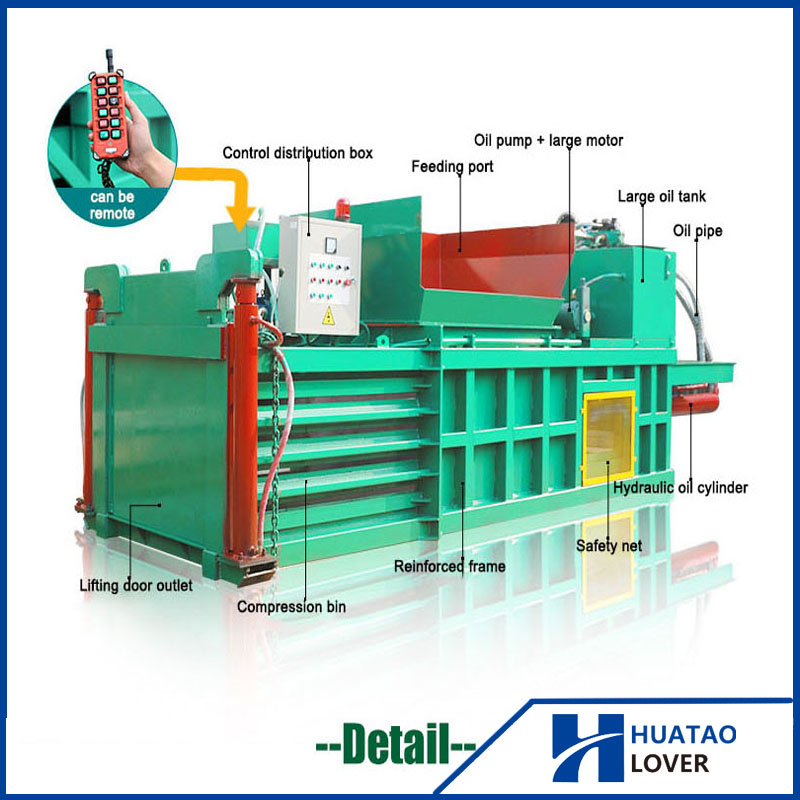
This configuration is suitable for medium-sized recycling operations requiring larger bales and higher compression performance. It can reduce manual handling compared with many smaller vertical systems.
Fully Automatic Horizontal Baler
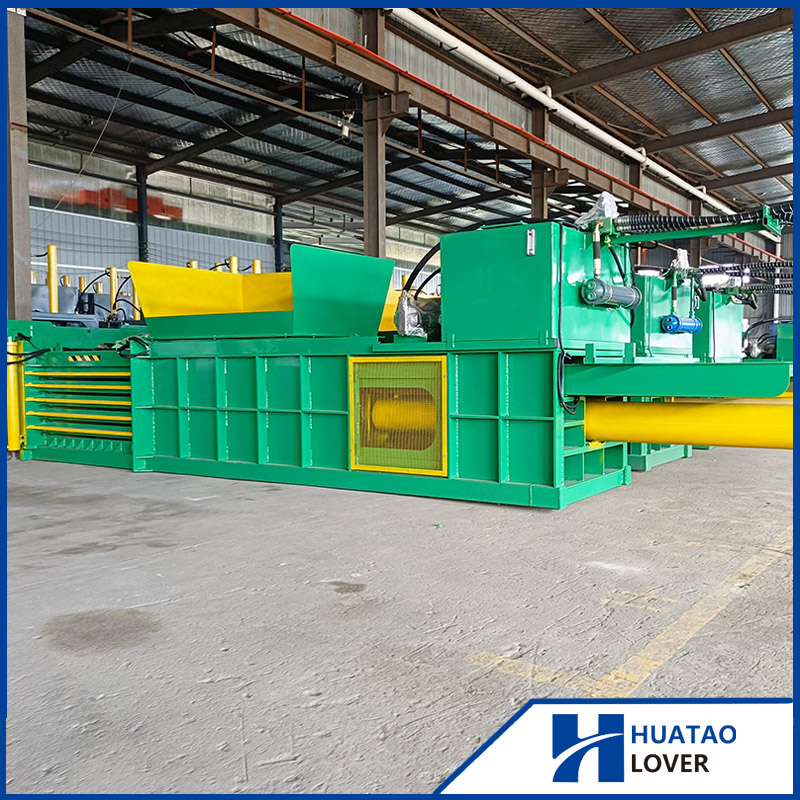
For a high-volume PET recycling facility, an automatic horizontal channel baler is generally the first option to evaluate. Feeding conveyors, automatic compression controls, tying systems and bale discharge can be integrated into one production arrangement.
The machine structure and investment should be matched with the actual supply of PET bottles.
Review the HUATAO company profile and technical service information when assessing its wider industrial equipment and service capabilities.
2. Should You Install a Bottle Perforator Before the Baler?
A perforator can be valuable when incoming PET bottles retain their caps and contain trapped air.
During compression, the trapped air may prevent bottles from collapsing sufficiently. This can produce lighter bales and affect the specifications accepted by downstream customers.
A bottle perforator punctures containers before compression, helping release the air. It should not be confused with a shredder, which cuts bottles into smaller pieces.
3. What Technical Specifications Matter Most?
When comparing PET bottle balers, check the following parameters:
-
Processing capacity: Actual hourly throughput based on your supply volume.
-
Compression force: Hydraulic cylinder force and operating pressure.
-
Ram stroke: Whether the machine can compress hollow containers consistently.
-
Feed opening: Compatibility with your conveyor and loading method.
-
Bale dimensions: The finished size accepted by downstream processors.
-
Bale weight and density: Confirm using actual material trials.
-
Automatic tying: Evaluate tying wire, binding frequency and maintenance.
-
Motor power: Confirm energy requirements and electrical supply.
Remember that advertised capacity may refer to another material. Request performance information specifically for PET bottles.
For additional background on material preparation, explore screening equipment, magnetic separation equipment, conveyor systems, crushing equipment, mineral equipment, paper industry equipment and corrugated industry machinery.
These are broader industrial equipment categories and should not be interpreted as PET baler product specifications.
4. Which Supporting Equipment Can Be Used in a PET Recycling Plant?
A complete bottle recycling facility may include receiving, sorting, contaminant removal, perforation, baling and subsequent washing or granulation, depending on the business model.
Five related products worth reviewing are:
-
Rotary Trommel Screen – for size-based sorting in suitable mixed waste streams.
-
Magnetic Separator – for removing suitable ferrous contaminants.
-
Mining Conveyor Roller – supports industrial conveyor material movement.
-
Heavy-Duty Conveyor Belt Tracker – helps control conveyor belt alignment.
-
Conveyor Skirtboard and Skirting System – helps control material spillage at conveyor transfer points.
These are related sorting and material-handling products, not PET bottle balers or bottle perforators.
5. How Can You Reduce Baler Maintenance Costs?
The hydraulic system needs regular inspection to maintain reliable compression.
Check oil cleanliness, filter condition, hydraulic hoses, cylinder seals, pumps, valves and cooling arrangements. The automatic tying system also requires inspection because binding failures can interrupt production.
Operators should receive training on safe feeding, bale removal, emergency stops and routine equipment inspection.
The entire processing line should also be planned with reference to the company's published industrial equipment range. Correct equipment integration can help avoid material bottlenecks between sorting, feeding and baling.
Frequently Asked Questions
Q1: Is a horizontal hydraulic baler better for PET bottles?
For medium and large recycling facilities, a horizontal baler is generally worth considering because it can provide stronger compression and integrate automatic feeding. A vertical model may still be more economical for smaller collection points.
Q2: Do PET bottles need to be crushed before baling?
Usually not. Whole empty PET bottles can be perforated and compressed directly. Shredding is a different processing stage and is generally used when PET bottles are being prepared for washing and granulation.
Q3: Is a perforator necessary for every PET bottle baler?
No. It depends on the percentage of capped bottles, compression capability and buyer requirements. Ask the supplier to test the actual bottle mixture before deciding.
Q4: What determines PET bale quality?
Bottle preparation, sorting, contamination, compression force, machine configuration, bale dimensions and tying conditions all influence the finished bale.
Q5: What information should be provided when requesting a quotation?
Provide daily PET volume, bottle condition, cap retention rate, desired bale weight, bale dimensions, available space, feeding method and electrical supply.
Conclusion
A fully automatic horizontal hydraulic baler is usually the strongest option to evaluate for medium and large PET bottle recycling facilities. Smaller collection businesses may find vertical or semi-automatic models more economical.
The best investment is determined by actual bottle volume, compression performance, bale requirements, upstream preparation and long-term maintenance.
Any interesting, please contact with me.
Email: marketing@huataogroup.com
Tel/WeChat/WhatsApp: 008613383116640
Website: www.huataoshredder.com
WhatsApp: http://wa.me/13383116640
#PETBottleRecycling #HydraulicBaler #PETBottleBaler #PlasticRecycling #AutomaticBaler #HorizontalBaler #VerticalBaler #BottlePerforator #PlasticWaste #RecyclingEquipment #BalingMachine #WasteManagement #MaterialHandling #RecyclingPlant #IndustrialMachinery #PETPlastic #BottleCompression #RecyclingSolutions #WasteProcessing #HUATAOGROUP



 WhatsApp