Plastic film and flexible bags are common waste materials in packaging factories, warehouses, distribution centers and recycling plants. Although they are lightweight, they occupy considerable storage space when collected loosely. Stretch wrap, LDPE film, shrink wrap and PP woven bags can also be difficult to feed and compress consistently.
A suitable hydraulic baler helps reduce the volume of these materials, making storage, stacking and transportation more manageable. The key is to select equipment according to the material's physical behavior and the facility's daily operating requirements.
Why Does Plastic Film Require a Suitable Baling System?
Plastic film behaves differently from rigid plastic waste. Its low bulk density means that a large volume may contain relatively little material by weight. Flexible film can fold, trap air and form loose layers during feeding. After compression, elastic recovery may cause the material to expand.
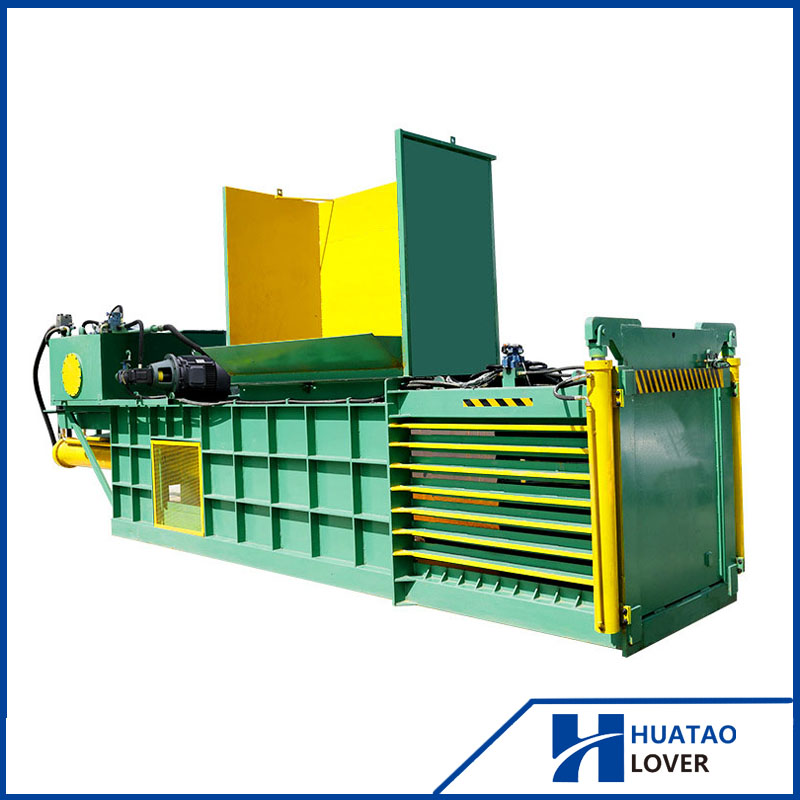
A HYDRAULIC BALING MACHINE should therefore be evaluated not only by its rated compression force but also by its chamber structure, feeding arrangement, compression cycle and tying method.
The finished bale should remain stable during ejection, handling, storage and transportation. Its dimensions and weight should also match the requirements of the downstream recycler.
1. Vertical or Horizontal: Which Baler Should You Choose?
A vertical hydraulic baler is generally suitable for smaller or intermittent material volumes. It uses a vertical compression arrangement and often requires operators to load, compress, tie and remove each bale. Its compact layout can be useful in warehouses, workshops and facilities with limited installation space.
A horizontal hydraulic baler is more suitable for regular material flow. Depending on the model, it can be connected to conveyors, hoppers and automatic feeding systems. This arrangement can reduce manual handling and support higher operating rates.
The VERTICAL AND HORIZONTAL HYDRAULIC BALER range provides a useful starting point for comparing the two layouts.
The selection should consider:
-
Daily and peak material volume
-
Number of operating shifts
-
Available floor space
-
Operator availability
-
Required bale size and weight
-
Whether automatic tying is necessary
2. Which Features Affect Bale Quality?
Feeding arrangement: A wide and appropriately designed feed opening helps accommodate bulky film. For regular material flow, a conveyor can reduce manual loading. The hopper should be designed to limit bridging and uneven feeding.
Compression system: Hydraulic force is important, but it is only one part of the process. Chamber dimensions, ram movement, pressure control and compression time all influence the finished bale.
Tying arrangement: Plastic film can expand after compression. The tying system must retain the material securely and match the expected bale dimensions.
Bale discharge: The bale must be removed safely and transferred to a storage or loading area. Confirm the discharge arrangement and forklift access before installation.
3. How Do Different Plastic Materials Affect Selection?
Different materials may require different feeding and compression arrangements.
-
LDPE film: Lightweight and flexible, often requiring controlled feeding and reliable bale retention.
-
Stretch wrap: Elastic and prone to tangling, so the feeding method should be reviewed carefully.
-
Shrink film: May arrive as large sheets or mixed packaging waste; the feed opening must suit the material format.
-
PP woven bags: Can contain trapped air and may spring back after pressing. Sample testing is recommended.
-
Mixed flexible plastics: Sorting and contamination control should be considered before baling.
Some plants also prepare material before compression. A SPECIALIZED PLASTIC FILM CRUSHER may be relevant when size reduction is part of the recycling process. A SINGLE SHAFT SHREDDER can also be evaluated for suitable upstream applications. However, shredding is not a universal requirement for baling.
4. How Should Buyers Evaluate the Supplier?
A reliable equipment recommendation should be based on actual material information. Buyers should prepare photographs or samples, daily volume, material composition, moisture level, contamination, target bale dimensions and the preferred feeding method.
Ask the supplier to explain the hydraulic system, compression cycle, tying procedure, safety interlocks and maintenance schedule. It is also useful to understand which components require routine inspection and how replacement parts are supplied.
The HYDRAULIC BALER MAINTENANCE GUIDE can help buyers prepare questions about hydraulic oil, filters, hoses, seals and routine checks.
For facilities that process plastic beyond the baling stage, a PLASTIC GRANULATOR MACHINE or PP AND PE PLASTIC GRANULATORS may be considered as part of a wider recycling layout.
5. What Information Is Needed for Equipment Configuration?
Before requesting a quotation, prepare:
-
Plastic type and material photographs
-
Daily or hourly material volume
-
Loose bulk density, if available
-
Moisture and contamination conditions
-
Target bale dimensions and weight
-
Feeding method and required automation
-
Available floor space and power supply
-
Bale handling and transportation requirements
If the facility processes several material streams, a WASTE RECYCLING PRODUCTION LINE may need to be planned around sorting, size reduction, conveying and baling. For PET bottle operations, review the PET BOTTLE RECYCLING LINE as a separate process application.
Related Products
-
Hydraulic Baling Machine
-
Vertical and Horizontal Hydraulic Baler
-
Plastic Granulator Machine
-
Single Shaft Shredder
-
Crusher Machine
Conclusion
For continuous or high-volume plastic film recycling, a horizontal hydraulic baler with a suitable feeding and tying arrangement is often the preferred solution. A vertical baler can be practical for smaller, batch-based operations. Material testing and clear bale specifications help ensure that the selected machine matches the actual recycling workflow.
Email: marketing@huataogroup.com
Tel/WeChat/WhatsApp: 008613383116640
Website: www.huataoshredder.com
WhatsApp: http://wa.me/13383116640
#HydraulicBaler #PlasticFilmBaler #PlasticRecycling #WastePlastic #PlasticBagRecycling #LDPEFilm #PPWovenBags #HorizontalBaler #VerticalBaler #RecyclingEquipment #PlasticWasteManagement #BalingMachine #WasteManagement #RecyclingPlant #CircularEconomy #PlasticPackaging #MaterialRecovery #IndustrialBaler #RecyclingTechnology #WasteProcessing



 WhatsApp