Introduction
Why can two shredder blades carrying the same D2/SKD-11 material designation deliver completely different service lives?
This is a common question among recycling plant managers, equipment manufacturers, maintenance engineers, and industrial blade buyers.
The reason is that steel grade alone does not determine the performance of a finished blade.
Raw material consistency, heat treatment, hardness distribution, machining accuracy, cutting geometry, and application conditions all influence the result.
For industrial buyers, understanding these variables helps prevent premature blade replacement and unnecessary production downtime.
1. Material Quality: D2/SKD-11 Is Only the Beginning
D2 and SKD-11 are closely related high-carbon, high-chromium cold-work tool steels.
Their properties make them suitable for various industrial cutting applications requiring wear resistance.
However, different steel batches may show variations in chemical composition, cleanliness, and carbide distribution.
These characteristics can affect:
A professional purchasing process should include material identification and documentation rather than relying exclusively on a supplier's material label.
2. Heat Treatment Determines the Final Properties
Heat treatment is one of the most important stages in manufacturing D2/SKD-11 shredder blades.
The process must be controlled to achieve an appropriate balance of hardness and toughness.
Important variables include:
Poorly controlled heat treatment can produce uneven mechanical properties.
Excessive brittleness may increase the risk of edge chipping, while insufficient hardness may accelerate abrasive wear.
This is why buyers should evaluate the manufacturer's process controls, not simply request a hardness number.
3. Hardness vs. Toughness: Finding the Right Balance
A common purchasing mistake is assuming that a higher HRC value always indicates a better blade.
In actual shredding operations, blades experience friction, shearing forces, abrasion, and sometimes unexpected impact loads.
Hardness supports wear resistance, while toughness helps the cutting edge withstand mechanical stress.
The correct balance depends on the processing material and machine configuration.
For example, clean plastic and contaminated industrial waste may require different blade performance characteristics.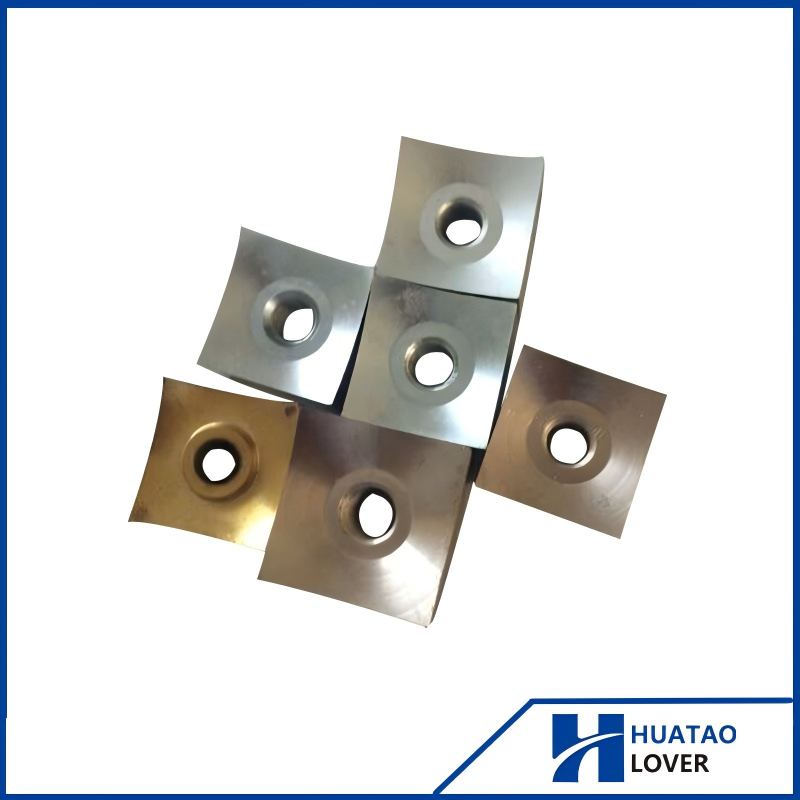
4. Machining Accuracy and Cutting Geometry
Manufacturing precision directly influences blade installation and cutting performance.
Important inspection items include:
| Parameter |
Performance Impact |
| Thickness |
Assembly consistency |
| Flatness |
Contact and fitting quality |
| Parallelism |
Installation accuracy |
| Bore dimensions |
Mounting compatibility |
| Cutting geometry |
Cutting efficiency |
| Surface finish |
Contact conditions |
For double shaft shredders, incorrect blade dimensions can affect cutting clearances and the interaction between rotating and fixed knives.
For single shaft shredders, rotor blade geometry and the relationship with the stationary counter knife also require attention.
5. Application Matching: One Material Does Not Fit Every Job
The actual service life of a blade depends heavily on what it processes.
Consider these applications:
-
Plastic recycling: Polymer type, contamination, and feed consistency influence wear.
-
Rubber recycling: Material properties and processing conditions affect cutting loads.
-
E-waste recycling: Abrasive and hard components may increase wear and impact.
-
Metal-containing waste: Unexpected metal contamination can cause severe blade damage.
Selecting a blade without understanding the feed material can lead to unsuitable performance expectations.
6. How to Evaluate a Reliable Blade Manufacturer
Before ordering replacement blades, buyers should examine the following:
-
Material grade and material documentation.
-
Heat-treatment process control.
-
Hardness testing and inspection methods.
-
Dimensional accuracy.
-
Cutting-edge machining quality.
-
OEM drawing compatibility.
-
Batch traceability.
-
Custom material and dimension capabilities.
-
Quality inspection documentation.
-
Technical support and replacement-part availability.
For customized OEM blades, provide drawings, dimensions, photographs, machine information, and processing-material details.
This allows the manufacturer to assess the requirements before production.
7. How to Reduce Total Blade Operating Costs
Purchase price is only one part of the cost calculation.
A practical evaluation should consider:
A blade with a higher initial price may offer better value if its verified operating performance reduces replacement and maintenance costs.
However, service-life comparisons should always be based on comparable materials, operating hours, throughput, and machine conditions.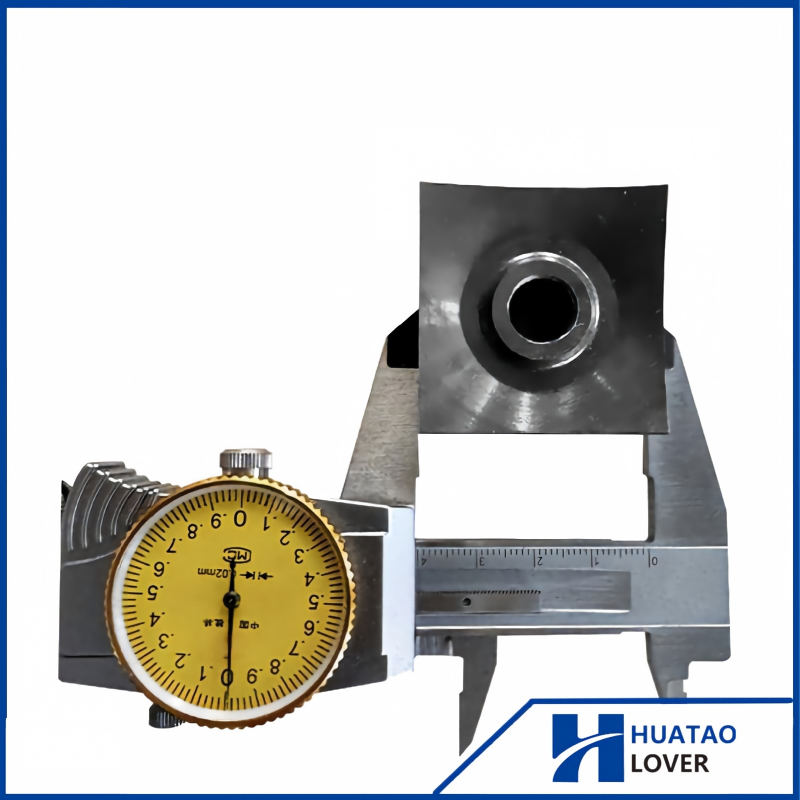
Frequently Asked Questions
Q1: Are D2 and SKD-11 identical?
They are closely related steel designations, but actual material standards and chemical composition should be verified.
Q2: Why do identical material grades produce different blade performance?
Manufacturing quality, heat treatment, machining accuracy, and operating conditions can differ.
Q3: Is higher hardness always better?
No. Hardness must be balanced with toughness and impact resistance.
Q4: What causes premature blade chipping?
Potential causes include excessive brittleness, impact loading, hard contaminants, and unsuitable cutting geometry.
Q5: Can D2/SKD-11 be used for plastic shredding?
It can be suitable for selected applications, depending on the plastic type, contamination, machine configuration, and blade design.
Q6: What should buyers provide for OEM replacement blades?
Drawings, dimensions, photographs, machine model, material information, and processing requirements.
Q7: How can blade service life be compared?
Compare operating hours, throughput, feed material, contamination, maintenance conditions, and wear measurements.
Q8: Does blade geometry affect service life?
Yes. Geometry influences cutting forces, contact conditions, and wear distribution.
Related Articles and Products
Contact
Email: marketing@huataogroup.com
Tel/WeChat/WhatsApp: 008613383116640
Website: www.huataoshredder.com
WhatsApp: http://wa.me/13383116640



 WhatsApp