1. What Is a Hydraulic Metal Baler?
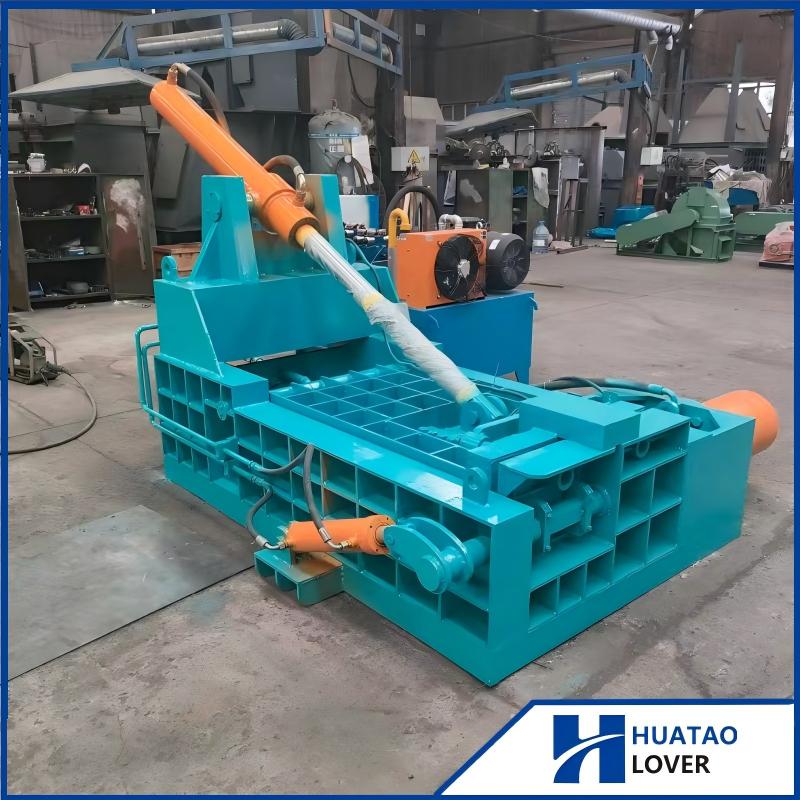
A hydraulic metal baler is a machine designed to compact recyclable metal waste through hydraulic pressure. It uses a compression chamber and hydraulic ram to transform loose scrap into dense bales.
Explore the HYDRAULIC BALING MACHINE for an overview of hydraulic baling equipment.
2. Working Principle
The typical operating process includes:
-
Material sorting and preparation.
-
Loading scrap into the compression chamber.
-
Closing the chamber or compression door.
-
Applying hydraulic force through the pressing ram.
-
Forming and releasing the compacted bale.
-
Moving the bale to storage or transportation.
The specific sequence varies with the baler design. Some machines use different ram arrangements and discharge methods.
3. Main Benefits
Reduced storage requirements: Compact bales generally occupy less space than the equivalent loose material.
Easier handling: Regular-shaped bales are easier to move with suitable material-handling equipment.
Improved logistics: Baling can help make better use of available cargo volume, although vehicle payload limits must also be considered.
Better yard organization: Clearly formed bales make it easier to separate, stack, and manage different scrap categories.
4. Applications and Material Comparison
| Material |
Key Selection Consideration |
| Aluminum sheet scrap |
Thickness, shape, springback |
| Steel offcuts |
Strength, dimensions, chamber opening |
| Copper scrap |
Shape, cleanliness, bale stability |
| Stainless steel scrap |
Hardness and compression suitability |
| Metal fabrication waste |
Daily volume and loading method |
Not all metal waste is suitable for conventional baling. Thick castings, hardened steel, and long tangled materials may require cutting, shearing, or another processing method first.
For fine copper material, consider a HYDRAULIC COPPER FOIL BRIQUETTING MACHINE.
5. Vertical vs. Horizontal Hydraulic Balers
| Factor |
Vertical Baler |
Horizontal Baler |
| Loading |
Usually top loading |
Usually front or conveyor feeding |
| Space |
Often more compact |
Generally requires more floor space |
| Operation |
Often suited to smaller operations |
Often suited to larger material flows |
| Automation |
Depends on configuration |
Can support automated feeding |
| Selection |
Based on volume and material |
Based on volume and material |
See VERTICAL AND HORIZONTAL HYDRAULIC BALERS when comparing machine arrangements.
6. Industry Application Matrix
| Industry |
Typical Scrap |
Baling Objective |
| Scrap metal yards |
Mixed sorted scrap |
Storage and transportation |
| Steel processing |
Sheet and plate offcuts |
Waste management |
| Aluminum fabrication |
Extrusion offcuts |
Compact storage |
| Copper processing |
Copper scrap |
Material handling |
| Automotive dismantling |
Prepared metal scrap |
Volume reduction |
7. Selection and Procurement Guide
Before requesting a quotation, prepare:
-
Material photos and videos
-
Material type, dimensions, and thickness
-
Daily processing quantity
-
Target bale dimensions and weight
-
Required loading and discharge method
-
Available workshop space
-
Local voltage and electrical requirements
Ask the supplier to clarify hydraulic force, chamber dimensions, cycle conditions, power requirements, safety devices, and maintenance access. Request a material test where possible.
You can also review the SCRAP METAL RECYCLING PRODUCTION LINE and METAL RECYCLING LINE ENGINEERING GUIDE when planning a wider processing system.
8. Failure Analysis
| Problem |
Possible Cause |
Recommended Action |
| Low compression force |
Hydraulic leakage or incorrect pressure setting |
Inspect the hydraulic circuit |
| Slow operating cycle |
Pump, filter, or valve issue |
Check hydraulic system condition |
| Bale expands after discharge |
Material springback or inadequate bale retention |
Review material and tying method |
| Ram moves unevenly |
Mechanical obstruction or hydraulic fault |
Stop and inspect the system |
| Excessive oil temperature |
Restricted flow or continuous overload |
Check cooling and operating conditions |
9. Maintenance Guide
-
Daily: Check for oil leakage, abnormal noise, loose fasteners, and material buildup.
-
Weekly: Inspect hoses, fittings, guides, and safety devices.
-
Monthly: Review hydraulic oil condition, filters, cylinder seals, and electrical connections according to the manufacturer's schedule.
For more details, read the HYDRAULIC BALER MAINTENANCE GUIDE.
10. Illustrative Case Study
Customer Type: Scrap metal collection yard
Material: Aluminum offcuts and steel scrap
Problem: Loose scrap occupied large storage areas and required frequent handling.
Solution: The operator evaluated a hydraulic baler based on the two material streams and selected a suitable configuration after testing.
Result: The intended operational improvements were more organized storage and easier movement of compacted scrap. No quantified savings are claimed because no verified customer operating data is available.
11. FAQ
Q1. How much can a hydraulic metal baler reduce scrap volume?
There is no universal reduction ratio. It depends on the material's original bulk density, shape, thickness, compressibility, chamber dimensions, and machine force. Light sheet scrap may behave differently from thick steel pieces or copper offcuts. Ask the supplier to test your actual material and record the loose and finished bale dimensions.
Q2. What metals can be processed?
Suitable materials may include aluminum offcuts, steel sheets, copper scrap, and certain stainless steel waste. However, material hardness, thickness, shape, and springback affect suitability. Thick castings, hardened steel, and long tangled materials may require pre-processing. Always provide representative material samples or videos before selecting a machine.
Q3. Does baling reduce transportation costs?
It can improve transport efficiency by reducing the volume occupied by loose scrap. However, actual savings depend on vehicle payload, container dimensions, loading method, freight rates, and bale density. A transport assessment should compare both volume and weight limits rather than assuming that denser bales always reduce freight costs.
Q4. Is a horizontal or vertical baler better?
Neither is universally better. Vertical balers may suit operations with limited space or smaller material flows, while horizontal configurations can support larger or more continuous operations. The right choice depends on scrap dimensions, loading equipment, daily volume, labor availability, and the required bale format.
Q5. Does scrap need to be sorted before baling?
Sorting is recommended when material value or downstream processing depends on metal type and grade. Mixing aluminum, copper, and steel can reduce material quality and complicate subsequent processing. Remove hazardous or prohibited items and follow site procedures before loading any scrap into the machine.
Q6. How often should a hydraulic baler be maintained?
Daily visual checks, regular hose and fitting inspections, and scheduled hydraulic oil and filter maintenance are important. The exact interval should follow the equipment manufacturer's instructions and actual operating conditions. Keep records of oil temperature, leakage, cycle behavior, and abnormal noise to identify problems early.
Q7. What information is needed for a quotation?
Provide material type, photographs, maximum dimensions, thickness, daily quantity, desired bale size, power supply, and preferred feeding and discharge method. These details help the supplier assess chamber size, hydraulic configuration, and handling requirements. A material test is recommended when the scrap is unusual or mixed.
Q8. Can a baler be integrated into a metal recycling line?
Yes. It can be used as a standalone compaction unit or integrated into a larger recycling workflow. Depending on the feedstock, the line may include sorting, shearing, shredding, magnetic separation, non-ferrous separation, and baling. The correct sequence depends on the material and the intended final product.
Related Articles
Conclusion
A hydraulic metal baler helps recycling facilities reduce the volume of suitable scrap metal and improve storage, handling, and logistics. The most effective solution is selected according to material characteristics and real operating requirements—not simply the highest pressure rating.



 WhatsApp