

The highest-value application for recycled PET is bottle-to-bottle recycling, where rPET pellets are used to manufacture new beverage containers that meet strict food-contact regulatory standards. Achieving this requires a PET Recycling Pelletizing Machine configured with advanced process controls, including Solid-State Polycondensation (SSP) technology, inline crystallization, and rigorous contamination management systems . The technical demands of food-grade applications have driven the PET Recycling Pelletizing Machine from a simple extrusion system to a sophisticated, multi-stage processing platform.
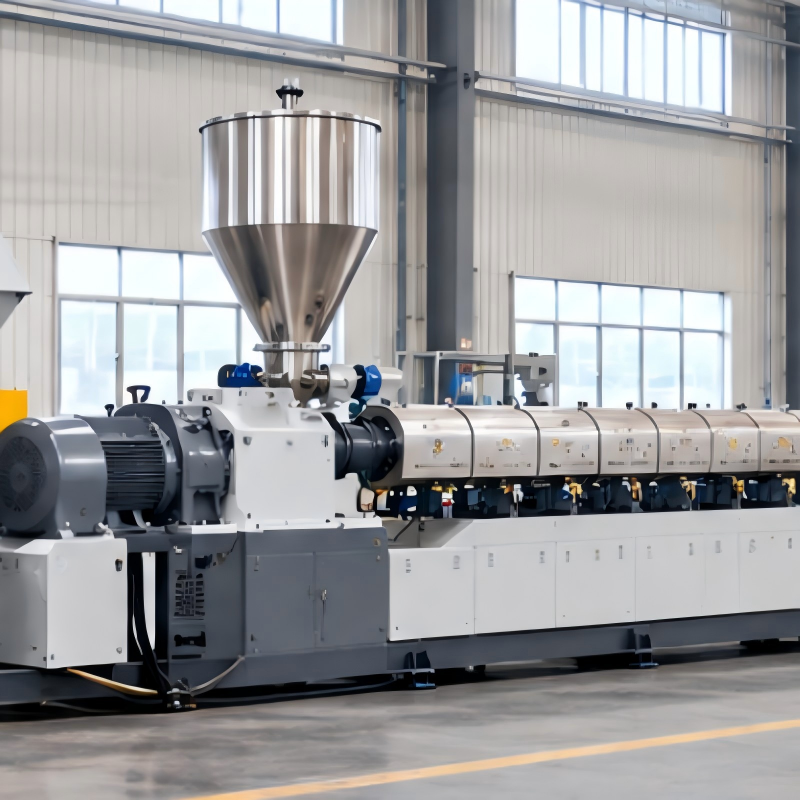
The Technical Path to Food-Grade rPET Pellets
The journey from washed PET flakes to food-grade rPET pellets is governed by two critical parameters: intrinsic viscosity (IV) and contaminant levels. Food-contact applications require IV values typically above 0.72 dl/g, along with contaminant levels that comply with FDA and EFSA guidelines for recycled plastics in food packaging . A modern PET Recycling Pelletizing Machine designed for bottle-to-bottle applications addresses these requirements through a combination of SSP technology, inline crystallization, and advanced melt filtration.
SSP IV Enhancement: SSP technology is a post-extrusion process that elevates the IV of rPET pellets through solid-state polymerization. In the PET Recycling Pelletizing Machine configured for food-grade applications, the extruder first produces pellets with a baseline IV, which are then subjected to elevated temperatures under vacuum or inert gas flow to build molecular weight . This two-step approach allows the PET Recycling Pelletizing Machine to achieve consistent IV values despite variations in input flake quality, enabling the production of pellets suitable for stretch-blow molding .
Inline Crystallization and Drying: Freshly cut amorphous rPET pellets are prone to moisture absorption and clumping. To address this, advanced PET Recycling Pelletizing Machine systems integrate inline drying and crystallizing silos that utilize the pellets' residual heat to induce crystallization, reducing hygroscopicity and preparing the material for downstream handling . The crystallization process also helps prevent the pellet degradation that can occur during storage and transport, a critical consideration for producers serving the beverage industry .
Contamination Management for Food-Contact Applications: The PET Recycling Pelletizing Machine for food-grade applications must deliver contaminant levels below the thresholds established by regulatory bodies. This is achieved through multi-stage filtration (often with filtration fineness down to 20-40 microns) and careful process design that prevents the introduction of cross-contamination . For facilities seeking FDA compliance, the PET Recycling Pelletizing Machine must be validated through challenge tests that demonstrate the removal of model contaminants, a process that requires careful integration with upstream washing and sorting systems .
Contact us:
Marketing@huataogroup.com
Tel:+86 13383116640 (Wechat/whatsapp)
http://wa.me/13383116640
Website:www.huataoshredder.com
#PETRecycling #BottleToBottle #FoodGrade #SSP #rPET #PelletizingMachine #CircularEconomy #RecyclingTechnology #Huatao #Sustainability
can not be empty
can not be empty

HUATAO GROUP - Recycling Machine and Spare parts
ADD : No.298 Zhonghua North Street, Shijiazhuang 050000 China.
TEL : +86 13383116640
EMAIL :marketing@huataogroup.com
 WhatsApp & WeChat : +86 13383116640