

The economic viability of plastic recycling hinges on the ability to process increasingly challenging feedstocks—materials that contain high levels of contamination, multi-layer construction, or mixed polymer compositions. The Waste Plastic Recycling Line must be thoughtfully configured to address these challenges, with each component selected to maximize recovery and purity while minimizing operational costs.
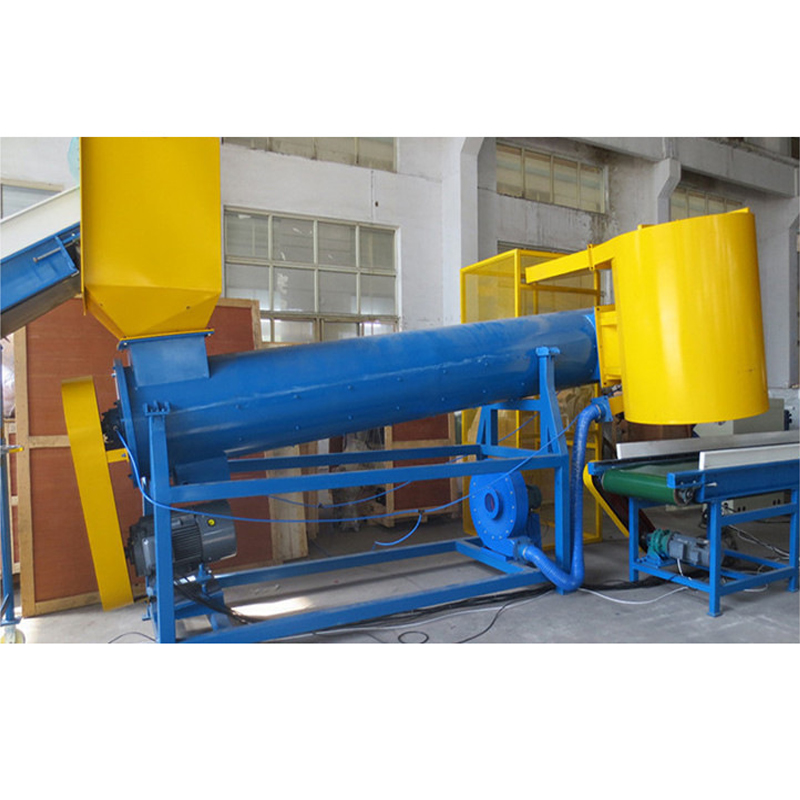
Feedstock-Specific Configurations of the Waste Plastic Recycling Line
PE Film Recycling (LDPE/LLDPE)
Agricultural films, stretch wrap, and post-consumer packaging represent some of the most difficult feedstocks for a Waste Plastic Recycling Line. These materials often contain soil, food residues, printing inks, and moisture levels that can exceed 30%. A robust Waste Plastic Recycling Line for film applications typically incorporates:
1 A heavy-duty double-shaft shredder with specialized film-cutting geometry
2 Multiple washing stages, including hot wash and friction washing
3 Advanced dewatering and drying systems, often featuring both centrifugal and thermal drying
4 High-efficiency melt filtration to remove residual contaminants before pelletization
PP Woven Bag and Raffia Recycling
1 Woven bags, FIBCs, and raffia present unique challenges for the Waste Plastic Recycling Line due to their high tensile strength and the potential for contamination with organic matter. A Waste Plastic Recycling Line configured for these materials must provide effective size reduction to open the woven structure, followed by thorough washing to remove contaminants from the fiber surfaces.
2 PET Bottle and Tray Recycling
PET recycling demands a Waste Plastic Recycling Line capable of producing extremely high-purity flakes suitable for food-contact applications. This requires careful label removal, sorting to remove non-PET contaminants, and hot washing to eliminate adhesives and organic residues. Some Waste Plastic Recycling Line systems incorporate advanced delamination technology specifically designed to handle multi-layer PET trays, a growing segment of the packaging market.
Economic Considerations in Waste Plastic Recycling Line Selection
The capital investment in a Waste Plastic Recycling Line must be justified by the value of the output material and the operational costs of the system. A complete Waste Plastic Recycling Line for film washing typically ranges from $80,000 to $300,000, while a full washing and pelletizing system may cost $200,000 to $500,000 depending on capacity and automation level.
Key factors to consider when evaluating a Waste Plastic Recycling Line:
Throughput Capacity: Systems range from 300 kg/h to over 3,000 kg/h, with larger-capacity Waste Plastic Recycling Line configurations offering a lower cost per kilogram but requiring greater capital investment.
Energy Consumption: Advanced Waste Plastic Recycling Line designs can reduce energy consumption by up to 18% compared to legacy systems.
Output Purity: A well-designed Waste Plastic Recycling Line can achieve residual contaminant levels of 1% or less, maximizing the value of the recovered material.
Technology Trends in Waste Plastic Recycling Line Design:
Recent innovations in Waste Plastic Recycling Line technology focus on improving processing efficiency and expanding the range of recyclable materials. Advanced control systems enable real-time monitoring and adjustment of the Waste Plastic Recycling Line to maintain optimal performance with varying feedstocks. Modular Waste Plastic Recycling Line designs allow operators to reconfigure systems as processing requirements change, extending the useful life of the equipment.
Contact us:
Marketing@huataogroup.com
Tel:+86 13383116640 (Wechat/whatsapp)
http://wa.me/13383116640
Website:www.huataoshredder.com
#PlasticRecycling #RecyclingLine #WastePlasticRecycling #FilmRecycling #PETRecycling #PPRecycling #CircularEconomy #RecyclingTechnology #WasteManagement #Huatao #Sustainability
can not be empty
can not be empty

HUATAO GROUP - Recycling Machine and Spare parts
ADD : No.298 Zhonghua North Street, Shijiazhuang 050000 China.
TEL : +86 13383116640
EMAIL :marketing@huataogroup.com
 WhatsApp & WeChat : +86 13383116640