

The global recycling and waste-to-energy sectors demand Crusher systems engineered for the most challenging feedstocks—heterogeneous, contaminated, and often abrasive materials that test the limits of conventional size reduction equipment. The Crusher has evolved to meet these demands, with designs that prioritize robustness, throughput capacity, and operational reliability over the precision requirements of mineral processing.
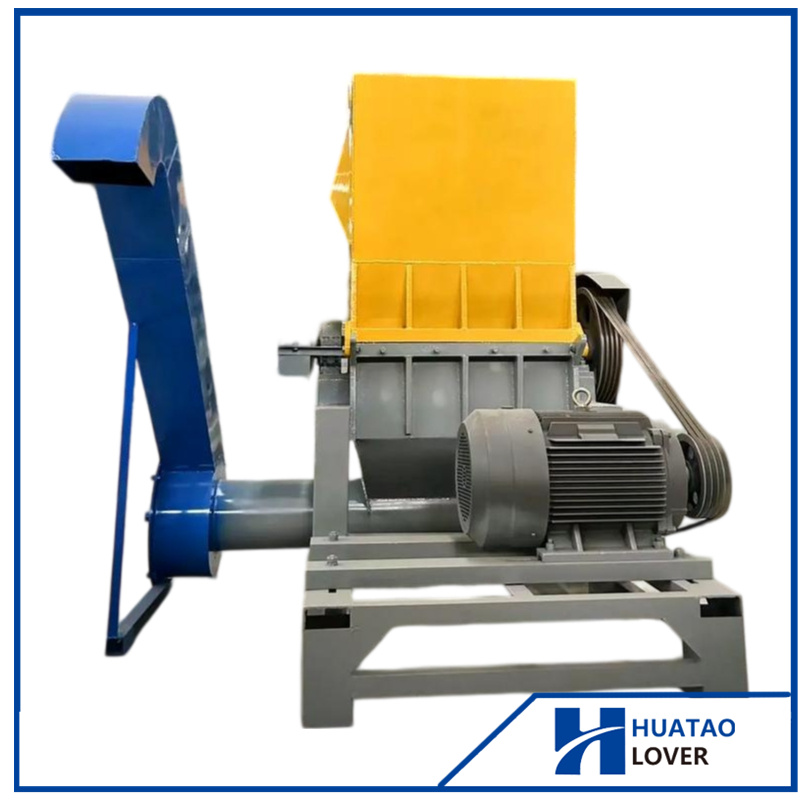
The Role of the Pre-Crusher in Waste Processing
In many waste processing applications, the Crusher serves as a pre-crushing stage, reducing oversize material to a manageable particle size for subsequent separation and processing. A pre- Crusher is typically employed at the front end of a waste refining process to improve overall separation efficiency. For example, in municipal solid waste (MSW) processing, a pre- Crusher operates as a bag opener, breaking waste bags and reducing bulky items to a particle size range of 100–300 mm, enabling downstream screening and sorting equipment to function effectively.
The design of a waste processing Crusher reflects the demands of the application. Heavy-duty construction with robust knife geometry is critical to achieving high throughput. Optimized Crusher designs incorporate features such as paired knives—positioned in a spiral pattern along the rotor—that prevent material from bending and ensure effective cutting action. The knife configuration also prevents particles from sticking to the cutting elements, a common problem when processing waste streams with high moisture or organic content.
Crusher Integration in Refuse-Derived Fuel Production
In refuse-derived fuel (RDF) production, the Crusher plays an essential role in preparing high-calorific fractions for use as alternative fuel in cement kilns and power stations. The typical RDF production flow sheet incorporates a Crusher following initial sorting and separation stages. The high-heating-value components recovered through front-end separation enter the Crusher via conveyor for size reduction. Following crushing, the material is blended with additives such as biomass, industrial scrap, or lime before pelletizing into RDF product. This application demonstrates how the Crusher enables the transformation of a waste liability into a valuable energy resource.
Key Engineering Features of Industrial Crushers
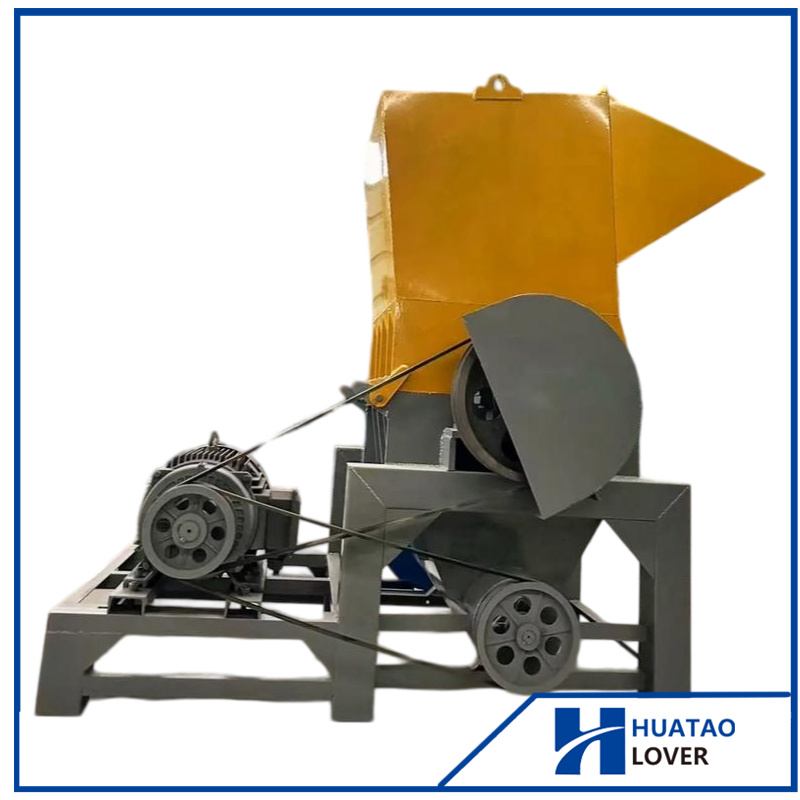
The waste processing Crusher distinguishes itself from mining counterparts through several engineering features:
1 Direct Hydraulic Drive: Many industrial Crusher systems utilize direct hydraulic drives that provide high torque capability, essential for managing heterogeneous feedstock with varying crushability. The hydraulic system also maintains power reserve for occasional peak loads caused by challenging material inclusions.
2 Large Feed Hopper Design: Industrial Crusher units feature generously dimensioned feed hoppers that accommodate bulky items such as furniture, pallets, and large containers, enabling multiple loading options and reducing pre-sorting requirements.
3 Optimized Crushing Geometry: The Crusher chamber geometry is designed for high-capacity, continuous operation rather than precision product control, with knife dimensions optimized for throughput performance.
Versatile Applications for Industrial Crushers
The industrial Crusher finds application across multiple waste streams:
Municipal Solid Waste (MSW): Primary size reduction for separation and recovery
Commercial and Industrial Waste (C&I): Volume reduction for transport and further processing
Bulky Waste: Furniture, pallets, and oversized items
Biomass Preparation: Size reduction for fuel production
Contact us:
Marketing@huataogroup.com
Tel:+86 13383116640 (Wechat/whatsapp)
http://wa.me/13383116640
Website:www.huataoshredder.com
#Crusher #WasteToEnergy #RecyclingTechnology #RDF #MSWProcessing #IndustrialCrusher #ResourceRecovery #CircularEconomy #Huatao #WasteManagement #Sustainability
can not be empty
can not be empty

HUATAO GROUP - Recycling Machine and Spare parts
ADD : No.298 Zhonghua North Street, Shijiazhuang 050000 China.
TEL : +86 13383116640
EMAIL :marketing@huataogroup.com
 WhatsApp & WeChat : +86 13383116640