

The circular economy is founded on the principle of keeping resources in use for as long as possible, extracting the maximum value from them. In the world of industrial recycling, this principle applies not just to the plastic, metal, or paper being processed, but also to the very machinery that makes recycling possible. A Knife Grinder is perhaps the most effective tool for applying circular economy principles to your equipment, transforming a costly consumable—the cutting blade—into a long-lasting, reusable asset.
Industrial blades, whether from a crusher, granulator, or shredder, are often treated as disposable items. Once dull, they are thrown away and replaced, generating significant waste and incurring substantial costs. However, this linear approach is both financially and environmentally unsustainable. By integrating a Knife Grinder into your maintenance workflow, you can shift to a circular model where blades are regularly sharpened and reused, dramatically reducing waste and operational expenses.
HUATAO Knife Grinder: Enabling a Sustainable Workflow
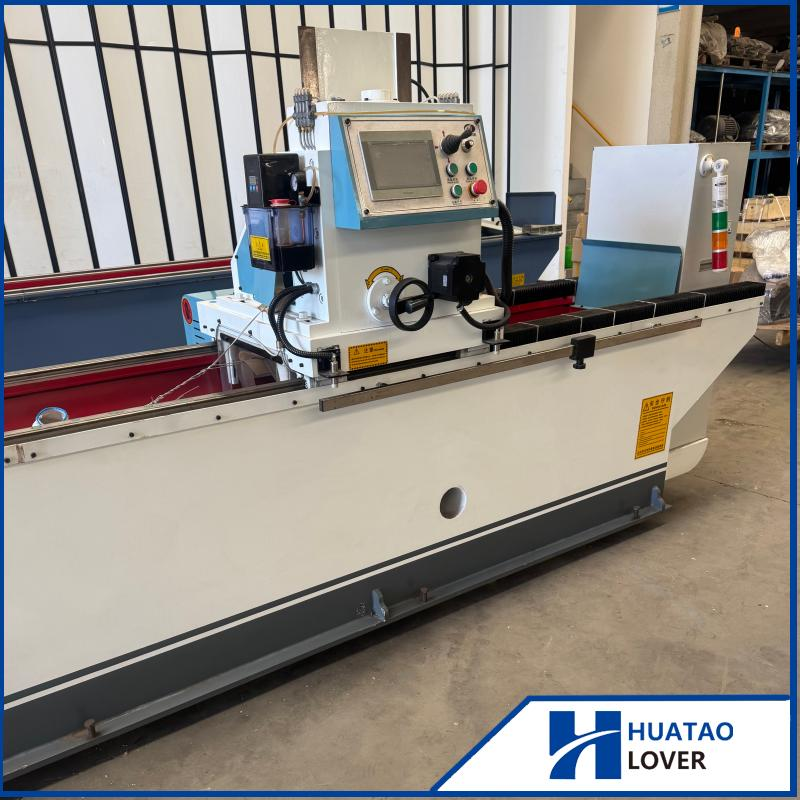
The lifecycle of a typical industrial blade can be dramatically extended with a Knife Grinder. As noted in the industry, an automatic Knife Grinder can remove just 0.05 to 0.1 mm per pass, allowing for 6 to 10 re-sharpenings per blade set. Instead of discarding a blade set multiple times a year, you can sharpen it repeatedly. This simple change has several profound benefits:
1 Waste Reduction: By far, the most significant environmental benefit is reducing the volume of steel waste sent to landfills or scrapyards.
2 Cost Efficiency: Extending blade life by 6 to 10 times delivers exceptional cost savings, dramatically lowering the average cost per ton of material processed.
3 Energy Conservation: A sharp blade consumes less energy. Using a Knife Grinder to maintain a sharp edge reduces the energy footprint of your entire processing line.
HUATAO Knife Grinder in Practice: A Complete Maintenance Solution
Implementing a Knife Grinder is more than just a purchase; it is a strategic decision to optimize your entire recycling operation. This is further reinforced when paired with a comprehensive blade selection strategy. Choosing the right material for your blades—such as D2 for general plastic recycling, DC53 for high-impact materials, or carbide for highly abrasive feedstocks—and regularly sharpening them with a Knife Grinder is a best practice for any serious recycling plant.
The return on investment for a Knife Grinder is often realized within months, not years. By reducing the need for new blade sets, lowering energy bills, and minimizing machine downtime, the equipment pays for itself quickly.
The Economic Case for Blade Regrinding:
For many recycling businesses, the decision to purchase a Knife Grinder is driven by simple economic logic. The cost of a complete set of new blades for a large shredder can be substantial. With a Knife Grinder, this capital outlay is delayed or even eliminated. The machine also reduces the need for outsourcing, as discussed in another article, saving on shipping costs and lead times.
In the context of the circular economy, the Knife Grinder is more than just a maintenance tool; it is a symbol of a smarter, more sustainable way of doing business. It represents a fundamental shift in how we view equipment and resources—from a disposable expense to a valuable asset that can be preserved and optimized for the long term.
Contact us:
Marketing@huataogroup.com
Tel:+86 13383116640 (Wechat/whatsapp)
http://wa.me/13383116640
Website:www.huataoshredder.com
#CircularEconomy #KnifeGrinder #Recycling #Sustainability #BladeSharpening #ResourceRecovery #ShredderMaintenance #Huatao #WasteManagement #GreenManufacturing
can not be empty
can not be empty

HUATAO GROUP - Recycling Machine and Spare parts
ADD : No.298 Zhonghua North Street, Shijiazhuang 050000 China.
TEL : +86 13383116640
EMAIL :marketing@huataogroup.com
 WhatsApp & WeChat : +86 13383116640