

The global plastics industry faces a dual imperative: meeting rising demand for polymeric materials while dramatically reducing the environmental footprint of plastic production and disposal. For manufacturers and recyclers alike, the Waste Plastic Recycling Line has emerged as the definitive solution for closing the material loop. A fully engineered Waste Plastic Recycling Line is not a collection of standalone machines but an integrated system designed to transform contaminated, heterogeneous plastic waste into clean, homogeneous feedstock suitable for high-value manufacturing applications.
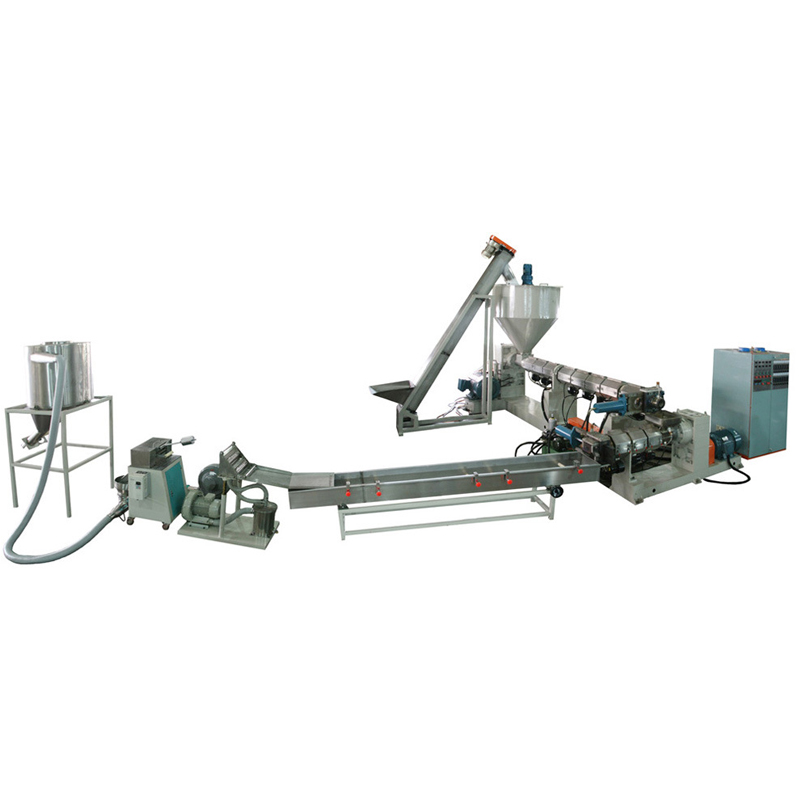
Defining the Modern Waste Plastic Recycling Line:
A complete Waste Plastic Recycling Line typically encompasses a sequence of unit operations that systematically remove contaminants, reduce particle size, separate materials by density, and condition the polymer for re-extrusion. While configurations vary based on feedstock type—ranging from flexible films to rigid containers—the core principles of a Waste Plastic Recycling Line remain consistent: size reduction, contaminant removal, drying, and pelletization.
The engineering of a Waste Plastic Recycling Line begins with a thorough characterization of the input material. Whether processing agricultural films laden with soil, post-consumer packaging with food residues, or post-industrial production scrap, the Waste Plastic Recycling Line must be configured to match the specific challenges of the feedstock-2-6. As one industry expert notes, "Recycling industrial plastics is a multifaceted challenge: every process, polymer, and scrap type requires its own engineered solution".
Unit Operations Within a Waste Plastic Recycling Line:
1. Size Reduction and Feed Preparation
The first stage in any Waste Plastic Recycling Line is the reduction of bulky waste to a manageable particle size. This is typically achieved through a combination of shredding and granulation. For heavy-duty applications involving contaminated films or bulky rigid plastics, a double-shaft shredder provides the high-torque, low-speed cutting action required to tear through tough materials without jamming. The granulator then refines the particle size to a consistent range suitable for washing and extrusion.
2. Washing and Contaminant Removal
Contaminant removal is the most critical step in the Waste Plastic Recycling Line, directly determining the quality of the final product. A comprehensive washing section within the Waste Plastic Recycling Line typically includes:
Pre-washing and Friction Washers: These remove surface contaminants, dirt, and adhesive residues through mechanical agitation.
Hot Wash Systems: For heavily contaminated films or materials containing oils and grease, hot washing with caustic solutions is essential to break down organic residues.
Sink-Float Separation Tanks: This density-based separation technology effectively removes contaminants such as metals, glass, and incompatible plastics (e.g., PVC) from the polymer stream within the Waste Plastic Recycling Line.
3. Dewatering and Drying
Following washing, the material in a Waste Plastic Recycling Line typically contains significant moisture—often 30% or more—which must be reduced to below 5-10% before extrusion. Advanced Waste Plastic Recycling Line designs incorporate centrifugal dewatering systems that spin off excess water, followed by thermal dryers that remove residual moisture. As one manufacturer notes, a well-engineered Waste Plastic Recycling Line can achieve moisture content as low as 2% after squeeze and centrifugal dewatering.
4. Pelletizing and Extrusion
The final stage of the Waste Plastic Recycling Line is melt filtration and pelletization. The clean, dried material is fed into an extruder, where it is melted and forced through a screen pack to remove any remaining contaminants. The purified melt is then pelletized—typically using strand pelletization, water-ring pelletization, or underwater pelletization—to produce uniform pellets suitable for direct reuse in manufacturing. Modern Waste Plastic Recycling Line pelletizers incorporate advanced degassing systems and multi-stage filtration to ensure high pellet quality even when processing challenging feedstocks
Contact us:
Marketing@huataogroup.com
Tel:+86 13383116640 (Wechat/whatsapp)
http://wa.me/13383116640
Website:www.huataoshredder.com
#WastePlasticRecycling #RecyclingLine #PlasticWashing #PEfilmRecycling #PPRecycling #PETRecycling #CircularEconomy #PlasticPelletizing #Huatao #RecyclingTechnology
can not be empty
can not be empty

HUATAO GROUP - Recycling Machine and Spare parts
ADD : No.298 Zhonghua North Street, Shijiazhuang 050000 China.
TEL : +86 13383116640
EMAIL :marketing@huataogroup.com
 WhatsApp & WeChat : +86 13383116640