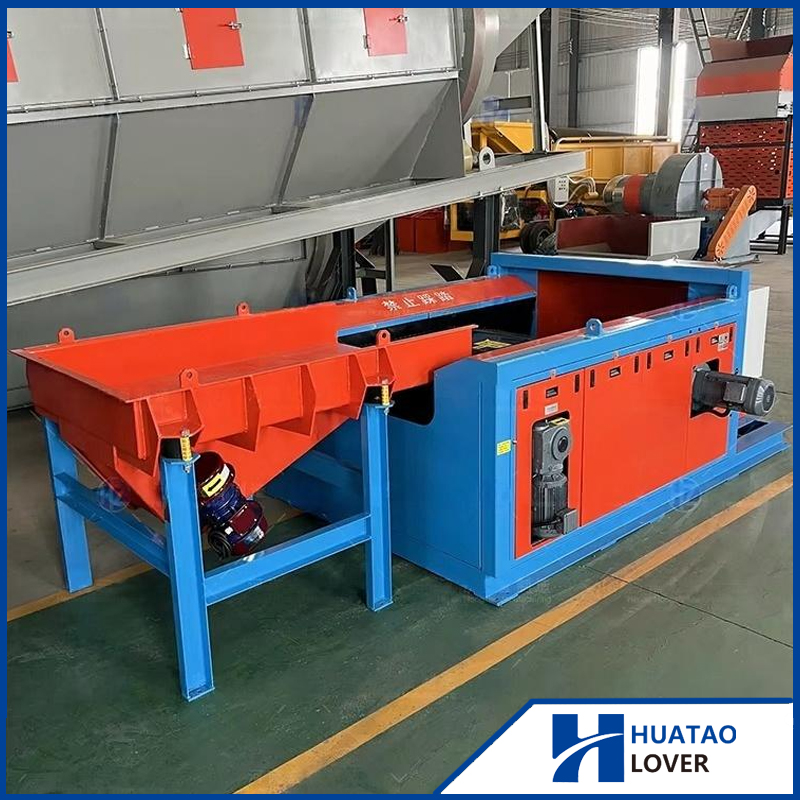
Eddy current separator selection should be based on the feed's particle size distribution, particle shape, conductivity, bulk density, and required mass flow. Engineers should match rotor configuration, magnetic field characteristics, conveyor width, belt speed, and feed-layer depth to the operating conditions. Screening and upstream ferrous removal are important for stable separation. Final equipment sizing should be verified through representative material testing, with recovery rate and concentrate purity measured at the intended throughput.
1. Define the Feed Characteristics
The first engineering task is to establish a reliable feed specification.
Record:
-
Minimum and maximum particle size.
-
Percentage distribution across size fractions.
-
Particle shape and thickness.
-
Bulk density and moisture.
-
Ferrous contamination.
-
Non-ferrous metal content.
The Eddy Current Separator product is the core equipment reference, while high-performance ECS applications provide further process context.
2. Evaluate Rotor and Magnetic Field Configuration
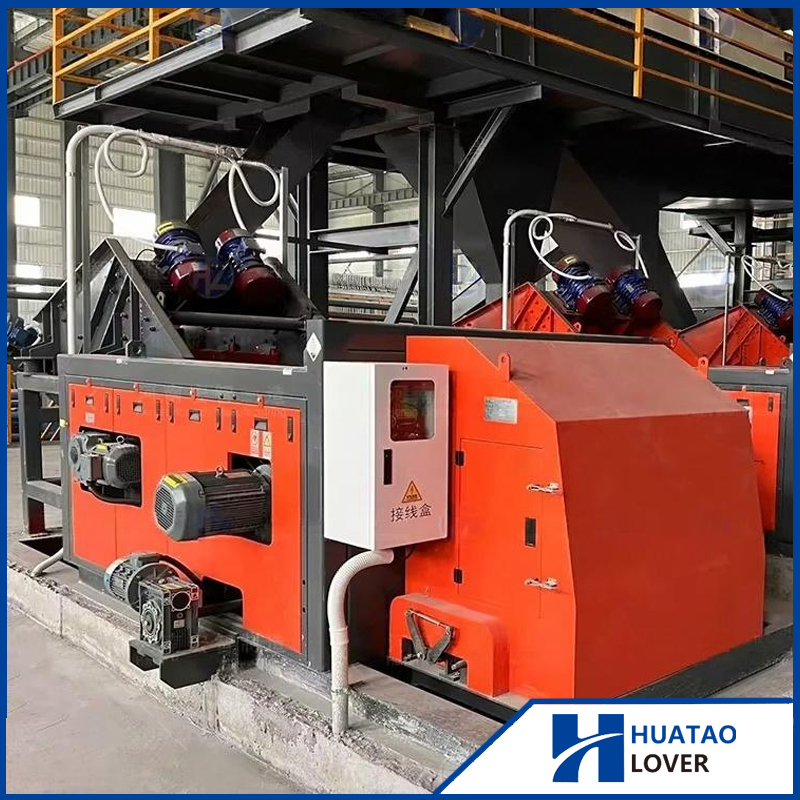
The magnetic rotor produces the changing magnetic field that induces eddy currents in conductive particles.
Rotor pole arrangement, rotational speed, field geometry, and the distance between the rotor and material stream all influence particle response.
A configuration suitable for coarse aluminum fragments should not automatically be specified for fine electronic scrap.
For finer applications, examine high-precision e-waste separator engineering and ECS-based non-ferrous recovery from e-waste.
3. Calculate Mass Flow and Conveyor Loading
Throughput should be evaluated as mass flow, normally in tons per hour.
The design review should include:
-
Required average and peak feed rate.
-
Bulk density.
-
Conveyor usable width.
-
Belt speed.
-
Material-layer depth.
-
Feed distribution across the belt.
-
Metal loading and expected recovery.
The conveyor must carry the required mass flow without creating an excessively deep or uneven burden.
A supplier should explain the relationship between feed rate, belt width, and belt speed rather than quoting a capacity figure without defining the material.
4. Integrate Screening and Separation
Screening can divide mixed feed into more consistent size fractions. This may allow each fraction to be processed using a more appropriate separator configuration.
Review automatic plastic and non-ferrous metal sorting equipment, sorting technology for recycling lines, and automated sorting for recycling factories.
For full plant design, consider complete metal recycling line engineering and configuration for complex metal feedstocks.
A vibrating screen machine may be used for upstream size classification.
5. Establish Acceptance Test Conditions
A meaningful equipment test should define the feed composition, particle-size distribution, moisture, and feed rate.
Measure at least:
-
Non-ferrous recovery rate.
-
Concentrate purity.
-
Processing throughput.
-
Metal losses in the non-metallic fraction.
-
Operating stability.
The test should use representative material and a documented sampling method.
Conclusion
Engineering an ECS system requires more than matching a motor or conveyor to a nominal capacity. Particle distribution, magnetic field characteristics, mass flow, and upstream preparation must be considered together.
HUATAO provides recycling equipment and shredder-related solutions for industrial waste processing. Final equipment configuration should be confirmed against the actual feedstock and project requirements.
Contact HUATAO GROUP
Email: marketing@huataogroup.com
Tel/WeChat/WhatsApp: 008613383116640
Website: www.huataoshredder.com
WhatsApp: http://wa.me/13383116640
#Recycling #EddyCurrentSeparator #AluminumRecovery #MetalRecycling #IndustrialEquipment #shredding #environment #waste #recycling #blade #metalrecycling #woodrecycling #RDF #MSW #recyclingworks #materialrecycling #recyclable #aluminum #aluminiumrecycling #recyclingindustrymatters #recyclingindustry #scraprecycling #alumiumscrap



 WhatsApp