Product Overview
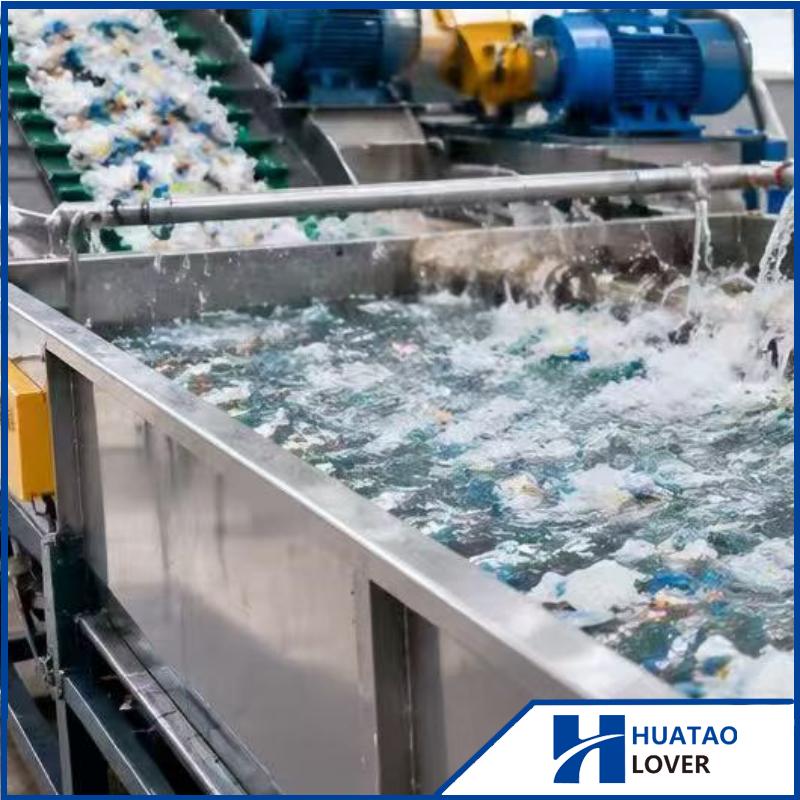
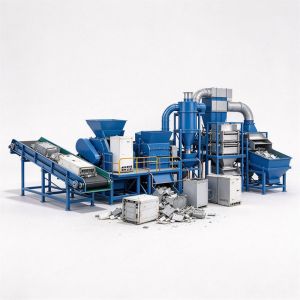
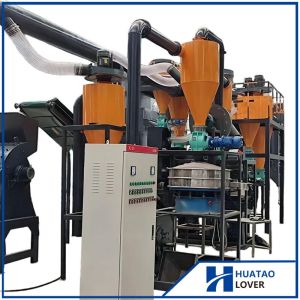
A Plastic Washing Line is a complete processing system that transforms post-consumer and post-industrial plastic waste into clean, contaminant-free flakes suitable for extrusion, pelletizing, or resale. The line integrates size reduction, contaminant removal, density separation, dewatering, and drying into a continuous workflow. Huatao designs and manufactures Plastic Washing Lines for a wide range of plastic streams, including PE film, PP woven bags, HDPE containers, and PET bottles.
What the Plastic Washing Line Processes:
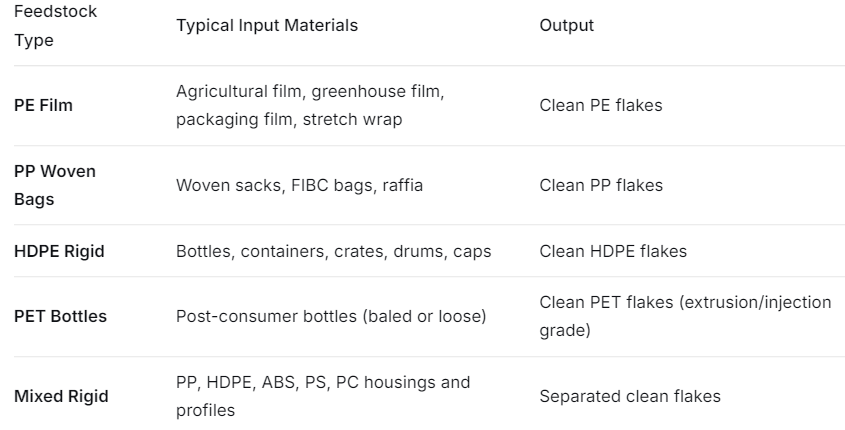
Huatao Plastic Washing Lines are configured for the specific characteristics of each plastic feedstock:
Process Stages:
A complete Plastic Washing Line follows a defined sequence of operations. Each stage is engineered to remove specific contaminants and prepare material for the next step.
Stage 1: Feeding and Pre-Washing
Baled or loose plastic enters the line via a heavy-duty belt conveyor with load-responsive control. An optional metal detector identifies metallic contaminants to protect downstream equipment. The pre-washing stage removes loose dirt, sand, and surface contaminants while beginning the separation of labels and caps.
Stage 2: Size Reduction
A wet granulator or crusher reduces plastic to consistent flake size. Water is introduced during crushing to control heat and assist in initial cleaning. The crusher features adjustable knife configurations and water inlet for simultaneous cutting and rinsing.
Stage 3: Friction Washing
High-speed friction washers remove label glue, oils, and stubborn contaminants through intensive surface scrubbing. Rotor speeds typically range from 500 to 1,200 RPM, creating high shear between flakes. Continuous water flow discharges suspended contaminants.
Stage 4: Hot Washing (Optional)
For heavily contaminated feedstock, hot washing at 60–90°C with caustic soda and detergent dissolves glue, fats, and label residue. This stage is essential for food-grade PET and greasy PE film. Temperature, residence time, and chemical dosing are controlled parameters.
Stage 5: Density Separation
Sink-float tanks separate polymers by density. Lighter materials (PE, PP) float while heavier materials (PET, PVC, PS) sink. This step removes caps, labels, and incompatible plastics from the main stream. Hydrocyclones offer faster separation for near-density materials.
Stage 6: Dewatering
Centrifugal dewatering machines rapidly extract surface water from washed flakes. High-speed rotors with stainless steel screen baskets reduce moisture content to 5–8% for film and 1–3% for rigid flakes.
Stage 7: Thermal Drying
A final hot-air drying stage stabilizes moisture below the level required for extrusion. Multi-pass drying pipes with cyclone discharge and PID temperature control ensure consistent output. Film requires squeezing presses before thermal drying due to its water-retention characteristics.
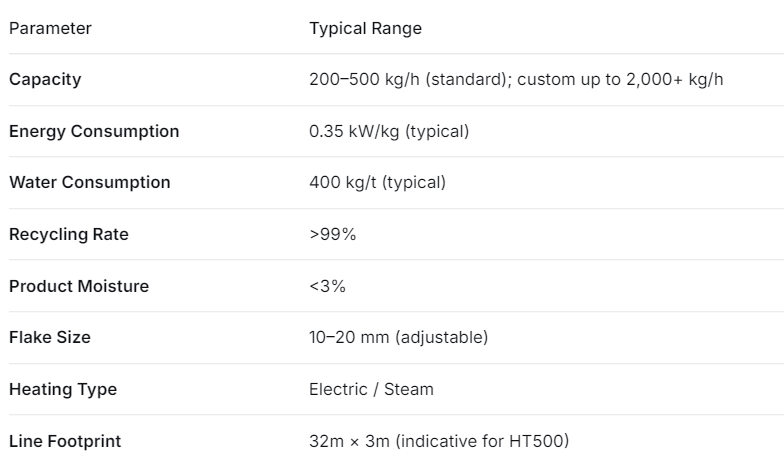
Technical Specifications:
Key Features:
1 Modular Design. Each Plastic Washing Line is assembled from standard modules — pre-washer, crusher, friction washer, sink-float tank, dewatering, and drying — allowing configuration to match specific feedstock requirements.
2 Integrated Water Treatment. Process water is recirculated through filtration and settling systems, reducing fresh water consumption and ensuring consistent flake purity. Water quality directly affects cleaning effectiveness.
3 Hot Wash Capability. For food-grade PET and heavily contaminated film, the line supports hot washing with caustic and detergent, dissolving adhesives and organic residues.
4 Wear-Resistant Components. Crusher blades are manufactured from D2 high-carbon, high-chromium steel. Friction washer screens and sink-float tank components use 304 stainless steel for corrosion resistance.
5 Consistent Output Quality. The line produces flakes with contamination levels below 50–100 ppm for standard grades and below 20 ppm for food-contact PET, depending on configuration and feedstock quality.
Applications:
1 PE Film Recycling. Agricultural film, greenhouse film, and packaging film are processed into clean PE flakes for pelletizing. The line handles heavy soil contamination and high moisture content.
2 PP Woven Bag Recycling. Woven sacks and FIBC bags are reduced to clean PP flakes suitable for re-extrusion into new woven products or injection molding.
3 PET Bottle Recycling. Post-consumer PET bottles are processed through de-baling, label removal, wet granulation, friction washing, density separation, hot washing, and drying to produce extrusion-grade flakes.
4 HDPE Rigid Recycling. Bottles, containers, and crates are reduced and cleaned to produce HDPE flakes for blow molding and injection applications.




 WhatsApp