Scrap shredder residue is the material left behind after ferrous metals have been extracted from shredded end-of-life vehicles and appliances. It is often described as "fluff" — a mixed stream of plastics, textiles, rubber, glass, and dirt. But it also contains something far more valuable: non-ferrous metals including aluminium, copper, brass, and zinc. The Eddy Current Separator is the machine that recovers these metals, turning what would otherwise be landfill or low-grade waste into a saleable product stream.
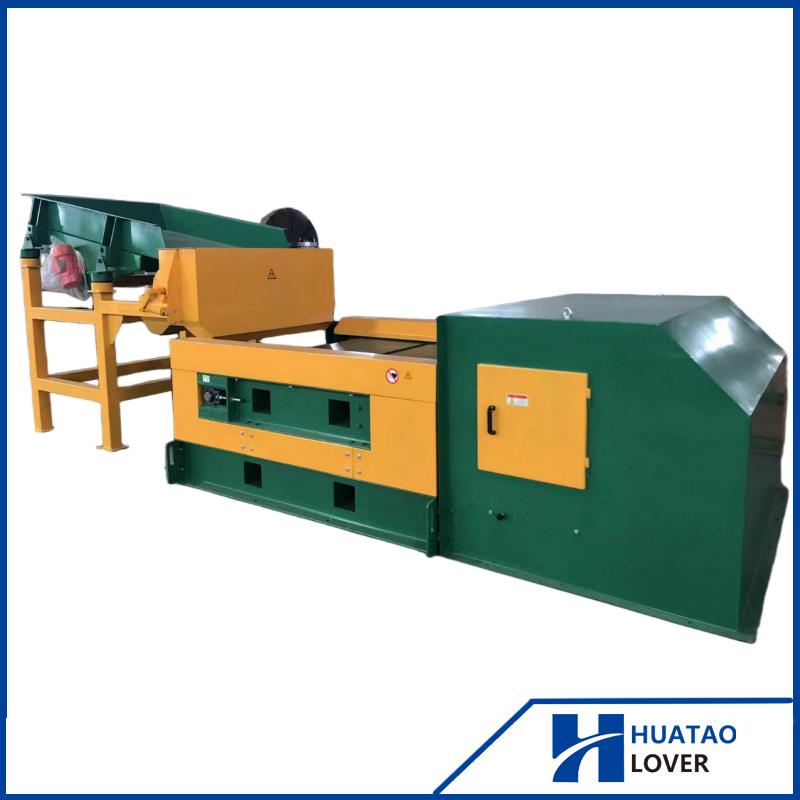
What Shredder Residue Contains?
Shredder residue is not a single material. It is a heterogeneous mixture that varies with the feedstock processed by the shredder. Automotive shredder residue (ASR) typically contains plastics, foam, fabric, rubber, glass, sand, and a non-ferrous metal fraction that includes aluminium (from engine components, wheels, and radiators), copper (from wiring and motors), brass, and zinc .
After ferrous metals are removed by magnetic separation, the remaining material still contains recoverable non-ferrous metals. The percentage is not trivial. Industry sources describe the non-magnetic fraction of shredded automobile scrap as containing approximately one-third metals by composition, with the remainder being glass, plastic, rubber, and dirt . Recovering that metal fraction is where the Eddy Current Separator becomes essential.
How Eddy Current Separation Works
The Eddy Current Separator operates on the principle of electromagnetic induction. A high-speed rotor fitted with alternating-pole permanent magnets generates a time-varying magnetic field at the discharge end of a conveyor belt .
When a conductive non-ferrous particle passes through this field, eddy currents are induced within the metal. These currents create a secondary magnetic field that opposes the original field, producing a repulsive force — the Lorentz force — that ejects the metal particle from the material stream . Non-conductive materials such as plastic, rubber, and glass are unaffected and follow the natural trajectory of the conveyor belt.
The result is a clean separation: metals are thrown forward into a concentrate stream, while non-metals fall away. Aluminium, copper, brass, and zinc are all effectively recovered by this method, with throughput capacities measured in tonnes per hour .
Why Ferrous Removal Must Come First?
The Eddy Current Separator cannot separate ferrous metals. In fact, the attractive forces on ferrous materials are stronger than the repulsive Lorentz forces used in eddy current separation, which is why magnetic separation is always performed before ECS in a processing line .
This sequencing is not optional. If ferrous metals remain in the feed to the Eddy Current Separator, they will be attracted to the rotor and disrupt the separation process. In shredder residue processing, magnetic drums or overband magnets are positioned upstream of the ECS to ensure that iron and steel have been removed before non-ferrous recovery begins.
Rotor Design and Particle Size Considerations
The performance of the Eddy Current Separator depends heavily on rotor configuration. The magnetic rotor's pole count and rotational speed determine the frequency of the alternating field and, consequently, the size of particles that can be effectively separated.
Conventional belt-driven rotary drum separators work well for particles in the range of approximately 5 mm and above. For finer particles, separation becomes more difficult because the repulsive force produces acceleration that is less than gravity, allowing friction and other forces to dominate . This limitation is relevant to shredder residue processing, where the non-ferrous fraction often includes fine particles that are difficult to recover with standard ECS designs.
Recent developments in multi-pole rotor designs and optimised magnetic field configurations have improved the recovery of smaller particles. For complex mixed e-waste and residue streams, adjustable rotor clearance, variable-frequency belt speed, and multi-angle splitter plates allow operators to optimise recovery across a wider particle size range .
Integration into Shredder Residue Processing Lines
The Eddy Current Separator does not operate in isolation. In a complete shredder residue processing line, it is one stage in a sequence that typically includes:
1 Shredding — reducing material to a manageable size
2 Magnetic separation — removing ferrous metals
3 Screening — classifying by particle size
4 Eddy current separation — recovering non-ferrous metals
5 Further refining — density separation or sensor-based sorting for higher purity
Historical installations demonstrate this integration. A Japanese shredder plant processing automobile scrap used an Eriez Eddy Current Separator as part of a non-ferrous recovery system for the -50+10 mm size fraction, following magnetic separation, air classification, and screening. Modern lines apply the same principle with improved rotor technology and automated controls.
Economic and Environmental Value
The economic case for Eddy Current Separation in shredder residue processing is straightforward. Non-ferrous metals — particularly copper and aluminium — command significant prices in commodity markets. Recovering them from a waste stream that would otherwise be landfilled converts a disposal cost into a revenue stream.
The environmental case is equally clear. Every tonne of aluminium recovered by the Eddy Current Separator avoids the energy consumption and emissions associated with primary production. Copper recovery similarly reduces the need for mining and smelting. For recycling operations seeking to improve their circular economy performance, ECS recovery from shredder residue is a measurable contribution.
The technology is also remarkably efficient and environmentally friendly, making it essential to the growth and sustainability of the metal recycling industry.
Selecting the Right Eddy Current Separator
For shredder residue applications, several specification factors matter:
1 Rotor pole configuration — higher pole counts suit finer particle recovery
2 Belt speed and feed rate — affect recovery rate and concentrate purity
3. Splitter positioning — balances metal recovery against product grade
4. Eccentric vs concentric rotor — eccentric designs concentrate the field for small particle ejection
5. Throughput capacity — matched to the residue volume generated by the upstream shredder
The Eddy Current Separator is not a commodity item. Match the configuration to the specific residue stream and recovery target.
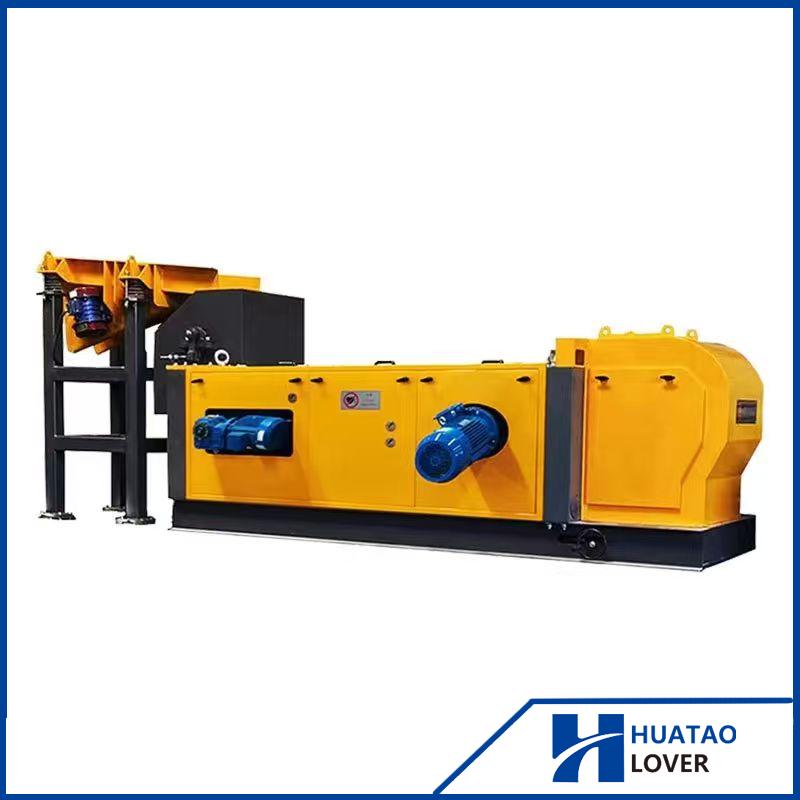
Conclusion:
Shredder residue is not waste. It is a metal-bearing stream that contains recoverable value in the form of aluminium, copper, brass, and zinc. The Eddy Current Separator is the technology that unlocks this value, separating non-ferrous metals from non-conductive fluff with high efficiency and at industrial scale.
For recyclers processing end-of-life vehicles, appliances, or mixed metal scrap, investing in Eddy Current Separation for residue recovery is a direct route to higher material recovery, reduced landfill volumes, and improved operational economics.
Contact us:
Marketing@huataogroup.com
Tel:+86 13383116640 (Wechat/whatsapp)
http://wa.me/13383116640
Website:www.huataoshredder.com
#EddyCurrentSeparator #ShredderResidue #NonFerrousMetal #ASRProcessing #MetalRecovery #RecyclingEquipment #Huatao #CircularEconomy #WasteManagement #RecyclingTechnology



 WhatsApp