Improving Size Reduction, Material Recovery, and Operational Efficiency with the Right Tire Shredding Solution
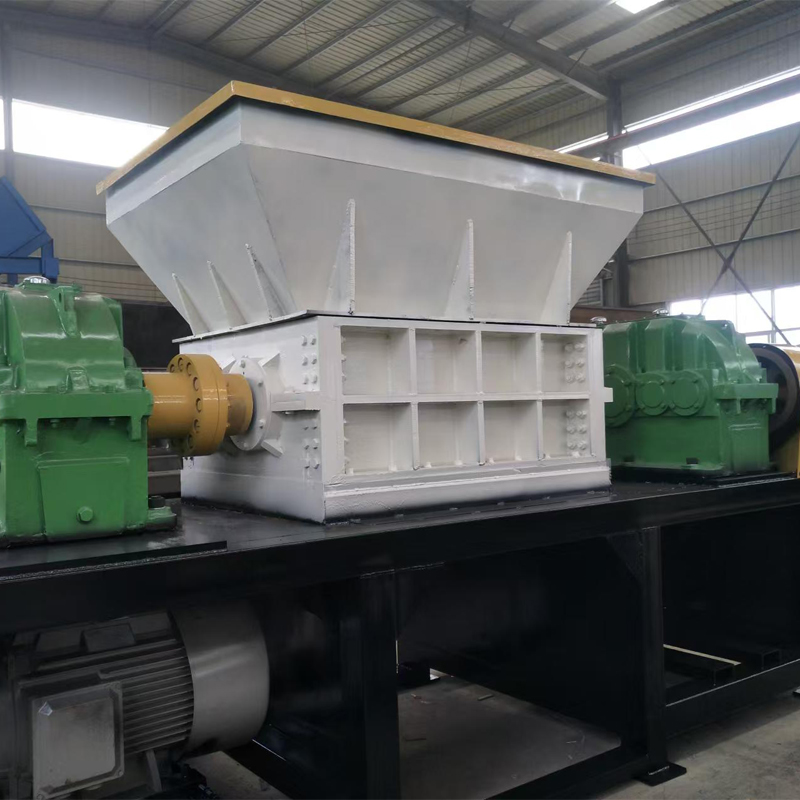
Waste tires are one of the most challenging materials in the recycling industry. Their durable rubber structure, embedded steel wires, and bulky shape make them difficult to handle, transport, and process efficiently.
However, end-of-life tires are not simply waste. With suitable recycling technology, they can become valuable secondary resources, including recycled rubber, steel, and textile fibers.
The first major step toward this transformation is industrial tire shredding.
For recycling companies planning to build a new tire recycling plant or upgrade an existing facility, choosing the right tire shredder can influence the entire downstream process—from material handling and separation to final product quality.
1. Why Is Tire Shredding So Important?
Whole tires occupy considerable storage and transportation space. Their strong rubber structure and reinforced steel belts also make them difficult to process using conventional size-reduction equipment.
An industrial tire shredder reduces whole tires into smaller pieces, making the material easier to convey, store, and process in subsequent stages.
A suitable shredding system can help recycling operators:
1 Reduce material size: Prepare bulky whole tires for downstream processing.
2 Improve processing efficiency: Establish a more consistent feed for subsequent crushing, grinding, and separation.
3 Support material liberation: Help expose or release steel reinforcement from the surrounding rubber during processing.
4 Optimize logistics: Reduce the bulk of the incoming material and make handling more manageable.
5 Create opportunities for resource recovery: Prepare tire-derived materials for the production of rubber chips, granules, or other recovered products.
The key is to view shredding as part of an integrated recycling process rather than an isolated operation.
2 The Shredding Stage: Liberation Through Shear
Industrial tire shredding is performed by machines designed specifically for the physical characteristics of rubber and steel reinforcement. The dominant technology is the Double Shaft Shredder, which uses two counter-rotating shafts fitted with hardened steel blades to grip and tear material apart.
The operating principle is low speed, high torque. Shaft speeds typically range from 10 to 40 RPM, but torque is multiplied through planetary or gear reducers to deliver the force required to shear through rubber and steel. This is fundamentally different from high-speed granulation, which relies on impact. Rubber deforms under impact rather than fracturing, which is why high-speed machines struggle with whole tires. The slow, high-torque shear of a tire shredder grips the material and applies sustained tearing force until it yields.
The counter-rotating geometry also creates a self-feeding effect. Material is pulled down between the shafts rather than bouncing on top of them. This is why the Double Shaft Shredder can process whole tires, tangled steel wire, and irregular assemblies that would stall a single-rotor machine.
The output of this stage is tire chips, typically in the range of 50 to 150 mm. These chips are the feedstock for every downstream process in a tire recycling line. The uniformity of the chip size directly affects the efficiency of steel separation, granulation, and any subsequent thermal or chemical processing.
From Chips to Valuable Resources
Once the shredder has liberated the materials, the tire chips proceed through a sequence of separation and refining stages that produce several distinct resource streams.
Steel Recovery. Magnetic separators extract the steel wire from the shredded material. This steel is a valuable commodity in its own right, suitable for resale to steel mills and foundries. The effectiveness of steel recovery depends on the degree of liberation achieved by the shredder — poorly shredded material leaves steel embedded in rubber, reducing both the purity of the steel fraction and the quality of the rubber fraction.
Crumb Rubber. The rubber fraction is further processed through granulators and grinding mills to produce crumb rubber. Ambient grinding produces irregular, rough-surfaced particles that bond well in applications like rubberized asphalt. Cryogenic grinding, which uses liquid nitrogen to freeze the rubber before pulverizing it, produces finer, smoother particles with reduced contamination. Crumb rubber is used in rubber-modified asphalt, playground surfaces, sports tracks, molded rubber products, and as a filler in new rubber compounds.
Tire-Derived Fuel (TDF). For applications where material recycling is not feasible, shredded tires serve as tire-derived fuel. TDF has a calorific value of approximately 8,000 kcal/kg, comparable to heavy fuel oil and higher than coal. It is used in cement kilns and industrial boilers as a partial substitute for fossil fuels. The greenhouse gas emissions rate associated with TDF combustion is approximately 0.09 metric tons of CO2 equivalent per million Btu, slightly lower than coal.
Pyrolysis Feedstock. Shredded tire chips are also the feedstock for pyrolysis, a thermal process that breaks down rubber into oil, gas, and recovered carbon black. The uniformity of the shredder output affects the consistency of heat transfer and reaction conditions within the pyrolysis reactor, making the shredding stage an important variable in pyrolysis yield and product quality.
The Equipment Behind the Process
The industrial tire shredding stage is typically built around a heavy-duty Double Shaft Shredder configured for the specific demands of tire processing. Huatao manufactures this equipment in several capacity tiers, including the 800 Type Double Shaft Shredder, 1000 Type Double Shaft Shredder, and 1200 Type Double Shaft Shredder, with a 600 Type Double Shaft Shredder available for compact installations. Full specifications are on the Double Shaft Shredder Machine page.
The shredder is not a standalone solution. It is the first stage in a complete tire recycling line that includes steel separation, granulation, and classification. For complete line configurations, see The Complete Tire Recycling Line Engineering A Sustainable Future For End Of Life Tyres and Waste Tire Crushing And Grinding Production Line.
Blade condition is the variable that determines shredder performance. Dull blades increase energy consumption, reduce throughput, and produce inconsistent chip size. An Industrial Knife Grinding Machine restores blades to specification, and replacement blades are available as Huatao Wear Resistant Customization Shredder Blades. For maintenance guidance, see Twin Shaft Shredder Maintenance Guide Extend Service Life Cut Operational Cost and Do You Know How To Process With Waste Tires.
The Economics of Shredding
The economic case for industrial tire shredding rests on the value of the resources it liberates. A whole tire has little market value. Shredded tire chips have more. Separated steel and crumb rubber have significantly more. The shredder is the machine that initiates this value chain.
The global tire recycling market is also shaped by regulatory frameworks. Extended Producer Responsibility (EPR) schemes in regions including Canada, Germany, and Japan hold manufacturers responsible for the lifecycle of their products, creating steady supply chains for recycling infrastructure. The EU's Ecodesign for Sustainable Products Regulation, with subordinate legislation for tires expected in the coming years, is driving demand for higher-quality recycled materials. These regulatory developments increase the importance of efficient shredding and separation technology.
There is also an operational dimension to the economics. Tire shredding reduces volume by a substantial factor, which lowers storage and transport costs. For recyclers collecting tires from dispersed sources, the ability to shred at a transfer station before shipping to a processing facility can materially improve the logistics economics of the entire operation.
Conclusion
Waste tires are not simply a disposal burden. They are a resource stream containing rubber, steel, and textile that can be recovered and returned to productive use. The first step in that recovery is industrial tire shredding — the mechanical liberation of materials from the engineered assembly of a whole tire.
The Double Shaft Shredder performs this step. Its low-speed, high-torque shearing action breaks the bonds between rubber and steel, producing chips that downstream separation equipment can process. Without it, the resource remains locked. With it, the tire begins its journey from waste to valuable resource.
Contact us:
Marketing@huataogroup.com
Tel:+86 13383116640 (Wechat/whatsapp)
http://wa.me/13383116640
Website:www.huataoshredder.com
#IndustrialTireShredding #TireShredder #WasteTireRecycling #DoubleShaftShredder #TireDerivedFuel #CrumbRubber #Huatao #CircularEconomy #WasteManagement #RecyclingEquipment



 WhatsApp