Automotive shredder residue (ASR) is the material that remains after end-of-life vehicles have been shredded and ferrous metals have been removed by magnetic separation. It represents approximately 20–25% of the shredded output, and it is often described as “auto fluff” — a heterogeneous mixture of plastics, rubber, textiles, glass, and dirt . But ASR also contains a non-ferrous metal fraction that includes aluminium, copper, zinc, and smaller amounts of magnesium and brass . The Eddy Current Separator is the technology that recovers this value, turning a residue stream that is frequently landfilled into a source of saleable metals.
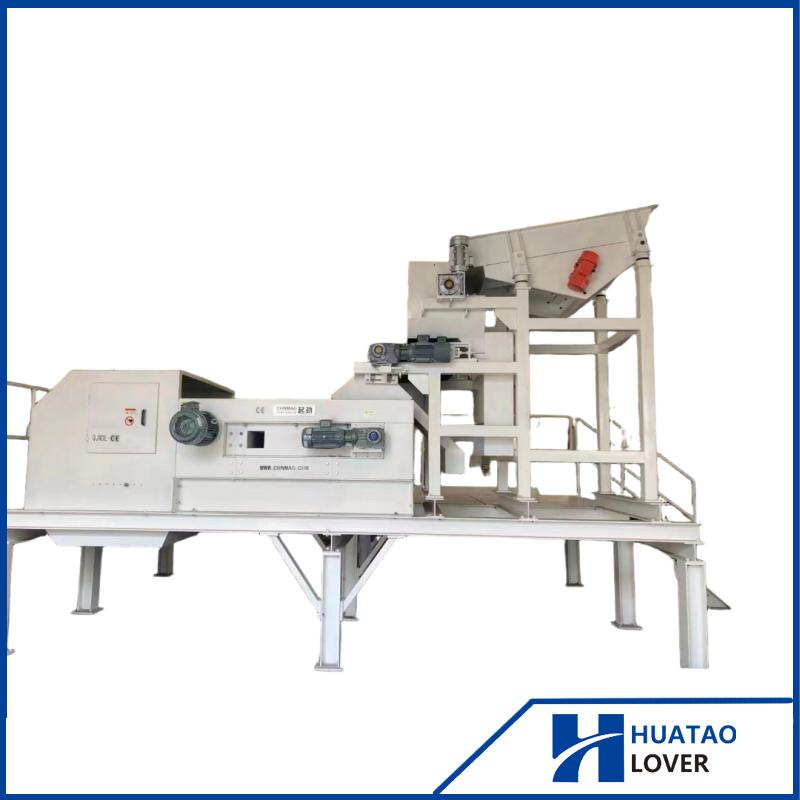
What ASR Contains?
The composition of ASR varies significantly depending on the shredder input and the degree of de-pollution performed before shredding. Reported figures indicate that ASR contains approximately 8–12.5% metals by weight, alongside plastics (19–35%), rubber (20%), textiles (10–40%), and other materials . The non-magnetic fraction of shredded automobile scrap has been described as containing approximately one-third metals, with the remainder being glass, plastic, rubber, rocks, and dirt .
The metals present in this fraction are primarily zinc and aluminium alloys, with smaller amounts of magnesium, copper, stainless steel, and lead, plus some ferrous material that escaped magnetic separation . Recovering these metals is the function of the Eddy Current Separator in an ASR processing line.
How Eddy Current Separation Works in ASR Processing?
The Eddy Current Separator operates on the principle of electromagnetic induction. A high-speed rotor fitted with alternating-pole permanent magnets generates a rapidly changing magnetic field at the discharge end of a conveyor belt. When a conductive non-ferrous particle passes through this field, eddy currents are induced within the metal. These currents create a secondary magnetic field that opposes the original field, producing a repulsive force that ejects the metal particle from the material stream. Non-conductive materials — plastic, rubber, glass, and dirt — are unaffected and follow the natural trajectory of the belt .
The result is a separation between a metal-rich concentrate and a non-metallic residue. The Eddy Current Separator has been applied for non-ferrous metal recovery from auto-shredder residue since the 1980s, and it remains the standard technology for this application .
The Critical Role of Ferrous Removal
The Eddy Current Separator cannot separate ferrous metals. In fact, the attractive forces on iron and steel are stronger than the repulsive Lorentz forces used in eddy current separation. If ferrous material enters the ECS, it will be attracted to the rotor and disrupt the process .
This is why magnetic separation must always precede eddy current separation in an ASR line. After the shredder, magnetic separators extract the ferrous fraction — which represents approximately 70–75% of the shredded output — leaving the non-ferrous and non-metallic materials for downstream processing . The Eddy Current Separator then operates on a feed stream that is free of iron and steel.
Particle Size and Feed Preparation
The performance of the Eddy Current Separator in ASR processing depends on particle size. Historical installations have demonstrated that the -50+10 mm size fraction is suitable for eddy current separation, with the -10 mm fraction requiring alternative concentration methods . For particles in the effective range, properly configured Eddy Current Separators achieve high recovery rates.
Feed preparation is therefore essential. Screening before the ECS ensures a controlled particle size distribution and maximises the recovery of the target non-ferrous fraction. The Eddy Current Separator is not a standalone solution — it is one stage in a sequence that includes shredding, magnetic separation, screening, and often additional refining steps.
Integration into Shredder Plant Operations
In a complete automobile shredder plant, the Eddy Current Separator is integrated into the non-ferrous recovery system. A documented Japanese installation used an Eriez Eddy Current Separator as part of a system that included air classification, heavy medium separation, and screening to recover aluminium and copper from automobile scrap . Modern lines apply the same principle with improved rotor technology and automated controls.-11
The Eddy Current Separator receives feedstock that has already been liberated and freed of ferrous contamination, and it produces a non-ferrous concentrate that can be sold to smelters or refined further. For shredder operators seeking to improve recovery rates and reduce the volume of residue sent to landfill, the ECS is a direct route to better operational economics.
Economic and Environmental Value
The economic case for Eddy Current Separation in ASR processing is straightforward. Aluminium and copper command significant prices in commodity markets. Recovering them from a residue stream that would otherwise be landfilled converts a disposal cost into a revenue stream.
The environmental case is equally clear. Every tonne of aluminium recovered by the Eddy Current Separator avoids the energy consumption and emissions associated with primary production. Copper recovery similarly reduces the need for mining and smelting. As regulatory pressure increases to improve end-of-life vehicle recycling rates, the Eddy Current Separator becomes an increasingly important component of compliant, profitable shredder operations.
Conclusion:
ASR is not waste. It is a metal-bearing stream that contains recoverable aluminium, copper, zinc, and other non-ferrous metals. The Eddy Current Separator is the technology that unlocks this value, separating conductive metals from the complex mixture of plastics, rubber, glass, and dirt that surrounds them.
For automobile shredder operators seeking to improve recovery rates and reduce landfill volumes, investing in a properly specified Eddy Current Separator — with attention to feed preparation and upstream ferrous removal — is a direct route to better operational economics and improved circular economy performance.
Contact us:
Marketing@huataogroup.com
Tel:+86 13383116640 (Wechat/whatsapp)
http://wa.me/13383116640
Website:www.huataoshredder.com
#EddyCurrentSeparator #ASRProcessing #AutomotiveShredderResidue #NonFerrousRecovery #AutoShredderResidue #MetalRecovery #Huatao #CircularEconomy #WasteManagement #RecyclingEquipment



 WhatsApp