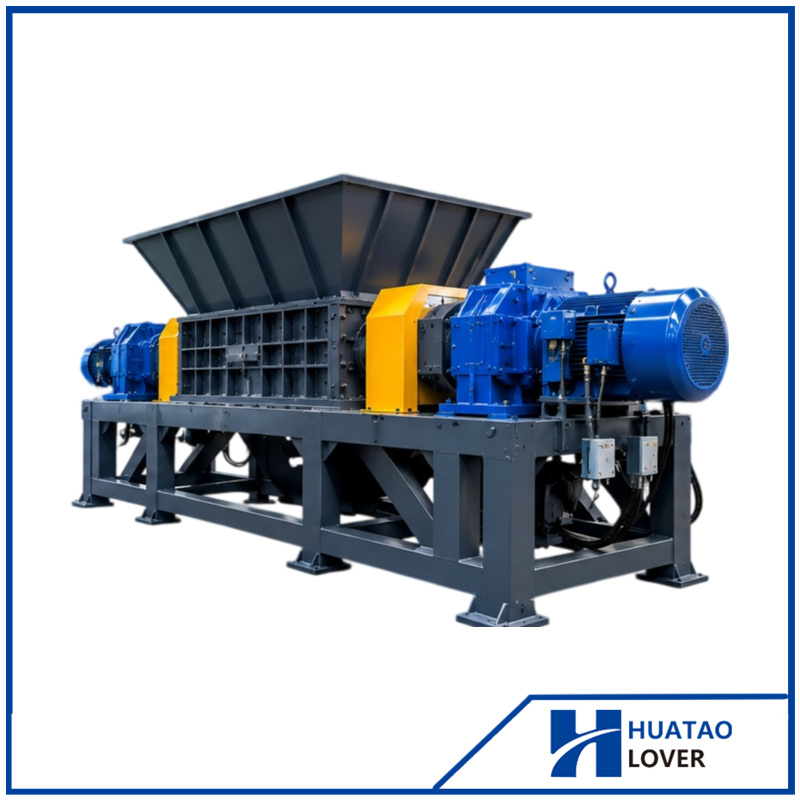
E-waste recycling is a young industry by the standards of heavy industrial processing. The first dedicated e-waste processing facilities appeared in the 1990s, and the technology has evolved rapidly since. Today, the Double Shaft Shredder sits at the center of a processing architecture that is becoming increasingly automated, increasingly instrumented, and increasingly data-driven. Understanding where this technology is heading is essential for operators planning investments that will remain competitive over the coming decade.
From Manual to Automated Operation
The earliest e-waste shredding operations relied on manual feeding and manual control. Operators loaded material into the Double Shaft Shredder by hand or by forklift, monitored the process visually, and intervened when problems occurred. This approach was labour-intensive and inconsistent.
Modern Double Shaft Shredder installations increasingly incorporate automated feeding systems including conveyors, vibratory feeders, and hopper systems that deliver material to the shredder at a controlled rate. Automated feeding improves consistency, reduces labour requirements, and allows the Double Shaft Shredder to operate at its design throughput.
The next stage of automation is closed-loop control. Sensors monitor the load on the Double Shaft Shredder drive system, the temperature of the hydraulic fluid, and the throughput of material. Control systems adjust feed rate in response to load, preventing overload conditions and maximizing throughput. The Double Shaft Shredder becomes self-regulating rather than operator-dependent.
This shift has practical consequences. A self-regulating Double Shaft Shredder maintains consistent output regardless of who is operating it or what shift is running. The variability that plagued early e-waste processing, where throughput and liberation quality depended on operator attention, is eliminated.
Sensor Integration and Material Characterization
The most significant development in e-waste processing technology is the integration of sensors that characterize material before and after shredding.
Pre-Shredding Characterization. X-ray fluorescence, X-ray transmission, and optical sensors can identify material composition before it reaches the Double Shaft Shredder. This information allows automatic routing of material to appropriate processing streams. A batch containing high-value circuit boards can be directed to a dedicated recovery line. A batch containing hazardous components can be diverted for manual inspection.
Post-Shredding Analysis. Sensors positioned after the Double Shaft Shredder can assess liberation quality and particle size distribution in real time. This data allows adjustment of shredder parameters including blade speed, feed rate, and screen configuration to optimize downstream recovery. The Double Shaft Shredder becomes part of a feedback control system rather than a fixed processing stage.
The implications for recovery economics are substantial. In a conventional line, the Double Shaft Shredder operates at fixed parameters and downstream equipment compensates for whatever it produces. In a sensor-integrated line, the Double Shaft Shredder adapts to the material, producing a feed that downstream separation equipment can process at maximum efficiency.
Huatao manufactures the Double Shaft Shredder in configurations that support integration with modern control systems. Models include the 600 Type Double Shaft Shredder, 800 Type Double Shaft Shredder, 1000 Type Double Shaft Shredder, and 1200 Type Double Shaft Shredder. Specifications are on the Double Shaft Shredder Machine page.
Predictive Maintenance and Condition Monitoring
The Double Shaft Shredder is a high-wear machine. Blades dull, bearings wear, and hydraulic components degrade. Traditionally, these issues have been managed through scheduled maintenance, replacing components at fixed intervals regardless of their actual condition.
Predictive maintenance changes this approach. Vibration sensors on the Double Shaft Shredder rotor bearings can detect the early stages of bearing wear. Temperature sensors on hydraulic components can identify developing faults. Power monitoring on the drive system can detect changes in cutting efficiency that indicate blade wear.
The data from these sensors allows maintenance to be scheduled when it is actually needed rather than at arbitrary intervals. Blades are sharpened before they cause a decline in liberation quality. Bearings are replaced before they fail. The Double Shaft Shredder operates more reliably and with lower total maintenance cost.
Guidance on maintenance planning is available in Twin Shaft Shredder Maintenance Guide Extend Service Life Cut Operational Cost. Blade care is covered in Optimizing Shredder Blade Usage A Comprehensive Guide To Efficiency And Longevity and The Most Important Part Of Shredder Shredder Blades.
The Integration of Shredding and Separation
Historically, shredding and separation have been treated as sequential but separate operations. The Double Shaft Shredder reduces material and the separation equipment then recovers value. Recent developments are blurring this boundary.
Flexible processing lines now allow the output of the Double Shaft Shredder to be routed to different separation configurations depending on the characteristics of the feed. A batch of material with high non-ferrous content may be routed to an Eddy Current Separator configured for maximum recovery. A batch with high ferrous content may be routed to magnetic separation first.
The Double Shaft Shredder is no longer a standalone stage but a node in a flexible processing network. Technical background on eddy current separation is available in Why Every Modern Recycling Plant Needs A High Performance Eddy Current Separator and Engineering Excellence High Precision E Waste Eddy Current Separators For Demanding Electronic Scrap Processing.
For complete e-waste line configurations, see E Waste Recycling Line High Purity Zero Discharge Systematic Solution and Circuit Board Crushing And Sorting Production Line.
What This Means for Operators
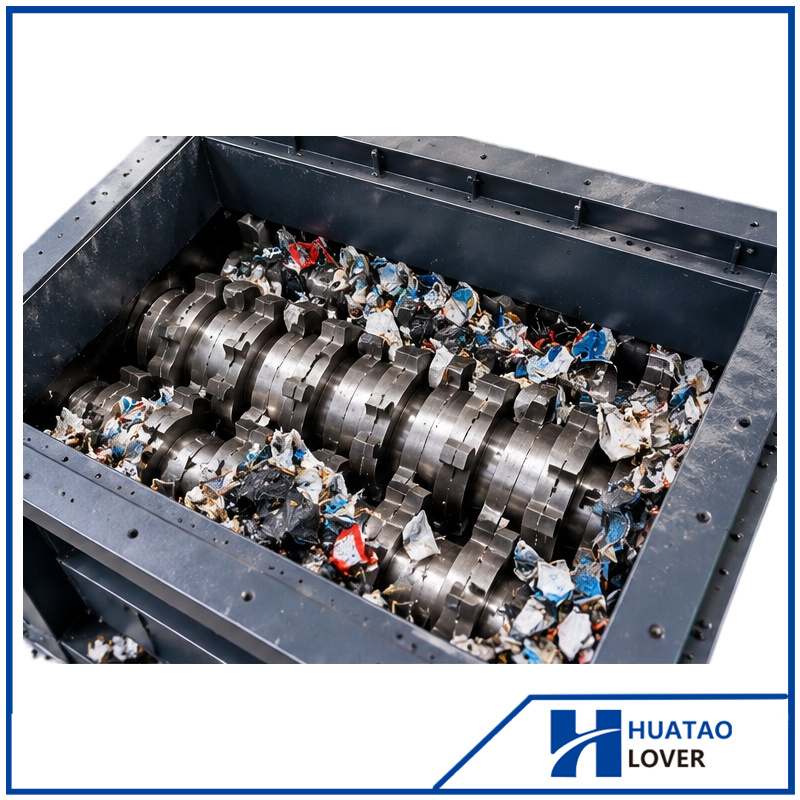
The direction of travel is clear. The Double Shaft Shredder is evolving from a standalone reduction machine into an instrumented, connected component of an intelligent processing system.
For operators, this has three implications.
First, investment decisions should account for connectivity. A Double Shaft Shredder that cannot integrate with modern control systems will become a bottleneck in an otherwise automated line.
Second, maintenance strategy should shift from reactive to predictive. The sensors required for condition monitoring are increasingly standard, and the data they generate has measurable value.
Third, line design should prioritize flexibility. The ability to route material to different separation configurations, rather than processing everything through a fixed sequence, is becoming a competitive advantage.
The Double Shaft Shredder remains the first stage in the e-waste line. But it is no longer an isolated first stage. It is the entry point to a processing architecture that is becoming smarter, more connected, and more capable with each generation.
Contact Us
Ready to discuss how an instrumented Double Shaft Shredder could fit your e-waste operation. Let us talk.
Marketing@huataogroup.com
Tel: +86 13383116640 (Wechat/whatsapp)
http://wa.me/13383116640
Website: www.huataoshredder.com
#DoubleShaftShredder #EWasteRecycling #SmartRecycling #Automation #PredictiveMaintenance #SensorIntegration #IndustrialShredder #Huatao #CircularEconomy #WasteManagement



 WhatsApp