Output consistency is the defining requirement of secondary shredding in plastic recycling. Washing lines perform best with uniform flake. Granulators operate most efficiently with predictable feed. Pelletizing lines produce better pellets with controlled input. Every downstream stage depends on the particle size distribution produced by the Single Shaft Shredder. Two variables determine that distribution: screen selection and blade geometry.
Screen Selection: The Primary Control Variable
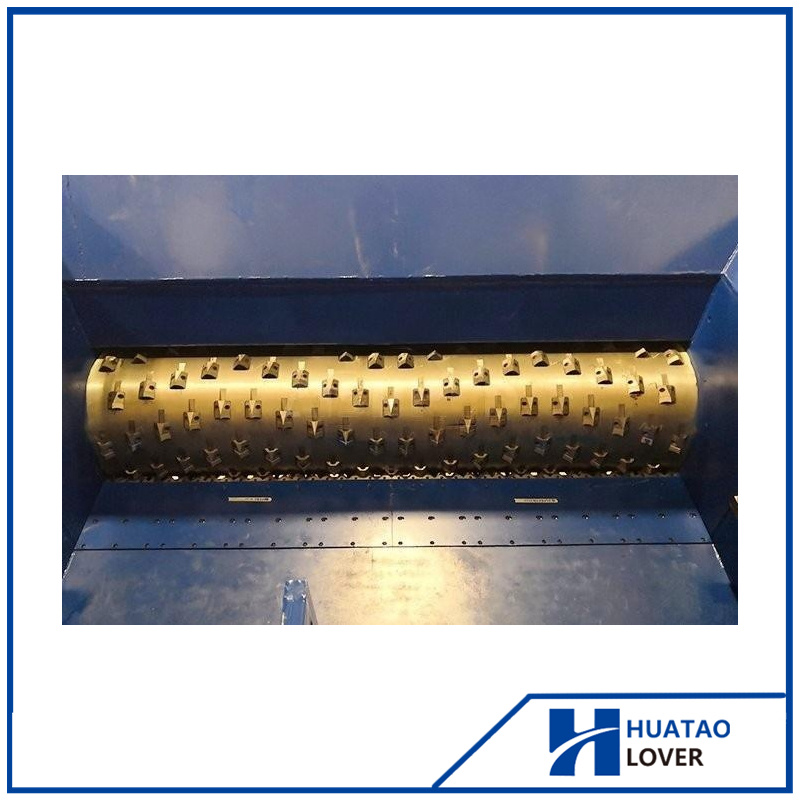
The screen installed beneath the rotor of the Single Shaft Shredder is the primary control over output particle size. Material remains in the cutting chamber until it is reduced sufficiently to pass through the screen apertures. This mechanical constraint ensures that no particle larger than the screen aperture exits the machine.
Screen apertures are specified according to the downstream process requirement. Common apertures for plastic processing range from 10 mm to 100 mm, with selection driven by the needs of the next stage in the line.
Coarse Screens. A 50 mm to 100 mm aperture produces a coarser output, suitable for applications where the material will undergo further reduction. Coarse screening maximizes throughput because material passes through the screen more quickly.
Medium Screens. A 20 mm to 50 mm aperture produces a medium output, suitable for granulator feed in many plastic recycling applications. This range balances throughput against output size.
Fine Screens. A 10 mm to 20 mm aperture produces a finer output, suitable for applications where the material will proceed directly to washing or where a fine flake is required. Fine screening reduces throughput because material must remain in the cutting chamber longer.
The Single Shaft Shredder allows screens to be changed, giving operators control over output size. Operators should maintain a stock of screens in the apertures relevant to their production requirements so that changeover does not become a bottleneck.
Blade Geometry: The Secondary Control Variable
Blade geometry is the second variable affecting output consistency. The cutting blades of the Single Shaft Shredder work against a fixed counter knife. The clearance between the rotor blades and the counter knife determines cutting efficiency.
When blades are new and properly set, the clearance is minimal and cutting is efficient. Material is sheared cleanly, producing particles with a relatively narrow size distribution.
As blades wear, clearance increases. The cutting action becomes less efficient. Material is torn rather than sheared, producing a wider particle size distribution with more fines and more oversized particles. Energy consumption also increases because the machine must work harder to achieve the same reduction.
Maintaining correct blade clearance is therefore essential for output consistency. Blades should be inspected regularly and sharpened or replaced when clearance exceeds specification.
The Effect of Dull Blades on Output Quality
The effect of dull blades extends beyond output size distribution. Dull blades can also affect:
Throughput. Dull blades reduce cutting efficiency, slowing the rate at which material passes through the screen. Throughput falls.
Energy Consumption. Dull blades require more force to cut, increasing the load on the motor and the energy consumed per ton of material processed.
Fines Generation. Dull blades produce more fines. These fines may be lost in downstream processing or may cause problems in washing and granulation.
Heat Generation. Dull blades generate more heat through friction. On heat-sensitive polymers, this can cause degradation.
Blade Sharpening and Maintenance
Blade sharpening should be performed on a precision knife grinder to restore the correct cutting geometry and maintain uniform blade height. An Industrial Knife Grinding Machine is the appropriate equipment for this task.
Model options include the HT800Mm Automatic Sharpener, the HT1600Mm Automatic Sharpener, and the HT2300Mm Automatic Sharpener. For fully automated workflows, the Fully Automatic Linear Knife Sharpener is available.
The Single Shaft Shredder Blade is the component that determines cutting performance. Replacement blades are available as Huatao Wear Resistant Customization Shredder Blades.
Supporting guidance is available in Focus On Plastic Recycling Industry Solve Frequent Blade Sharpening Pain Points, How To Choose The Right Plastic Crusher Blades Skd11 D2 Dc53 And Ld, and Optimizing Shredder Blade Usage A Comprehensive Guide To Efficiency And Longevity.
Model Selection and Screen Availability
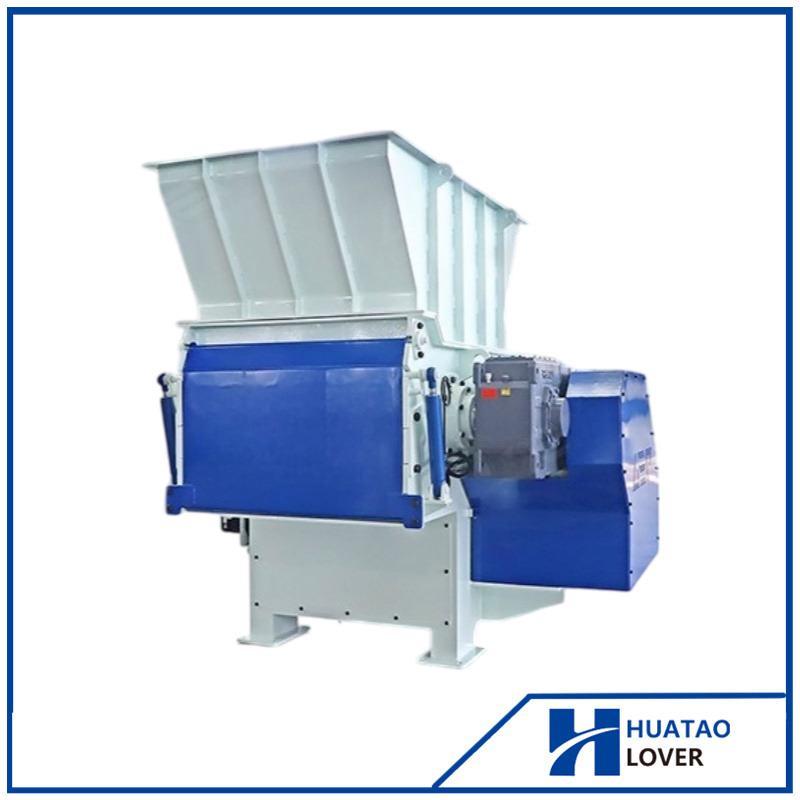
Huatao manufactures the Single Shaft Shredder in several configurations, each with its own screen options. The Single Shaft Shredder HT600 Series, Single Shaft Shredder 800 Type, Single Shaft Shredder HT 1000 Type, and Single Shaft Shredder 1200 Type are available with a range of screen apertures. Full information is on the Single Shaft Shredder page.
Contact us:
Marketing@huataogroup.com
Tel:+86 13383116640 (Wechat/whatsapp)
http://wa.me/13383116640
Website:www.huataoshredder.com
#SingleShaftShredder #ScreenSelection #BladeGeometry #OutputConsistency #PlasticRecycling #ShredderMaintenance #Huatao #CircularEconomy #IndustrialShredder #WasteManagement



 WhatsApp