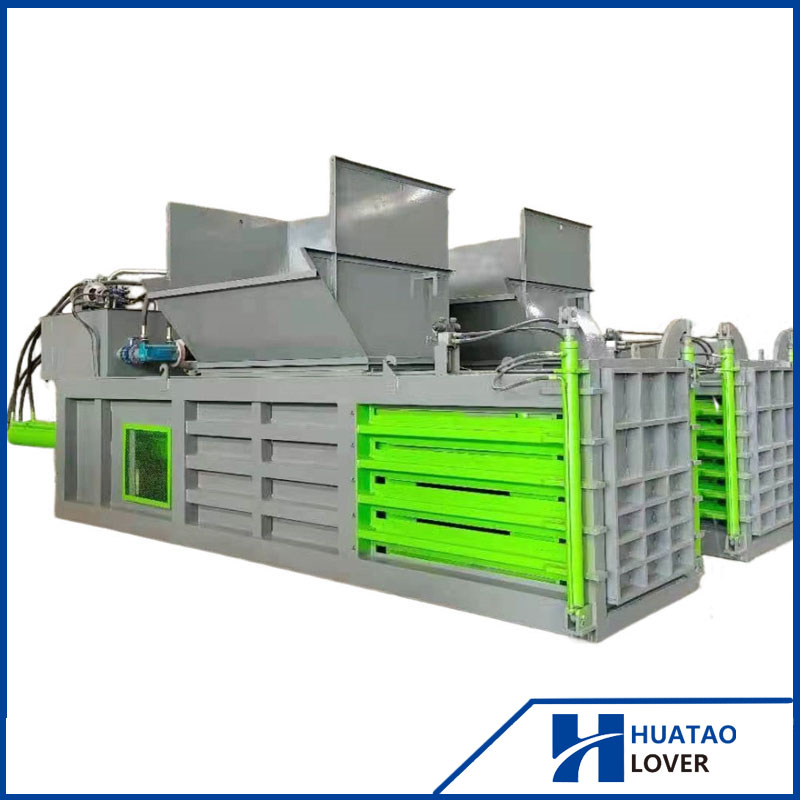
The best hydraulic baler for waste paper and cardboard recycling is one supplied by a manufacturer who can demonstrate material-specific testing, provide transparent component specifications, and support the machine with accessible spare parts for its full service life. Machine specifications matter, but supplier capability determines whether the baler performs to specification in year one and remains operational in year seven.
Introduction
Buyers searching for a cardboard baler encounter dozens of suppliers quoting similar tonnage figures and automation features. The apparent similarity is misleading. Behind identical “80-ton horizontal baler” labels are differences in hydraulic component brands, chamber steel thickness, platen guidance design, and tying mechanism quality that determine whether the machine runs reliably or becomes a maintenance liability. For procurement teams evaluating international suppliers, the challenge is distinguishing genuine manufacturing capability from assembly and trading operations. This guide focuses on verification methods and commercial terms that protect the buyer’s investment.
What technical factors affect bale density and quality?
Density depends on press force, chamber geometry, and material behavior. Corrugated board compresses readily but exhibits spring-back if not secured during tying. The chamber must contain material under pressure until wire is tensioned. Three-way compression addresses edge density variation. For upstream size control, a Single Shaft Shredder reduces oversized board to consistent particle size; the Crusher category covers additional reduction options for mixed paper streams.
What automation options exist for horizontal balers?
Manual models require operator involvement for feeding and tying initiation. Semi-automatic models automate compression but may require manual tying. Fully automatic configurations incorporate PLC control, conveyor feeding, automatic tying, and bale ejection. Siemens or Schneider platforms provide real-time diagnostics. For system-level integration, see Waste Recycling Production Line.
H2: Which hydraulic components and maintenance schedules apply?
Cylinders with wear-resistant seals, high-flow cartridge valves, and leak-resistant fittings reduce failure frequency. Return-line filters should be changed quarterly with annual oil replacement. Oil temperature above 65°C indicates cooling issues. Weekly tasks include greasing pivot points and inspecting tying needles. The Single Shaft Shredder Blade resource illustrates wear-part management applicable across equipment categories.
H2: How should bale dimensions be specified for downstream compatibility?
Bale size affects stacking stability, truck loading efficiency, and mill receiving equipment. Standard OCC dimensions facilitate handling throughout the chain. Adjustable length settings allow customization; confirm the receiving mill's preferred size before finalizing. For component-level questions, see Spare Parts and the product page for Hydraulic Baling Machine.
What Are the Warning Signs of an Unreliable Baler Supplier?
Several patterns indicate elevated risk. A supplier who cannot explain why a specific configuration suits cardboard—as opposed to plastic or metal—is selling generic machines without application engineering. A supplier who quotes a delivery time significantly shorter than competitors for a customized configuration is either misunderstanding the customization or planning to ship a standard unit. A supplier who provides customer references only from a different industry or a different continent may lack relevant application experience.
Factory visit reluctance is a significant red flag for buyers able to travel. Even for remote buyers, a live video inspection during the buyer’s working hours (accounting for time zone differences) should be accommodated by any legitimate manufacturer. If the “factory” is actually a trading company’s office, the inspection will reveal that quickly.
Finally, be cautious of suppliers who dismiss competitor products with vague criticism rather than specific technical comparison. A supplier who understands the engineering trade-offs can explain why their design choices suit your application without denigrating alternatives.
How Should International Buyers Structure the Purchase Process?
The purchase process for imported recycling equipment carries risks that domestic purchases do not. Mitigation begins with a clear specification annex attached to the purchase contract, including performance guarantees (minimum bale density for the specified material, throughput within a stated tolerance). The contract should specify the acceptance test procedure and the remedy if the machine fails to meet guaranteed performance.
Shipping terms should be negotiated with Incoterms that clarify responsibility at each stage. FOB (Free On Board) gives the buyer control over freight and insurance but requires more logistics capability. CIF (Cost, Insurance, Freight) simplifies the process but may obscure the actual freight cost. For first-time importers, CIF to the nearest port followed by a reputable customs broker is often the pragmatic choice.
Inspection before shipment is the buyer’s last opportunity to verify quality before the machine leaves the supplier’s country. A third-party inspection service can witness the factory acceptance test, verify component brands against the specification, and confirm that all accessories and spare parts are packed. The cost of inspection (typically $300–$800) is small relative to the risk of receiving a non-compliant machine.
FAQ
How do I verify that a Chinese baler manufacturer actually produces the machines they sell?
Request a live video walkthrough during your business hours, showing the production floor from steel storage through assembly to testing. Ask to see半-finished frames and hydraulic components being installed. Cross-reference the company’s export records or ask for customs documentation from previous shipments to your region. A trading company may provide excellent service, but you should know which party is responsible for quality and warranty.
What should be included in the warranty for an imported hydraulic baler?
At minimum: 12 months parts warranty, clear identification of what is excluded (wear parts such as liners and seals are typically not covered), the process for filing a claim, and the expected response time. For critical components like hydraulic cylinders and pumps, negotiate longer coverage or advance replacement terms. Warranty without defined response times is a promise without a deadline.
How much should I budget for spare parts with a new baler?
Plan for 5–8% of the machine price as an initial spare parts stock. Priority items: one set of hydraulic seals for the main cylinder, one set of tying mechanism wear parts, filters, and a platen liner (if bolted design). This stock covers the most likely failure points during the first year and avoids production stoppages waiting for international shipments.
What payment terms are standard for Chinese baler manufacturers?
30% deposit, 70% before shipment is common. Negotiate 60% before shipment and 10% after commissioning for larger orders. The factory acceptance test documentation (video, photos, component verification) should be a condition of the pre-shipment payment. Avoid suppliers who require 100% payment before the machine is completed and tested.
Is a factory visit necessary if I have a third-party inspection?
A personal visit provides context that an inspection report cannot: the general organization of the facility, the attitude of the workforce, the condition of equipment in production, and the responsiveness of technical staff to questions. If travel is impractical, a live video walkthrough with specific, pre-submitted questions serves as a partial substitute. Third-party inspection verifies the machine; a visit verifies the organization behind it.
Conclusion
Choosing the best hydraulic baler for waste paper and cardboard recycling is a supplier qualification exercise as much as an equipment selection exercise. The machine specification determines theoretical performance; the supplier’s manufacturing discipline, component transparency, and after-sales infrastructure determine whether that performance is realized in daily operation. Buyers should prioritize suppliers who welcome material testing, provide complete component-level quotations, and offer warranty terms that demonstrate confidence in their product. The lowest initial price often signals hidden costs in downtime, parts lead times, and premature replacement.
Contact Information:
Email: marketing@huataogroup.com
Tel/WeChat/WhatsApp: 008613383116640
Website: www.huataoshredder.com
WhatsApp: http://wa.me/13383116640
#hydraulicbalersupplier #balermanufacturerverification #recyclingequipmentsourcing #industrialbalerpurchase #recyclingequipment #verticalhydraulicbaler
#shredding #environment #waste #recycling #blade #metalrecycling #woodrecycling #RDF #MSW #recyclingworks #materialrecycling #recyclable #aluminum #aluminiumrecycling #recyclingindustrymatters #recyclingindustry #scraprecycling #alumiumscrap #aluminiumscraprecycling #energy #secondaryindustrymatters #tyrerecycling
#shredding #shredderknive #wasterecycling #blade #metalrecycling #aluminum #aluminiumrecycling #copperwirerecycling #Cablerecycling #alumiumscrap #aluminiumscraprecycling
#woodrecycling #RDF #MSW #recyclingworks #materialrecycling #recyclable #recyclingindustrymatters
#recyclingindustry #scraprecycling #energy #secondaryindustrymatters #tyrerecycling
#plasticrecycling #crusherblade #industrialcrusher #recycling #PETbottlerecycling #blade #plasticcrusher #hardplasticrecycling #pprecycling #plastictrayrecycling #perecycling #psrecycling #pvcrecycling #Sharpener #bladesharpen #grinder #bladegrinding #sharpenermachine



 WhatsApp