

The shift from linear plastic consumption to closed-loop recovery depends on a single engineering reality: recycled plastic must compete with virgin material on quality and cost. That competition is won or lost inside the Waste Plastic Recycling Line, where contaminated, heterogeneous plastic waste is converted into clean, specification-grade feedstock. Understanding the technical architecture of a Waste Plastic Recycling Line — the sequence of unit operations, the function of each stage, and the way they interact — is the foundation for specifying equipment that delivers consistent output rather than intermittent results.
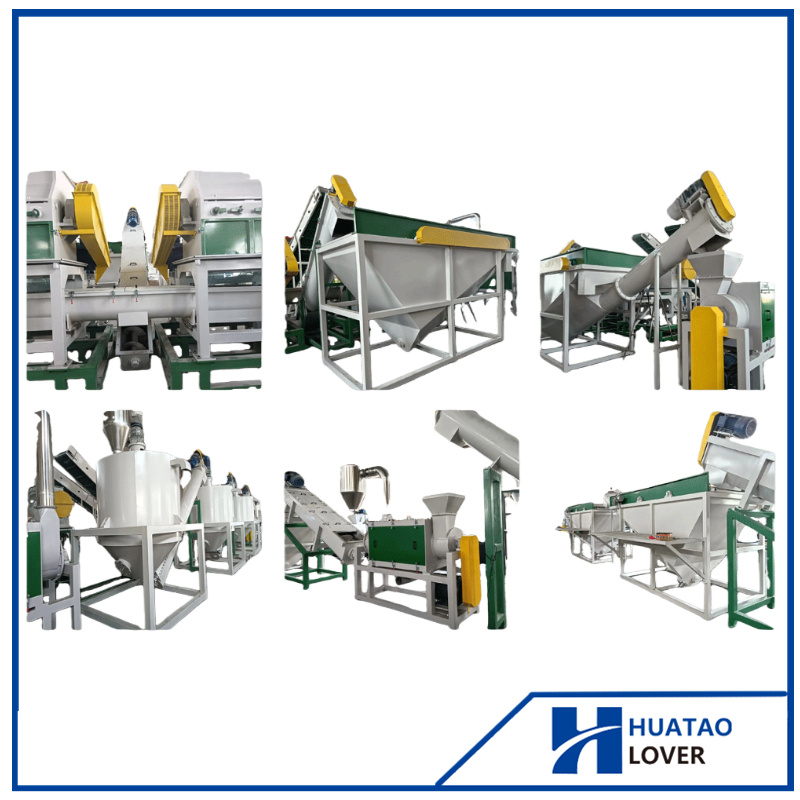
Defining the Waste Plastic Recycling Line
A Waste Plastic Recycling Line is an integrated system of unit operations that transforms post-industrial and post-consumer plastic waste into clean, uniform material suitable for re-extrusion. It is not a single machine but a coordinated sequence: size reduction, contaminant removal, density separation, dewatering, drying, and melt processing.
The configuration of a Waste Plastic Recycling Line is determined by three variables: the feedstock type, the required output purity, and the target product form. A line processing agricultural film carries different requirements from one processing PET bottles or PP woven bags. The engineering task is to match the sequence of operations to the specific contamination profile and physical characteristics of the incoming material.
Stage One: Size Reduction
The first stage of any Waste Plastic Recycling Line is the reduction of bulky plastic waste to a particle size suitable for washing and separation. Two shredding technologies are typically applied in sequence.
Primary reduction is performed by a Double Shaft Shredder, which uses counter-rotating shafts to grip and tear bales, purgings, large molded parts, and film bundles. A Double Shaft Shredder Machine is available in several capacity tiers, including the 800 Type Double Shaft Shredder, the 1000 Type Double Shaft Shredder, and the 1200 Type Double Shaft Shredder. A 600 Type Double Shaft Shredder is available for compact installations.
Secondary reduction within the Waste Plastic Recycling Line is performed by a Single Shaft Shredder, which applies controlled shearing against a fixed counter knife with a hydraulic pusher. The output particle size is set by the screen installed beneath the rotor, allowing the Waste Plastic Recycling Line to produce consistent feedstock for downstream washing. Models include the Single Shaft Shredder HT600 Series, the 800 Type, the HT 1000 Type, and the 1200 Type.
The division of labour between these two stages is deliberate. The Double Shaft Shredder handles the difficult gripping and tearing work; the Single Shaft Shredder delivers the controlled particle size that washing equipment requires.
Stage Two: Washing and Contaminant Removal
Contaminant removal is the stage that determines the commercial value of the output from a Waste Plastic Recycling Line. Post-consumer and post-industrial plastics carry soil, organic residue, adhesives, printing inks, and incompatible polymer fractions. Each must be addressed by a specific unit operation.
A typical washing section within a Waste Plastic Recycling Line includes pre-washing to remove loose contaminants, friction washing to abrade adhered material from the plastic surface, and — for heavily contaminated feedstock — hot washing with a caustic solution to break down oils and organic residues.
The intensity of the washing section is a direct function of feedstock quality. Film recovered from agricultural applications requires more aggressive washing than clean post-industrial production scrap. This is one reason why the Waste Plastic Recycling Line must be configured to the specific material stream rather than specified generically.
Stage Three: Density Separation
Density separation is the stage that removes incompatible materials from the plastic stream. A sink-float separation tank exploits differences in specific gravity to separate target polymers from contaminants.
In a Waste Plastic Recycling Line processing mixed plastics, sink-float separation removes metals, glass, and heavier polymer fractions such as PVC from the lighter PE and PP stream. This stage protects downstream equipment and raises the purity of the final product.
Screening equipment supports this stage by classifying material by size. A Vibrating Screen Machine separates the shredded stream into size fractions, while Vibrating Screen Panels and Shale Shaker Screen components are available for screen maintenance and replacement.
Stage Four: Dewatering and Drying
Following washing, material in a Waste Plastic Recycling Line typically contains substantial moisture, which must be reduced before melt processing. Excess moisture causes hydrolysis in sensitive polymers such as PET, reducing intrinsic viscosity and degrading mechanical properties.
The dewatering stage within a Waste Plastic Recycling Line combines mechanical and thermal methods. Centrifugal dewatering removes the bulk of surface moisture; thermal drying reduces residual moisture to the level required by the extruder.
Stage Five: Melt Processing and Pelletizing
The final stage of a Waste Plastic Recycling Line converts clean, dried flake into pellet form. A Plastic Granulator Machine performs the final size reduction before extrusion, producing uniform flake suitable for consistent melting.
For woven bag and raffia feedstock, Pp And Pe Plastic Granulators For Waste Plastic Woven Bag Recycling are configured specifically for that material stream. For rigid container and small bottle applications, see Professional Plastic Container Crusher Small Bottle And Plastic Frame Crushing Machine. Film applications are covered in Specialized Plastic Film Crusher Anti Winding Pe Pp Film Recycling Crushing Machine and High Efficiency Crusher For Daily Rigid Plastic Waste Recycling.
Downstream pelletizing produces the final product: uniform pellets suitable for reuse in manufacturing. Where food-contact applications are targeted, additional processing such as solid-state polycondensation may be required to restore intrinsic viscosity.
Non-Ferrous and Metal Removal Within the Line
Plastic waste streams frequently contain metal contaminants — bottle caps, embedded fasteners, and metalised labels. These must be removed to protect granulator blades and maintain product purity.
An Eddy Current Separator is positioned within the Waste Plastic Recycling Line to recover non-ferrous metals. Technical background is available in Why Every Modern Recycling Plant Needs A High Performance Eddy Current Separator and Efficient Plastic Non Ferrous Metal Sorting For Waste Recycling Lines. Automated configurations are described in Automatic Plastic And Non Ferrous Metal Sorting For Recycling Factories.
Configuring the Waste Plastic Recycling Line by Feedstock
The architecture described above is adapted to the specific material stream.
For general plastic recovery, the Waste Recycling Production Line provides a base configuration. For bottle-to-bottle and fibre applications, the PET Polyethylene Terephthalate Bottle Recycling Line addresses the specific requirements of that polymer.
Detailed engineering guidance is available in Engineering A Closed Loop Future The Technical Architecture Of The Waste Plastic Recycling Line and Optimizing Recovery Configuring The Waste Plastic Recycling Line For Complex Feedstocks.
Supporting Equipment and Blade Maintenance
A Waste Plastic Recycling Line depends on equipment that maintains cutting performance over time. Blade condition directly affects output quality and energy consumption, and a structured sharpening programme is essential.
An Industrial Knife Grinding Machine restores granulator and shredder blades to specification. Model options include the HT800Mm Automatic Sharpener, the HT1600Mm Automatic Sharpener, and the HT2300Mm Automatic Sharpener. For fully automated workflows, the Fully Automatic Linear Knife Sharpener is available.
Supporting guidance includes Focus On Plastic Recycling Industry Solve Frequent Blade Sharpening Pain Points, How To Choose The Right Plastic Crusher Blades Skd11 D2 Dc53 And Ld, and Optimizing Shredder Blade Usage A Comprehensive Guide To Efficiency And Longevity.
Baling equipment for output handling is covered on the Hydraulic Baling Machine page, with maintenance guidance in How To Maintain A Hydraulic Baler Expert Tips To Extend Service Life Cut Downtime.
The Closed-Loop Objective
The purpose of the Waste Plastic Recycling Line is to close the material loop — to return plastic waste to manufacturing as feedstock that meets specification. Achieving this requires each stage to perform its function reliably and to deliver output that the next stage can process.
That is an engineering problem, not a marketing one. It is solved by matching equipment to feedstock, maintaining cutting performance, and configuring the line as an integrated system rather than a collection of machines.
Contact us:
Marketing@huataogroup.com
Tel:+86 13383116640 (Wechat/whatsapp)
http://wa.me/13383116640
Website:www.huataoshredder.com
#WastePlasticRecyclingLine #PlasticRecycling #DoubleShaftShredder #SingleShaftShredder #EddyCurrentSeparator #PlasticGranulator #Huatao #CircularEconomy #PlasticWashingLine #RecyclingEquipment
can not be empty
can not be empty

HUATAO GROUP - Recycling Machine and Spare parts
ADD : No.298 Zhonghua North Street, Shijiazhuang 050000 China.
TEL : +86 13383116640
EMAIL :marketing@huataogroup.com
 WhatsApp & WeChat : +86 13383116640