1. Define Your Actual Sharpening Requirements
Before requesting quotations, identify the blades that need to be sharpened.
Important information includes:
-
Blade type and application
-
Maximum blade length
-
Blade width and thickness
-
Blade material and hardness
-
Required cutting-edge geometry
-
Sharpening frequency
-
Expected daily or weekly workload
For example, a plastic recycling plant may need to sharpen shredder knives and crusher blades, while a woodworking facility may primarily process long straight chipper knives.
These applications may require different machine configurations.
You can learn more about Industrial Knife Grinding Machines and Industrial Knife Grinder Solutions.
2. Select the Appropriate Working Length
The machine's working length must match the dimensions of the blades being processed.
A machine that cannot accommodate the longest blade in your workshop may limit future production flexibility.
When comparing equipment, check:
If your workshop processes several blade sizes, consider future requirements rather than selecting a machine only for your current most common blade.
Different working-length options can be reviewed through the following product pages:
Always confirm the effective working capacity with the equipment supplier.
3. Compare Manual and Automatic Sharpening Machines
The automation level should correspond to your workload and operator availability.
Manual sharpening equipment
Manual machines may be appropriate for smaller workshops, lower sharpening volumes, or applications that require frequent operator adjustments.
Automatic sharpening equipment
Automatic systems can reduce repetitive manual operations and provide more standardized grinding movement for compatible blades.
For workshops processing long straight knives, a Fully Automatic Linear Knife Sharpener may be worth evaluating.
When comparing models, ask about operating procedures, adjustment methods, operator training, and the level of automation actually included.
4. Evaluate Grinding Accuracy and Stability
Grinding quality is essential to the finished blade condition.
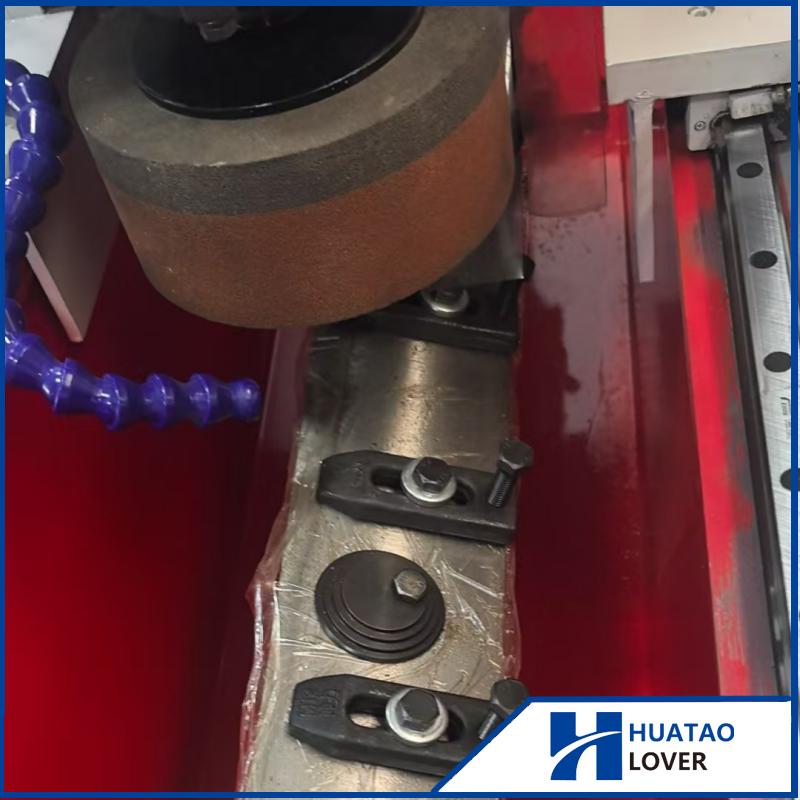
A suitable machine should provide stable blade support and controlled movement of the grinding head.
Consider the following:
-
Machine-bed rigidity
-
Blade clamping stability
-
Grinding-head movement
-
Grinding-depth adjustment
-
Repeatability of the grinding process
-
Compatibility with the required blade geometry
Ask the supplier how the machine controls blade positioning and whether a sample test can be arranged using your own blade.
For additional technical information, see Engineering Excellence: How a Knife Grinder Delivers Precision Sharpening for Crusher Blades.
5. Check Grinding Wheel and Cooling Configuration
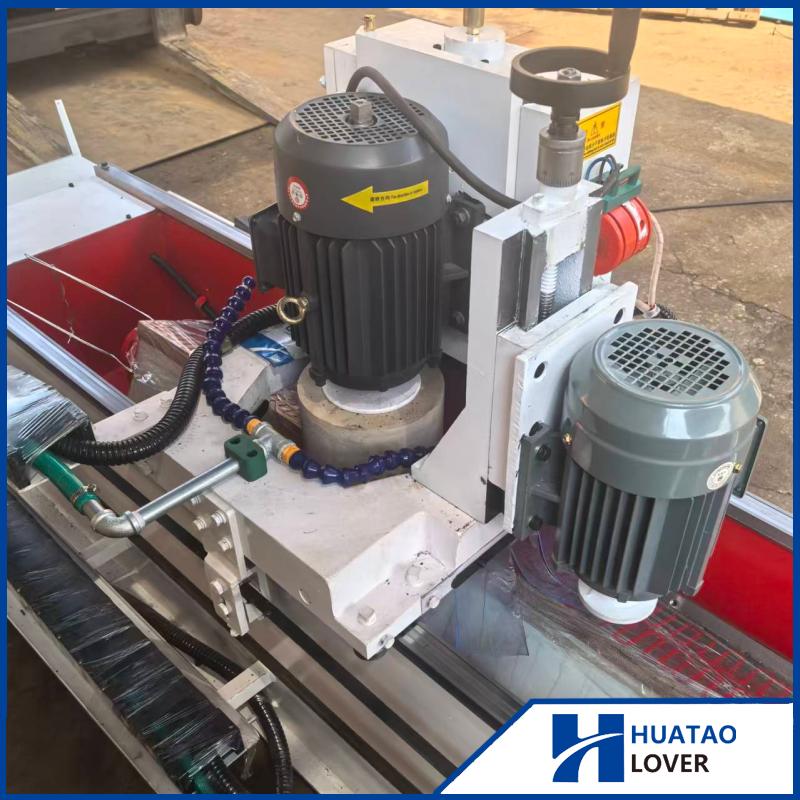
The grinding wheel must be suitable for the blade material and sharpening process.
Buyers should confirm:
Grinding produces heat. Appropriate operating conditions and cooling arrangements may be necessary to control temperature and protect the blade edge.
Do not assume that the same grinding wheel or setting is suitable for every blade material.
6. Calculate the Total Cost of Ownership
A low purchase price does not always mean a low long-term cost.
Evaluate the complete operating picture:
| Cost factor |
What to consider |
| Initial investment |
Machine price and included accessories |
| Consumables |
Grinding wheels and replacement parts |
| Labor |
Operator time and training |
| Maintenance |
Routine inspection and servicing |
| Downtime |
Time required for maintenance or repairs |
| Technical support |
Spare parts and after-sales assistance |
The right machine should match your actual sharpening workload and maintenance strategy.
7. Evaluate the Supplier Before Ordering
A reliable purchasing decision also requires clear technical communication.
Ask the supplier to provide:
-
A machine specification sheet
-
Working dimensions and blade compatibility
-
Electrical requirements
-
Standard accessories and optional configurations
-
Installation and operating instructions
-
Spare-parts information
-
Warranty and after-sales service details
-
Video or demonstration of the sharpening process
You should also provide blade drawings or photographs so the supplier can assess compatibility more accurately.
For related blade information, review Optimizing Shredder Blade Usage and Shredder Blade Maintenance and Care.
8. A Practical Pre-Purchase Checklist
Before placing an order, confirm that:
-
The machine can accommodate your maximum blade length.
-
The clamping system suits your blade dimensions.
-
The grinding system is compatible with your blade material.
-
The required sharpening geometry can be achieved.
-
The automation level matches your workload.
-
Cooling and grinding-wheel requirements are clear.
-
Installation, training, and maintenance support are available.
Conclusion
Choosing an industrial blade sharpening machine requires a structured evaluation of technical requirements and long-term operating costs.
The best purchasing decision is not necessarily the machine with the highest automation level or the lowest price. It is the machine that matches your blade dimensions, sharpening frequency, workshop conditions, and maintenance objectives.
Looking for a suitable industrial blade sharpening solution?
Prepare your blade drawings, dimensions, material information, and expected sharpening volume before requesting a quotation. These details will help the supplier recommend a more appropriate configuration.
Email: marketing@huataogroup.com
Tel/WeChat/WhatsApp: 008613383116640 Website: www.huataoshredder.com
WhatsApp: http://wa.me/13383116640



 WhatsApp