A biomass pellet machine converts prepared organic materials into compact cylindrical pellets through mechanical compression. Common feedstocks include sawdust, wood chips, rice husks, wheat straw, corn stalks, peanut shells, bamboo waste, and other suitable agricultural or forestry residues.
Biomass pellets can be used in compatible industrial boilers, heating systems, and biomass energy applications.
However, pellet production depends on more than the pelletizing machine. Raw material preparation, particle size, moisture content, compression conditions, and equipment maintenance all contribute to the final product.
This guide explains the working principle of a biomass pellet machine, the typical production process, and the role of upstream shredding equipment.
1. What Is a Biomass Pellet Machine?
A biomass pellet machine is specialized equipment that compresses prepared biomass materials into dense cylindrical pellets.
During operation, prepared biomass enters the pelletizing chamber. Rollers apply pressure and force the material through specially designed die holes. Pressure and friction generate heat, helping the particles bind together. The formed pellets are then cut to the required length.
The machine is used as part of a broader biomass processing system. Feedstock characteristics and production requirements determine the appropriate equipment configuration.
2. What Materials Can Be Processed?
Common biomass materials include:
| Feedstock |
Typical Source |
Preparation Considerations |
| Wood chips |
Forestry and wood processing |
Size reduction and particle consistency |
| Sawdust |
Sawmills and woodworking |
Moisture and particle condition |
| Rice husks |
Agricultural processing |
Material characteristics and feeding |
| Wheat straw |
Crop residues |
Cutting and size reduction |
| Corn stalks |
Agricultural residues |
Preliminary cutting and grinding |
| Peanut shells |
Agricultural processing |
Particle size and moisture |
| Bamboo waste |
Bamboo processing |
Size reduction before further processing |
Not every pellet machine can process every feedstock under identical conditions. Material compatibility should be confirmed against the machine configuration and production requirements.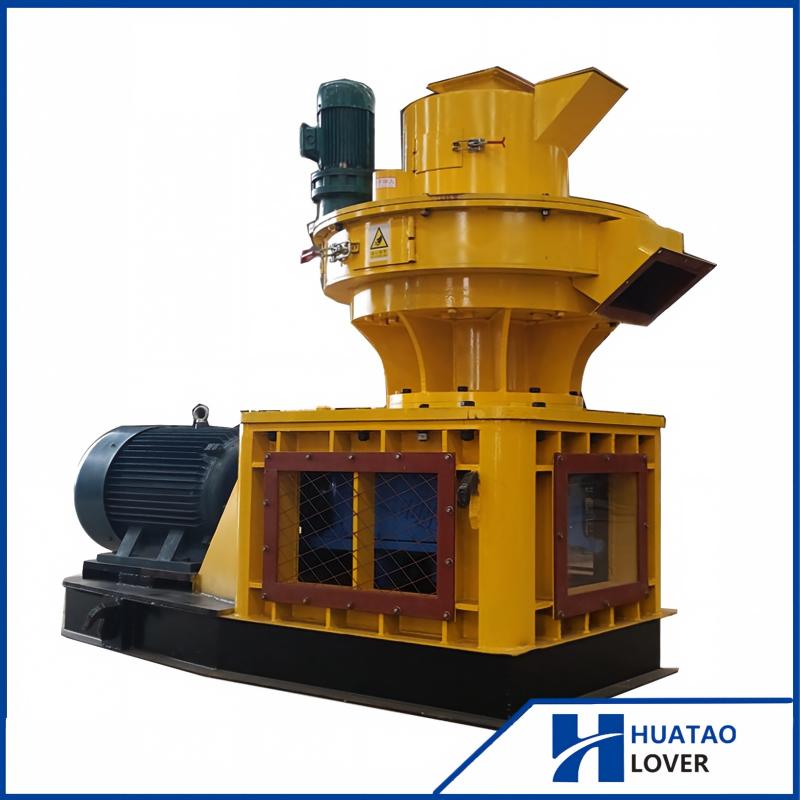
3. How Does a Biomass Pellet Production Line Work?
A typical biomass pellet production line contains several stages.
Step 1: Raw Material Collection
Wood waste, agricultural residues, and other suitable biomass materials are collected. Sorting may be necessary to remove unsuitable materials or contaminants.
Step 2: Crushing and Shredding
Large wood pieces, long stalks, and irregular biomass residues may require preliminary size reduction.
Depending on the feedstock and required output, manufacturers may evaluate a Single Shaft Shredder or a Double Shaft Shredder Machine.
The appropriate machine depends on material dimensions, composition, processing capacity, and the required output size.
Step 3: Grinding
After preliminary shredding, additional grinding may be required to achieve a suitable and relatively consistent particle size.
A Crusher Machine may be considered where further size reduction is required.
Step 4: Drying
Excess moisture is removed to achieve suitable conditions for pelletizing. The required moisture condition depends on the feedstock and pelletizing system.
Step 5: Pelletizing
Prepared biomass is compressed through die holes to form cylindrical pellets.
Step 6: Cooling and Screening
Freshly formed pellets are cooled and screened to remove excessive fines.
Step 7: Packaging
Finished pellets are packed or transferred to bulk storage for subsequent handling and transportation.
4. Why Is a Shredder Important in Biomass Pellet Production?
A pelletizing machine is designed to compress prepared materials. Oversized raw materials may need to be reduced before they enter the grinding and pelletizing stages.
Examples include:
-
Large wood pieces requiring preliminary size reduction
-
Long agricultural stalks requiring cutting into manageable lengths
-
Irregular wood waste requiring more consistent preparation
A suitable industrial shredder can help reduce oversized feedstock and support more consistent downstream feeding.
For wood-processing applications, blade condition and cutting performance should also be considered. Review wood crusher blade operating precautions.
The purpose of upstream shredding is not simply to reduce material size. It is to prepare the feedstock for the requirements of the next process.
5. What Factors Affect Biomass Pellet Quality?
Several factors influence the final pellet characteristics.
Raw Material
Different biomass materials have different fiber structures and binding characteristics. Feedstock selection should match the intended production process.
Particle Size
Consistent particle size can help improve material feeding and compression. The required size depends on the pelletizing equipment and material properties.
Moisture Content
Excessive or insufficient moisture can negatively affect pellet formation. Moisture conditions should be evaluated according to the feedstock and machine requirements.
Compression Pressure
Pressure and die configuration influence pellet density and durability.
Equipment Condition
Dies, rollers, blades, and other wear parts need appropriate inspection and maintenance to support stable operation.
For cutting-component maintenance, relevant equipment includes Industrial Knife Grinding Machines and Chipper Blade Sharpeners.
6. How to Select a Shredder for Biomass Material Preparation
Selecting upstream shredding equipment requires an evaluation of the actual material and process.
| Selection Factor |
Questions to Confirm |
| Feedstock |
Is the material wood waste, straw, bamboo, or another residue? |
| Feed dimensions |
What are the maximum length, width, and thickness? |
| Output size |
What particle size is required by the next stage? |
| Capacity |
What processing throughput is required? |
| Moisture |
Is the feedstock wet, dry, or variable? |
| Contamination |
Does the material contain stones, metal, or other foreign objects? |
| Operating conditions |
How many hours will the equipment operate? |
| Maintenance |
What blade and spare-part support is required? |
A single-shaft shredder and a double-shaft shredder should not be treated as interchangeable. The right choice depends on feedstock characteristics, material dimensions, and process requirements.
Manufacturers should also consider blade inspection, sharpening, and replacement planning. Related resources include shredder spare parts and industrial knife grinding equipment.
7. How Can HUATAO Support Biomass Material Preparation?
HUATAO focuses on industrial shredding equipment, cutting technology, and customized blade solutions.
For biomass-related applications, suitable shredding equipment can help prepare oversized wood waste and other suitable materials before subsequent grinding and pelletizing.
The appropriate configuration depends on:
Equipment specifications should be confirmed against the actual project requirements. No single machine configuration is suitable for every biomass feedstock.
Explore HUATAO industrial shredding solutions.
8. Frequently Asked Questions
What is a biomass pellet machine?
It is equipment that compresses prepared biomass materials into dense cylindrical pellets for compatible biomass fuel applications.
What raw materials can be used?
Common feedstocks include wood chips, sawdust, rice husks, wheat straw, corn stalks, peanut shells, bamboo waste, and other suitable agricultural and forestry residues.
Why is shredding important before pelletizing?
Large wood pieces and long agricultural residues may need preliminary size reduction before grinding and pelletizing. Suitable shredding helps prepare the material for downstream processing.
Does particle size affect pellet quality?
Yes. Particle size can influence feeding and compression. The appropriate size depends on the feedstock and pelletizing system.
How do I select a shredder for biomass processing?
Evaluate feedstock type, maximum feed dimensions, required output size, processing capacity, moisture, contamination, operating conditions, and maintenance requirements.
Conclusion
A biomass pellet machine is an important part of biomass fuel production, but the overall process includes raw material collection, shredding, grinding, drying, pelletizing, cooling, screening, and packaging.
Suitable upstream material preparation helps align the feedstock with downstream processing requirements. Manufacturers should evaluate the entire production process rather than selecting equipment based on one machine alone.
Contact HUATAO
Email: marketing@huataogroup.com
Tel/WeChat/WhatsApp: 008613383116640
WhatsApp: http://wa.me/13383116640
Website: www.huataoshredder.com
#BiomassPelletMachine #BiomassPelletProduction #BiomassEnergy #WoodWasteRecycling #AgriculturalWaste #WoodPelletProduction #IndustrialShredder #BiomassProcessing #RenewableEnergy #WasteRecycling #HUATAO



 WhatsApp