To select the right hydraulic baler, identify your material stream, calculate daily throughput, determine required bale dimensions and evaluate available installation space. Vertical balers generally suit smaller operations, while horizontal balers are better suited to larger material volumes and conveyor feeding. Automatic configurations can reduce manual handling in continuous production. Buyers should also compare compression force, hydraulic components, electrical requirements, safety systems, maintenance costs and the bale specifications accepted by downstream customers.
Why Is Correct Hydraulic Baler Selection Important?
Recycling businesses handle different materials, including cardboard, paper, plastic bottles, plastic film, metal scrap and textiles. These materials differ in density, elasticity, dimensions and compression behavior.
Choosing an unsuitable baler can lead to inconsistent bale quality, lower actual throughput, excessive manual handling or unnecessary operating costs.
The first step is to understand your material flow and review the available industrial recycling equipment range before deciding which machine configuration fits your operation.
1. How Should You Identify Your Material Requirements?
Start by recording the materials entering your facility.
-
Paper and cardboard: consider material volume, moisture and bale stability.
-
Plastic bottles: check material preparation, feeding consistency and compression performance.
-
Plastic film: pay attention to feeding, spring-back and bale retention.
-
Metal scrap: confirm heavy-duty chamber construction and material compatibility.
-
Textiles: evaluate compression behavior and suitable bale tying arrangements.
You should also record daily and hourly material volume, maximum feed dimensions and contamination levels.
Reviewing paper processing solutions and corrugated industry equipment can help businesses understand the different requirements of paper and cardboard processing.
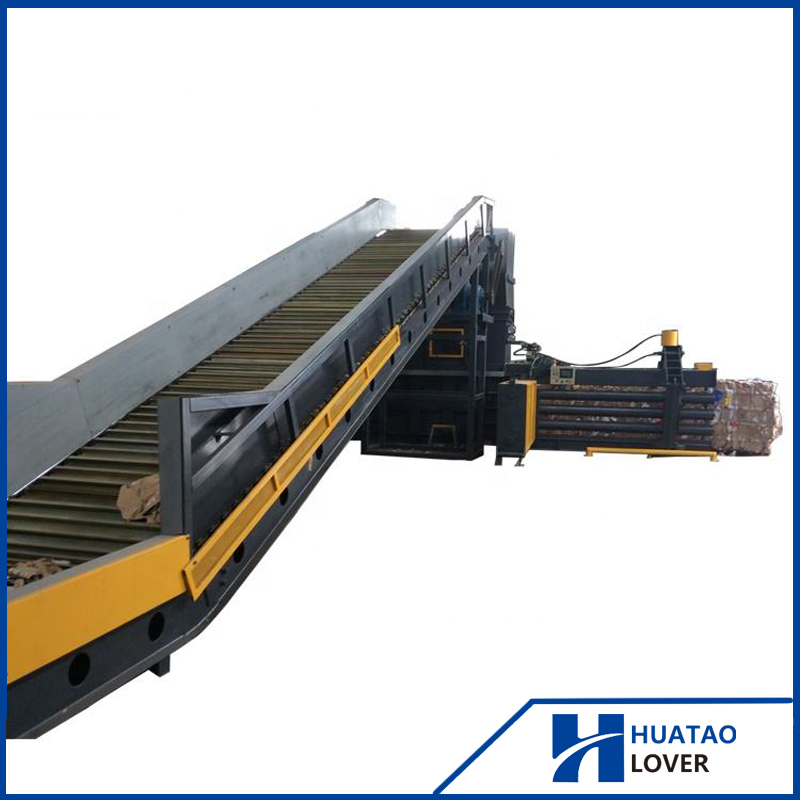
2. Should You Select a Vertical, Horizontal or Automatic Baler?
Vertical hydraulic balers generally require less floor space and are suitable for smaller operations processing limited material volumes. They commonly use batch feeding and may require more manual handling.
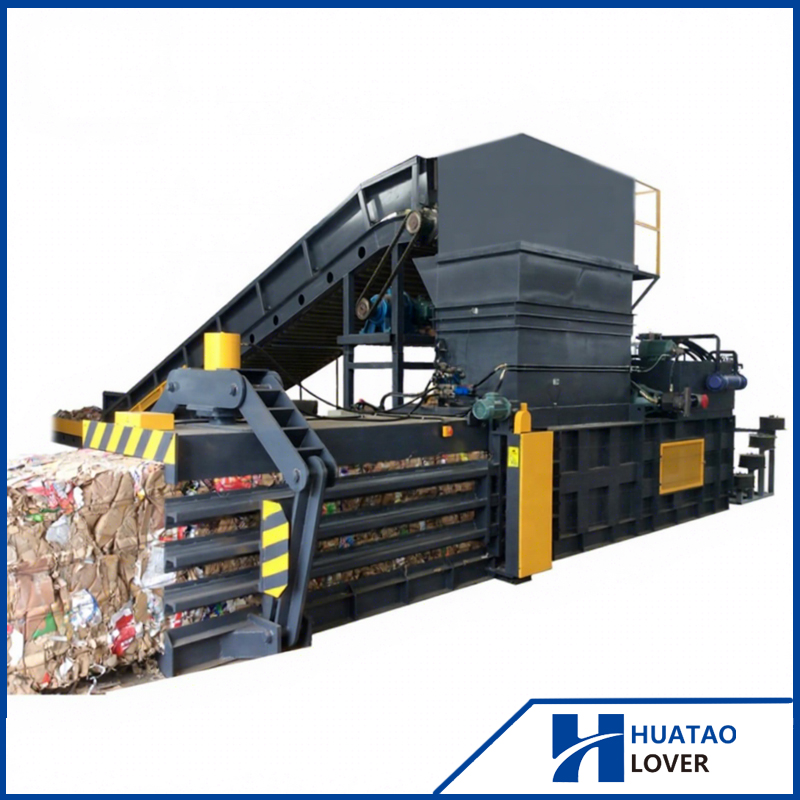
Horizontal hydraulic balers generally offer higher capacity and can be integrated with conveyor feeding systems. They are appropriate for larger recycling facilities.
Automatic hydraulic balers can combine feeding, compression, bale tying and discharge. They are worth considering where material supply is stable and continuous operation is required.
The published HUATAO company profile describes its industrial equipment categories and business scope. Buyers can also review its technical service resources when assessing supplier support requirements.
3. How Do You Determine Capacity and Bale Specifications?
A machine's advertised capacity should not be the only selection criterion.
Calculate the incoming material volume per hour and consider the complete operating cycle, including feeding, compression, tying and discharge.
The required bale specifications are equally important. Confirm:
-
Bale length, width and height.
-
Target bale weight.
-
Required bale density.
-
Tying material and method.
-
Forklift and storage requirements.
-
Transportation container or truck limitations.
For mixed or changing material streams, a two-ram configuration may be worth evaluating because baler designs differ in the range of materials they can process.
Additional equipment requirements can be compared with published mining industry equipment, crushing equipment, screening equipment and conveyor equipment categories.
4. What Other Products May Be Required in a Recycling Line?
A baler is generally the final compression stage for prepared recyclable materials. Depending on the waste stream, upstream sorting and size reduction may be necessary.
Five related product options include:
-
Cardboard & Paper Core Shredder – reduces suitable cardboard and paper-core waste.
-
Rotary Trommel Screen – separates compatible mixed materials according to particle size.
-
Magnetic Separator – removes suitable ferrous particles from compatible streams.
-
Jaw Crusher – processes suitable hard and bulky mineral or inert materials.
-
Impact Crusher – reduces compatible hard materials through impact crushing.
These machines support different processing stages and are not replacements for a hydraulic baler.
5. How Can You Compare Suppliers and Control Long-Term Costs?
Request detailed technical drawings, hydraulic system specifications, electrical requirements, machine dimensions and material testing arrangements.
Check the supplier's experience with your material type and ask how spare parts, troubleshooting and operator training are handled.
The technical news center provides further industrial equipment information, while a preventive maintenance plan should cover hydraulic oil, filters, pumps, cylinders, seals, valves, electrical controls and safety interlocks.
Frequently Asked Questions
Q1: Is a vertical hydraulic baler suitable for a new recycling business?
Yes, it may be suitable when material volumes are moderate and floor space is limited. However, compare its actual capacity, bale weight, chamber dimensions and feeding requirements with your daily material supply.
Q2: When should I upgrade to a horizontal baler?
Consider upgrading when the material volume increases, manual loading limits productivity or the business needs integration with conveyor systems. Evaluate whether the higher machine investment can be justified by improved production flow and reduced manual handling.
Q3: Can one hydraulic baler process paper, plastic and metal?
Not every baler can handle all these materials. Metal scrap generally requires a stronger, specially designed machine. Always verify the permitted materials, chamber strength, compression force and bale specifications with the supplier.
Q4: How important is bale density?
Bale density affects storage, transportation and downstream handling. However, the ideal density depends on material characteristics and customer requirements. Confirm bale dimensions and weight rather than selecting a machine solely by its maximum compression force.
Q5: What information should be included in an RFQ?
Provide material type, photographs, daily processing volume, maximum feed dimensions, target bale size and weight, installation space, electrical supply and desired automation level. These details help suppliers recommend a suitable configuration.
Conclusion
The right hydraulic baler should match your material characteristics, production volume, bale requirements and available operating resources.
Compare machine configurations carefully, verify performance through material testing and evaluate long-term maintenance and service support before making your investment.
Any interesting, please contact with me.
Email: marketing@huataogroup.com
Tel/WeChat/WhatsApp: 008613383116640
Website: www.huataoshredder.com
WhatsApp: http://wa.me/13383116640
#HydraulicBaler #RecyclingBusiness #RecyclingEquipment #WasteManagement #BalingMachine #IndustrialBaler #PlasticRecycling #PaperRecycling #MetalRecycling #CardboardRecycling #WasteProcessing #MaterialHandling #HydraulicPress #RecyclingMachinery #IndustrialEquipment #RecyclingSolutions #WasteReduction #AutomaticBaler #VerticalBaler #HorizontalBaler



 WhatsApp