A horizontal hydraulic metal baler is generally worth considering for medium and large scrap recycling facilities, while a vertical hydraulic baler can be suitable for smaller operations processing selected non-ferrous scrap. The best configuration depends on the metal type, scrap dimensions, required throughput, compression force and bale specifications. High-volume facilities may benefit from automatic feeding and bale discharge. Buyers should evaluate the hydraulic system, chamber strength, wear protection, safety controls and maintenance requirements before purchasing.
Why Do Scrap Metal Recycling Plants Need Hydraulic Balers?
Scrap metal recycling facilities handle various materials, including steel offcuts, aluminum profiles, copper residues, metal sheets and manufacturing waste. These materials often have irregular shapes and occupy considerable storage space.
A hydraulic baler uses a hydraulic cylinder and compression chamber to reduce the volume of suitable scrap metal. Compact bales can simplify storage, handling and transportation.
For businesses evaluating industrial machinery and material-processing solutions, the HUATAO equipment overview provides information about its industrial product categories.
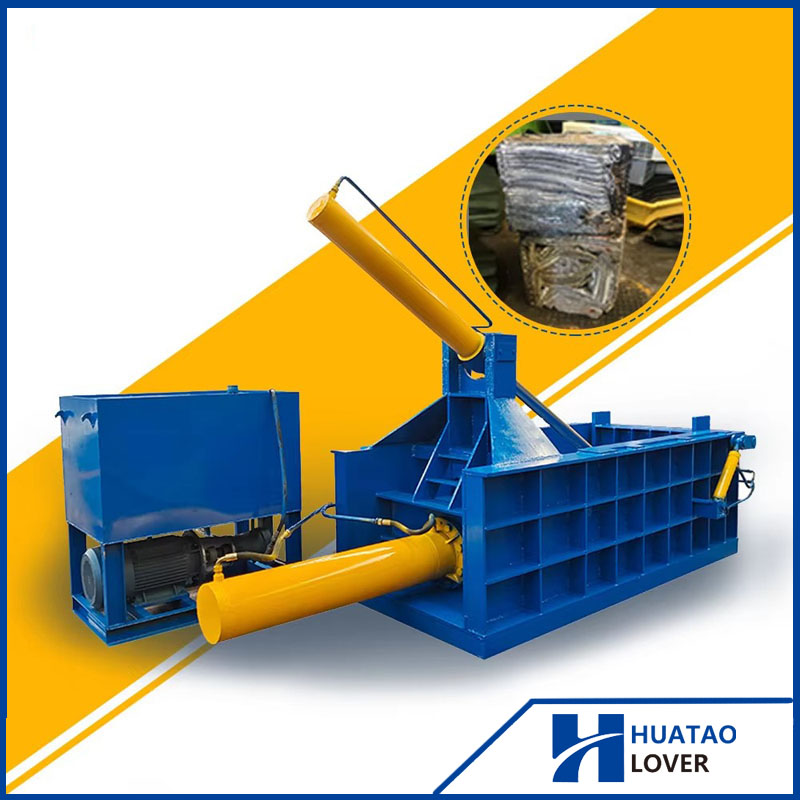
1. What Types of Hydraulic Metal Balers Are Available?
Vertical Hydraulic Baler
Vertical balers generally occupy less floor space and can be suitable for smaller scrap yards, metal workshops and facilities handling relatively light non-ferrous scrap.
Horizontal Hydraulic Baler
Horizontal balers are designed for larger material volumes. They can accommodate conveyor feeding, mechanical loading and different bale discharge configurations.
Automatic Horizontal Baler
Automatic configurations integrate feeding, compression, tying or bale discharge according to the machine design. They are worth evaluating for continuous production environments.
The selection should be based on material testing and actual operating requirements. More information about HUATAO company capabilities and engineering and service support can help buyers understand related industrial supply services.
2. What Technical Parameters Should Buyers Check?
Before purchasing a hydraulic metal baler, evaluate the following factors:
-
Material type: Steel, aluminum, copper, brass and mixed scrap require different machine configurations.
-
Compression force: Select sufficient hydraulic force for the intended material.
-
Chamber dimensions: The feeding chamber must accommodate the actual scrap size.
-
Bale specifications: Confirm required length, width, height and weight.
-
Production capacity: Calculate actual tons per hour rather than relying only on theoretical cycle time.
-
Hydraulic system: Examine cylinders, pumps, valves, filters and cooling arrangements.
-
Wear resistance: Chamber liners and replaceable wear plates influence service life.
3. Which Supporting Equipment Can Improve Scrap Processing?
A complete scrap metal recycling process may include sorting, feeding, size reduction, separation and baling.
The appropriate configuration depends on the incoming scrap and the required final product.
Five related industrial products worth evaluating include:
-
Jaw Crusher – for suitable bulk material size reduction, subject to application verification.
-
Impact Crusher – for suitable crushing applications, not a direct replacement for metal balers.
-
Vibrating Screen – for screening compatible material streams.
-
Magnetic Separator – for separating suitable magnetic materials.
-
Mining Conveyor Roller – for supporting bulk material conveying systems.
These products are adjacent processing equipment, not five types of metal balers. Their suitability should be confirmed according to the actual scrap composition.
Buyers can also review HUATAO conveyor equipment, crushing equipment and mineral processing solutions when planning supporting equipment.
4. How Can Buyers Reduce Maintenance Costs?
Scrap metal can cause substantial abrasion and impact loading inside the compression chamber.
Regular inspection should cover hydraulic hoses, seals, cylinders, pumps, valves, oil filters, electrical controls and chamber liners.
A preventive maintenance plan should include hydraulic oil condition monitoring, leakage inspection, lubrication and replacement of worn components.
For additional technical references, explore the mineral equipment and parts category, the hydrocyclone selection guide, the industrial wear-parts guide and the HUATAO technical news center.
Frequently Asked Questions
Q1: Is a horizontal baler better for steel scrap?
For many high-volume steel scrap operations, a heavy-duty horizontal baler is worth evaluating. However, heavy structural steel and oversized scrap may require a dedicated scrap shear or another processing machine before baling.
Q2: Can one baler process both aluminum and steel?
Some machines can handle different metal types, but the permissible material range, compression settings and chamber specifications must be confirmed with the manufacturer.
Q3: What determines finished bale density?
Compression force, chamber geometry, material dimensions, scrap composition and operating conditions all influence bale density.
Q4: Should I choose automatic or semi-automatic equipment?
Automatic systems are worth considering for stable, high-volume production. Semi-automatic machines may be more economical for smaller operations.
Q5: What information should I provide when requesting a quotation?
Provide scrap photographs, metal types, maximum scrap dimensions, daily throughput, required bale size, available space and electrical supply.
Conclusion
Selecting a suitable hydraulic baler requires evaluating the complete scrap metal processing process. Vertical balers may fit smaller operations, while horizontal and automatic systems are generally more suitable for larger material volumes.
A reliable selection process should prioritize material compatibility, hydraulic performance, bale specifications, equipment durability and long-term maintenance.
Any interesting, please contact with me.
Email: marketing@huataogroup.com
Tel/WeChat/WhatsApp: 008613383116640
Website: www.huataoshredder.com
WhatsApp: http://wa.me/13383116640



 WhatsApp