How to Choose the Right Industrial Shredder for Your Recycling Business
An industrial shredder is one of the most important machines in a recycling facility. Whether you process plastic waste, scrap metal, used tires, electronic waste or wood, choosing the right shredding equipment directly affects production efficiency, operating costs and final material quality.
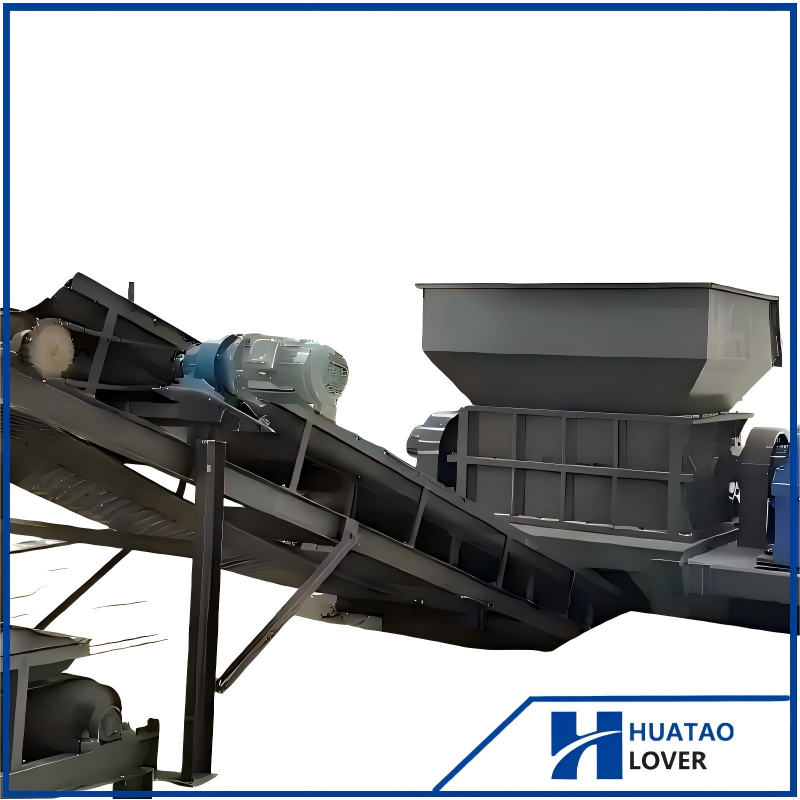
But with so many industrial shredder models available, how do you make the right investment?
Here are six important factors to consider.
1. Understand Your Material
Different materials require different shredding technologies.
-
Plastic: PP, PE, HDPE, PVC, ABS and plastic films.
-
Metal: Aluminum scrap, steel scrap and mixed metal waste.
-
Tires: Passenger car tires, truck tires and rubber components.
-
E-waste: Electronic components, appliances and circuit boards.
-
Wood: Pallets, wooden boxes and industrial wood waste.
Before selecting a machine, evaluate material hardness, dimensions, thickness, moisture content and possible contamination.
2. Choose the Right Shredder Type
The three common configurations include:
-
Single Shaft Shredder: Suitable for controlled size reduction, particularly for plastics and bulky materials.
-
Double Shaft Shredder: Suitable for primary shredding of bulky, irregular and mixed waste.
-
Four Shaft Shredder: Suitable for applications requiring multi-stage cutting and more controlled size reduction.
Learn more about our Single Shaft Shredder and Double Shaft Shredder.
3. Determine the Required Capacity
Capacity is not determined by motor power alone.
It also depends on material density, feeding conditions, blade configuration, rotor speed and required output size.
Always communicate your expected hourly throughput to the equipment supplier.
4. Consider the Output Size
What particle size do you need?
For example, a plastic recycling plant may require coarse shredding before washing and secondary crushing.
For a single shaft shredder, the screen aperture plays an important role in controlling output size.
5. Pay Attention to Blade Quality
Blades directly influence cutting efficiency, energy consumption and maintenance frequency.
Consider blade material, hardness, toughness, cutting geometry and replacement availability.
6. Evaluate Long-Term Operating Costs
A low purchase price does not always mean a low-cost investment.
Consider electricity consumption, blade replacement, maintenance, labor and downtime.
Final Thoughts
The best industrial shredder is not necessarily the biggest or most powerful machine. It is the one that matches your material, production targets and operating conditions.
At Huatao, we provide industrial shredders, crusher machines, blades and complete recycling equipment solutions.
Visit our official website to explore our equipment range.
Do you know which shredder is suitable for your material? Share your material type and required capacity with us.
#IndustrialShredder #RecyclingEquipment #PlasticRecycling #WasteManagement #ShredderMachine
Email: marketing@huataogroup.com
Tel/WeChat/WhatsApp: 008613383116640 Website: www.huataoshredder.com
WhatsApp: http://wa.me/13383116640



 WhatsApp