Introduction
Purchasing an industrial knife grinding machine is a decision that can affect blade maintenance, workshop efficiency, and production costs over the long term. For manufacturers and recycling plants, the challenge is not simply finding a machine that can sharpen a blade. It is finding equipment that can handle the blade types, dimensions, materials, and workload involved in daily operations.
A machine that is too small may not accommodate the longest knives in the workshop. A configuration that does not provide the required adjustment may make it difficult to maintain consistent grinding results. An overly complex machine may also be unnecessary for a facility with limited grinding volume.
The following seven factors can help buyers evaluate their requirements before contacting a supplier.
1. Identify the Blade Types and Applications
Begin by identifying every type of blade that needs to be ground. Common examples include shredder blades, granulator knives, plastic recycling blades, metal recycling blades, chipper blades, and straight industrial knives.
Different blade designs have different dimensions and grinding requirements. Blade length, width, thickness, material, edge geometry, and mounting features should all be considered.
For example, buyers handling single shaft shredder blades should document the blade design and dimensions rather than assuming that every industrial grinder can process them. The same applies to crusher blades and other cutting components.
Review the available industrial knife grinding machine range to understand the equipment category and discuss your blade application with the supplier.
2. Confirm the Grinding Length and Working Capacity
The maximum blade length is a key purchasing specification. However, it should not be considered in isolation.
Prepare the following information:
-
Longest and shortest blade dimensions
-
Maximum blade width and thickness
-
Blade material and construction
-
Required grinding angle or edge geometry
-
Expected number of blades processed per shift
-
Grinding wheel requirements
-
Workshop layout and available floor space
A machine's working table and travel range must suit the blades that will actually be processed. Buyers can compare product categories such as the HT800mm automatic sharpener, HT1600mm automatic sharpener, HT2300mm automatic sharpener, and HT3200mm automatic sharpener.
These product pages should be treated as starting points for comparison. Confirm the actual working length, permitted blade dimensions, and configuration with the manufacturer before placing an order.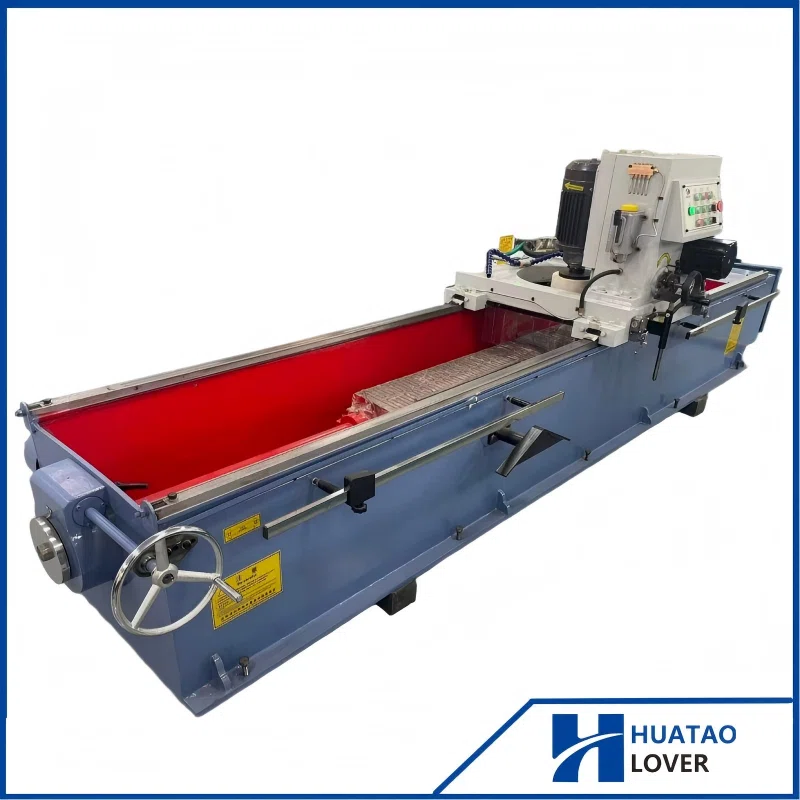
3. Evaluate Grinding Accuracy and Surface Quality
Grinding quality is closely connected to blade performance. An uneven grinding surface, inconsistent cutting angle, or excessive material removal can affect how a blade performs after maintenance.
When evaluating a machine, ask the supplier about:
-
Grinding accuracy and adjustment range
-
Table flatness and stability
-
Guide rail construction
-
Workpiece clamping and positioning
-
Grinding wheel selection
-
Cooling arrangements, where applicable
The objective is to achieve a grinding process that suits the blade design and maintenance requirements. The guide Precision Engineering: The Critical Role of the Knife Grinding Machine discusses why precision matters in industrial blade maintenance.
For a broader view of grinding considerations, read Optimizing Blade Performance.
4. Select an Appropriate Automation Level
Industrial knife grinding machines may use manual, semi-automatic, or automatic operating arrangements. The right choice depends on production volume, operator availability, required repeatability, and the nature of the blades being processed.
Manual grinding may be practical for smaller workshops or occasional blade maintenance, where operator control is important and the workload is limited.
Semi-automatic grinding may offer a useful balance when the factory needs some process assistance while retaining operator involvement.
Automatic grinding may be worth considering for facilities that handle larger blade volumes or need a more standardized grinding process.
Buyers evaluating automated equipment can review the fully automatic linear knife sharpener. The automation level should be selected only after checking the machine's actual functions, working range, and suitability for the blades in question.
5. Look Beyond Motor Power
Motor power is important, but it does not independently determine grinding quality or overall machine suitability.
The machine frame, guide rails, transmission system, cooling arrangement, and vibration control also deserve attention. A stable structure helps maintain the workpiece position and supports consistent operation.
Ask the supplier for the relevant technical specifications and clarify the machine's operating requirements, including power supply and installation conditions.
The article Industrial Knife Grinder: Precision Sharpening Solutions for Productivity provides further reading on industrial grinding applications.
6. Understand Maintenance and Spare Parts Requirements
Before purchasing, clarify the expected maintenance routine. Ask how grinding wheels are replaced, which components require regular inspection, and what spare parts should be kept in stock.
Also confirm whether the supplier can provide operating instructions, technical assistance, and replacement components when needed.
Blade maintenance itself should be managed systematically. The guide to shredder blade maintenance and care and the article on extending shredder blade service life offer related maintenance information. Buyers can also check the spare parts section when planning long-term support.
7. Evaluate the Manufacturer and Prepare Your Inquiry
A supplier should understand the blades you process and be able to discuss the relationship between blade dimensions, material, grinding requirements, and machine configuration.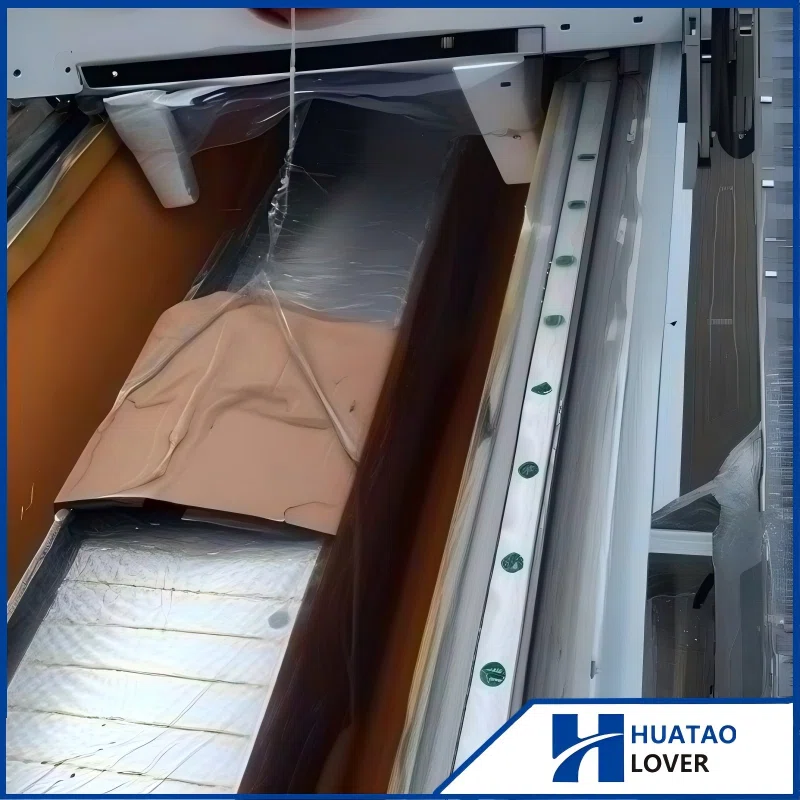
To make the inquiry more useful, prepare:
-
Blade drawings or clear photographs.
-
Blade length, width, and thickness.
-
Blade material and application.
-
Required grinding quality or angle, if specified.
-
Estimated grinding workload.
-
Preferred automation level.
-
Workshop power supply and available space.
-
Questions about installation, training, spare parts, and after-sales support.
If your operation includes chipper knives, you can also compare the application with the chipper blade sharpener.
Do not rely only on broad statements such as “high precision” or “high efficiency.” Ask for the relevant specifications and clarify how they apply to your own blades.
Conclusion
Choosing an industrial knife grinding machine requires more than comparing prices or machine appearance. Buyers should evaluate blade types, working dimensions, grinding accuracy, automation, machine stability, maintenance, and supplier support together.
The most suitable machine is the one that fits the factory's real operating conditions. A clear blade specification sheet and a detailed discussion with the manufacturer can help avoid choosing equipment that is either undersized or unnecessarily complicated.
Contact HUATAO GROUP
Email: marketing@huataogroup.com
Tel/WeChat/WhatsApp: 008613383116640
WhatsApp: http://wa.me/13383116640
Website: www.huataoshredder.com
#IndustrialKnifeGrindingMachine #IndustrialKnifeGrinder #KnifeGrindingMachine #BladeSharpening #IndustrialBlades #RecyclingMachinery #ShredderBlades #CrusherBlades #ManufacturingEquipment #BladeMaintenance



 WhatsApp