

Blade condition is the single most influential variable in the operating cost of any size-reduction equipment. A shredder, granulator, or crusher running with sharp blades consumes less energy, produces a more consistent output, and places less stress on bearings and drive components. As blades dull, all three of these parameters deteriorate simultaneously, and the cost accumulates across every operating hour. The Industrial Knife Grinding Machine exists to interrupt this deterioration by restoring blades to their specified cutting geometry at a fraction of the cost of replacement.
The Position of the Industrial Knife Grinding Machine in the Maintenance Chain
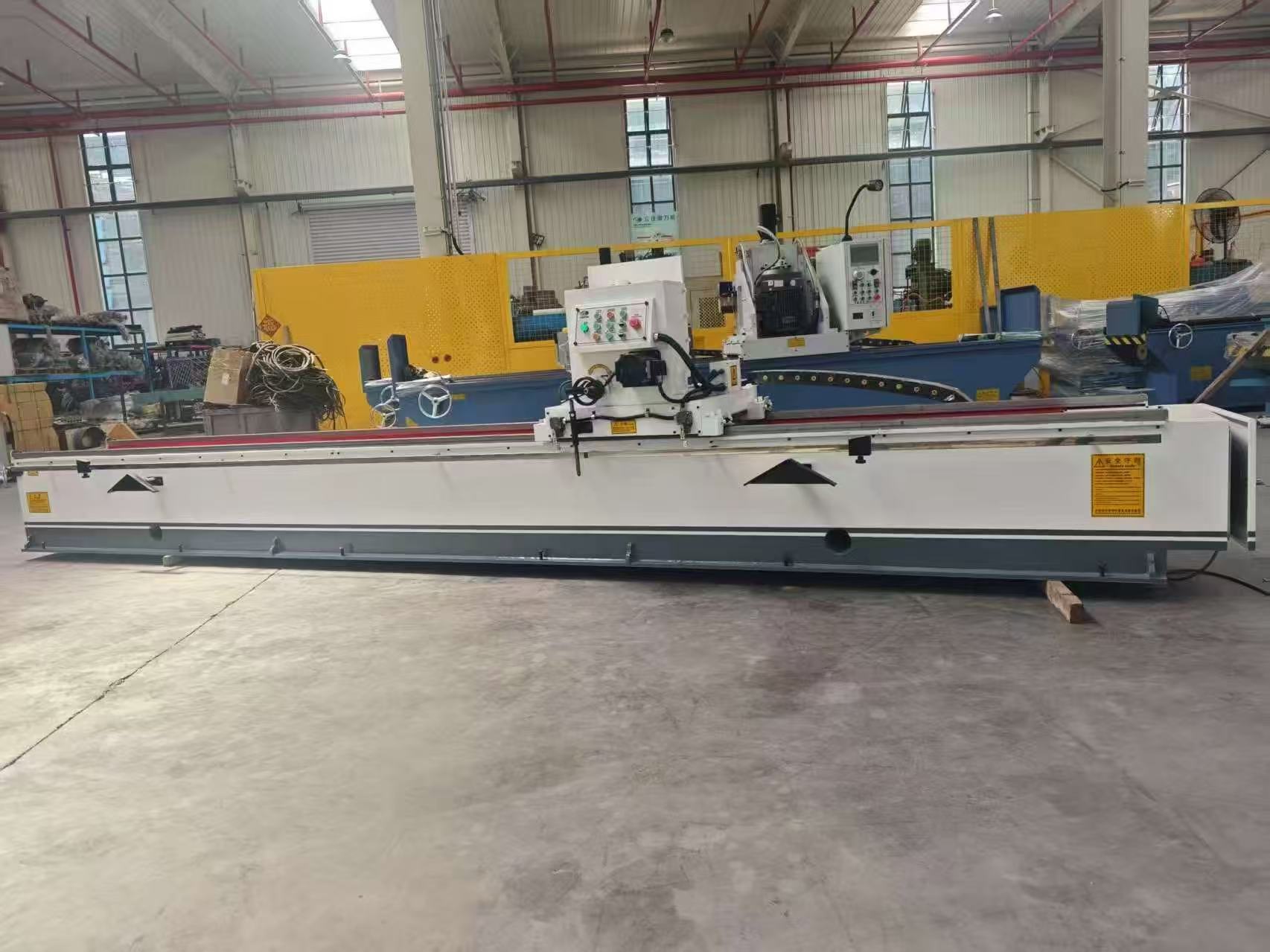
A recycling operation's maintenance chain runs from routine inspection through blade removal, sharpening, and reinstallation. The Industrial Knife Grinding Machine occupies the sharpening step, and its capability determines how many times a blade set can be reconditioned before replacement becomes unavoidable.
This matters because blade cost is a recurring expense, not a one-time purchase. A granulator blade set that costs several thousand dollars and can be sharpened eight times delivers a very different cost per ton of processed material than the same set sharpened only twice. The limiting factor is usually not the blade itself but the precision of the sharpening equipment available.
A Industrial Knife Grinding Machine that removes the minimum material necessary to restore a cutting edge—typically in the range of a few hundredths of a millimetre per pass—preserves blade thickness across many sharpening cycles. A machine that removes excessive material per pass will exhaust the blade's usable thickness in a small number of cycles, forcing premature replacement.
Sharpening Economics in Practice
The economics of in-house sharpening are straightforward. Outsourced blade sharpening carries a per-blade cost, shipping and handling charges, and a lead time measured in days. During that lead time, the machine is idle unless a spare blade set is available. In-house sharpening with an Industrial Knife Grinding Machine eliminates shipping costs, reduces lead time to hours, and allows the operation to maintain a rotating blade inventory rather than a replacement purchase cycle.
The decisive variable is not the cost of the Industrial Knife Grinding Machine but the number of blades the operation consumes per year. A facility processing abrasive material such as glass-fibre reinforced plastic may sharpen blades weekly. Over twelve months, the accumulated cost of outsourced sharpening or replacement will typically exceed the purchase price of a grinding machine many times over.
For a structured framework covering the wider maintenance programme, see our Twin Shaft Shredder Maintenance Guide Extend Service Life Cut Operational Cost.
Blade Geometry and Why Precision Matters
Blade performance depends on cutting geometry, not simply sharpness. The bevel angle, the straightness of the cutting edge, and the uniformity of blade height across the rotor all affect how the blade interacts with material.
If the bevel angle is incorrect, the blade will not cut efficiently regardless of how sharp the edge appears. If the cutting edge is not straight, the blade will cut unevenly across its length, producing inconsistent output and concentrating wear on one section. If blade height is not uniform across a rotor, the rotor becomes unbalanced, which increases vibration and accelerates bearing wear.
An Industrial Knife Grinding Machine addresses all three variables. The worktable angle is adjustable, allowing the original bevel to be replicated precisely. The grinding head travels on precision guide rails, producing a straight edge along the full blade length. And because the process is repeatable, all blades in a set can be ground to the same height.
Blade Material and Grinding Compatibility
Different blade materials require different grinding approaches, and the Industrial Knife Grinding Machine must be configured accordingly. Tool steels such as D2, DC53, and SKD11 are the standard materials for granulator and shredder blades and are compatible with conventional abrasive wheels. Carbide-tipped blades require diamond grinding wheels, as conventional abrasives cannot cut carbide effectively.
Blade material selection itself is a decision that should be made before the grinding machine is specified. Guidance on this is available in How To Choose The Right Plastic Crusher Blades SKD11 D2 DC53 And LD.
Grinding Machine Configurations by Blade Type
Huatao manufactures grinding equipment across a range of blade lengths, allowing operators to match the machine to their blade inventory.
For shorter blades, the HT800Mm Automatic Sharpener provides a compact configuration. Mid-range requirements are covered by the HT1600Mm Automatic Sharpener and the HT2300Mm Automatic Sharpener. Longer blades, such as those used in woodworking and paper converting, require the HT3200Mm Automatic Sharpener.
For operations requiring a fully automated workflow, the Fully Automatic Linear Knife Sharpener provides programmable sharpening cycles with minimal operator intervention. General information on the range is available on the Industrial Knife Grinding Machine page and the Huatao Blade Sharpener page.
Woodworking operations maintaining chipper and planer knives should also review the Chipper Blade Sharpener page, which addresses the specific requirements of that application.
Blade Maintenance as a Cost-Control Discipline
Treating blade sharpening as a scheduled maintenance activity rather than a reactive repair changes the cost profile of a recycling operation. A sharpening schedule based on operating hours, combined with a rotating blade inventory, allows blade changes to be performed during planned stoppages rather than forced by a breakdown.
This discipline also secondarily extends blade life. Blades that are sharpened before they become severely dull require less material removal per cycle, which means more sharpening cycles before replacement. The Industrial Knife Grinding Machine makes this proactive approach practical because sharpening becomes a routine operation rather than a specialist service.
Operators should also review the general guidance in Do You Know How To Maintain and Care for the Shredder Blade and Optimizing Shredder Blade Usage: A Comprehensive Guide to Efficiency and Longevity. Application-specific notes for wood processing are covered in What Precautions Should Be Taken When Using Wood Crusher Blades.
Contact us:
Marketing@huataogroup.com
Tel:+86 13383116640 (Wechat/whatsapp)
http://wa.me/13383116640
Website:www.huataoshredder.com
#IndustrialKnifeGrindingMachine #KnifeGrindingMachine #BladeSharpening #ShredderBladeMaintenance #ChipperBladeSharpener #Huatao #RecyclingMaintenance #CostControl #ToolGrinding #CircularEconomy
can not be empty
can not be empty

HUATAO GROUP - Recycling Machine and Spare parts
ADD : No.298 Zhonghua North Street, Shijiazhuang 050000 China.
TEL : +86 13383116640
EMAIL :marketing@huataogroup.com
 WhatsApp & WeChat : +86 13383116640