

In plastic recycling, the primary size reduction stage determines the performance of every downstream process. Bales, purgings, thick-walled molded parts, films, woven bags, PET bottles, HDPE drums and injection molding scraps cannot be fed directly to washing lines or granulators. The Double Shaft Shredder occupies the primary position, accepting bulky and irregular plastic feedstock and reducing it to a form that screens, washers and granulators can process effectively. If the primary stage is undersized or poorly configured, washing lines clog, granulators stall, and the quality of recycled pellets suffers. The economic consequences are immediate and measurable.
Where the Double Shaft Shredder Sits in the Plastic Recycling Chain
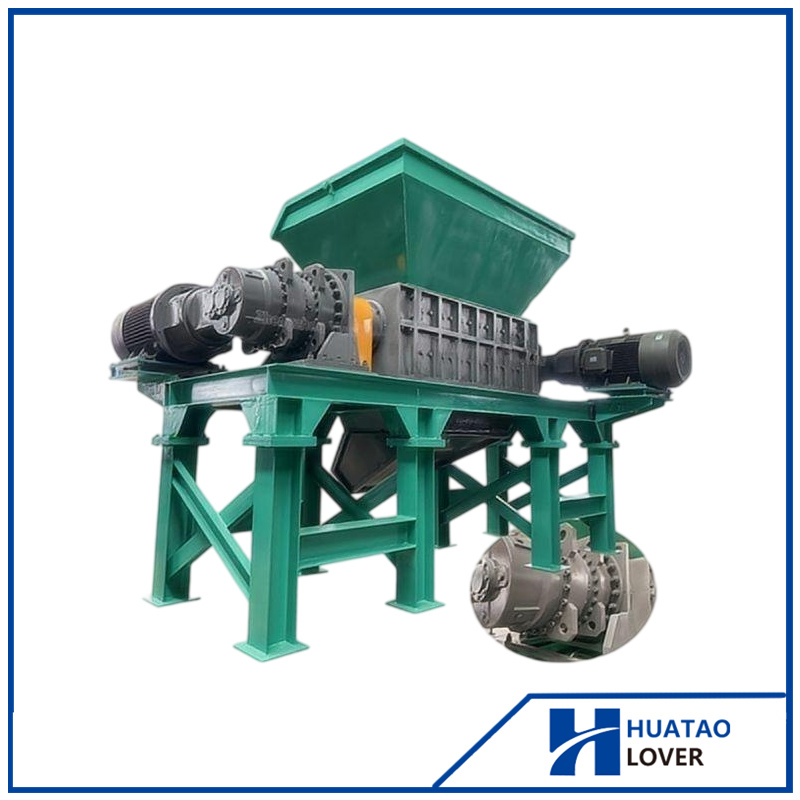
A plastic recycling line follows a predictable sequence: feedstock reception, primary size reduction, washing, secondary size reduction, drying and pelletizing. The Double Shaft Shredder operates at the primary size reduction stage, positioned immediately after feedstock reception and before any washing or fine-reduction equipment. Washing lines, float-sink tanks and granulators require liberated material. They cannot function efficiently when fed whole bales, complete purgings or intact large molded parts. The Double Shaft Shredder performs the liberation step, opening the material structure and creating a homogeneous feed stream for the equipment that follows.
In a typical plastic recycling configuration, the Double Shaft Shredder reduces bales and large molded parts to a manageable particle size. The pre-reduced material then passes to a washing line for contaminant removal before continuing to a Single Shaft Shredder or granulator for fine reduction. In PET bottle recycling, the Double Shaft Shredder handles whole bales and produces flakes suitable for washing. In film recycling, it reduces agricultural film, stretch film and woven bags for downstream washing and pelletizing. In rigid plastic recycling, it processes pallets, crates, drums and injection molding scrap.
Model Selection: Matching the Double Shaft Shredder to Plastic Applications
Huatao manufactures the Double Shaft Shredder in several capacity tiers. The 600 Type Double Shaft Shredder is available for compact installations. The 800 Type Double Shaft Shredder is the entry point for moderate throughput. The 1000 Type Double Shaft Shredder provides a mid-range option, while the 1200 Type Double Shaft Shredder addresses higher-capacity requirements.
Model selection for plastic applications should be driven by three factors: the maximum feed size the machine must accept, the required throughput in tonnes per hour, and the target output particle size. For plastic applications, blade materials and tooth profiles are customized according to polymer type. For film materials, the shaft structure can be optimized to reduce winding. For hard plastics, blade wear resistance can be enhanced to extend service life. A PLC control system with automatic reverse protects the machine when unshreddable material enters the cutting chamber.
The Two-Stage Configuration: Double Shaft Shredder Plus Single Shaft Shredder
Many plastic recycling operations achieve better results by combining two shredding technologies. A Single Shaft Shredder is frequently installed downstream of the Double Shaft Shredder to provide controlled secondary reduction. The Double Shaft Shredder handles the difficult work of gripping and tearing bulky, tangled or irregular material. Its counter-rotating shafts and high torque allow it to process plastic bales and large molded parts without repeated stoppages. The Single Shaft Shredder then takes the pre-reduced material and applies controlled shearing against a fixed counter knife with a hydraulic pusher, producing consistent output through a screen.
Available Single Shaft Shredder models include the HT600 series, the 800 type, the HT 1000 type and the 1200 type. Each model is configured to accept pre-shredded material from the Double Shaft Shredder and reduce it to the particle size required by downstream washing and pelletizing equipment.
Maintenance and Operational Life in Plastic Recycling
The Double Shaft Shredder is a high-wear machine by nature, and plastic feedstock containing glass, metal and sand accelerates blade wear. A structured maintenance programme covering daily visual inspection of the cutting chamber, hydraulic system checks and screen inspection will identify problems before they cause unplanned stoppages. Our twin shaft shredder maintenance guide sets out the recommended schedule in detail.
Blade condition is the single most important variable: dull blades increase energy consumption, reduce throughput and place additional load on bearings and drive components. Maintaining a Single Shaft Shredder Blade inventory and a sharpening schedule is essential for plastic recyclers. For operations that need to source replacement tooling, Huatao Wear Resistant Customization Shredder Blades are available in application-specific configurations for soft, hard and film plastics.
Integration with Downstream Equipment
The output of the Double Shaft Shredder feeds directly into the washing and fine-reduction stage of the plastic recycling line. This means washing lines, float-sink tanks, friction washers and granulators. For complete line design, a Waste Recycling Production Line can be configured around the Double Shaft Shredder as the primary stage, with all downstream equipment selected to match the shredder's output characteristics.
Request a quote for plastic shredding equipment:
Email: Marketing@huataogroup.com
Tel: +86 13383116640 (WeChat/WhatsApp)
http://wa.me/13383116640
Website: www.huataoshredder.com
#DoubleShaftShredder #PlasticRecycling #PrimarySizeReduction #PETShredder #Huatao #CircularEconomy #RecyclingEquipment #ShredderMaintenance
can not be empty
can not be empty

HUATAO GROUP - Recycling Machine and Spare parts
ADD : No.298 Zhonghua North Street, Shijiazhuang 050000 China.
TEL : +86 13383116640
EMAIL :marketing@huataogroup.com
 WhatsApp & WeChat : +86 13383116640