Choosing the right tire shredder is a critical step in establishing an efficient tire recycling plant. The machine must handle the dimensions and construction of your waste tires, meet your production targets, deliver the required output size and integrate with downstream equipment.
A tire shredder selected only by price, motor power or advertised capacity may not meet the actual requirements of your operation. For example, a plant processing passenger car tires has different feedstock requirements from one handling truck tires or large off-the-road (OTR) tires. A plant producing tire chips also needs a different process configuration from one manufacturing rubber granules or fine rubber powder. For a full process overview, see THE COMPLETE TIRE RECYCLING LINE ENGINEERING A SUSTAINABLE FUTURE FOR END OF LIFE TYRES.
Quick Answer: What Should I Consider When Choosing a Tire Shredder?
The most important selection factors are:
-
Tire type: Passenger car, truck, agricultural, industrial or OTR tires.
-
Maximum tire dimensions: Diameter, width, weight and construction.
-
Processing capacity: Required tons per hour under actual feedstock conditions.
-
Output size: Tire chips, smaller rubber pieces, granules or powder feedstock.
-
Downstream equipment: Secondary shredders, magnetic separators, fiber separators and granulators.
-
Operating costs: Wear parts, maintenance, energy and technical support.
The best machine is the one that meets the complete processing requirements—not necessarily the largest or most powerful model.
1. Understand Your Tire Feedstock
Before selecting equipment, classify the tires your plant will process.
| Tire category |
Important characteristics |
Selection considerations |
| Passenger car tires |
Smaller dimensions and steel reinforcement |
Feeding and continuous processing |
| Truck and bus tires |
Larger and heavier construction |
Cutting loads and feeding requirements |
| Agricultural tires |
Different dimensions and construction |
Maximum tire size and machine opening |
| Industrial tires |
Application-dependent construction |
Material evaluation and cutting configuration |
| OTR tires |
Very large dimensions and heavy construction |
Specialized handling and processing arrangements |
| Mixed tire waste |
Variable dimensions and composition |
Capacity and configuration for the most demanding feedstock |
Do not describe your feedstock simply as “waste tires.” Provide the manufacturer with the largest tire diameter, approximate width, weight range and the proportion of each tire category. Also clarify whether the tires arrive whole or have already undergone bead removal, cutting or other pre-treatment. For tire-derived material processing, see WASTE TIRE CRUSHING AND GRINDING PRODUCTION LINE.
2. Select the Right Primary Tire Shredder
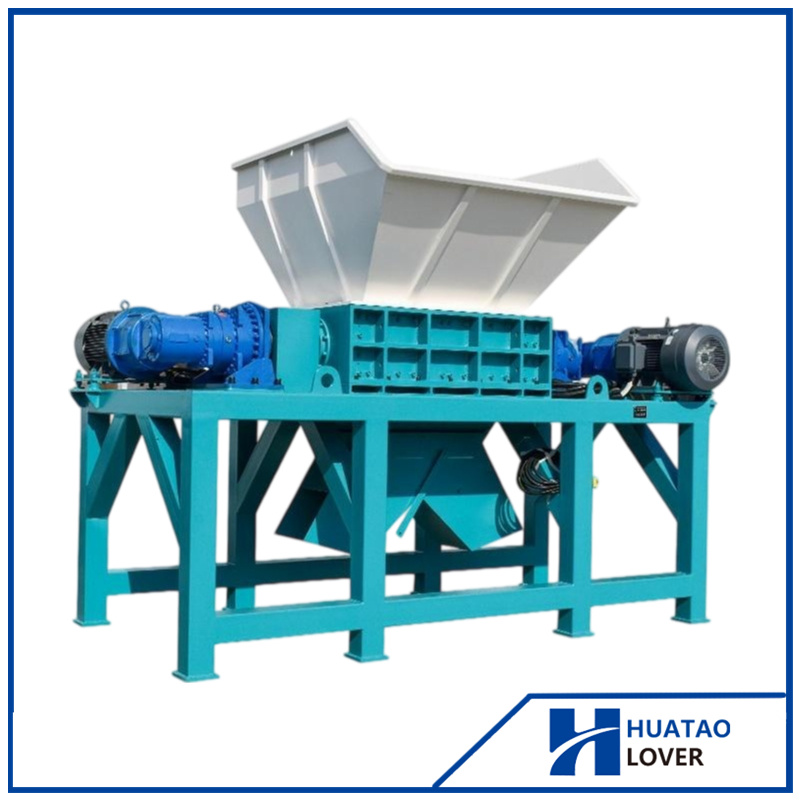
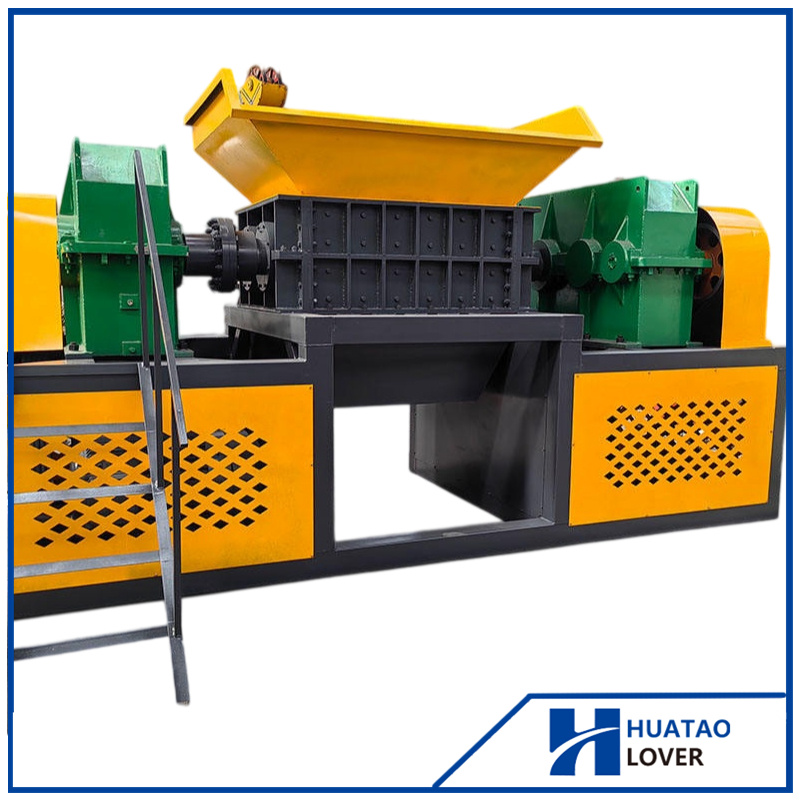
A primary tire shredder is generally the first major size-reduction machine in a tire recycling process. A two-shaft design uses rotating shafts equipped with cutting tools. The interaction between the shafts and cutting components tears and shears the tire material into smaller pieces.
When evaluating a primary shredder, examine:
-
Cutting chamber: Is the opening suitable for the largest tires?
-
Shaft configuration: Is the design appropriate for the expected cutting loads?
-
Cutting tools: What material and geometry are used?
-
Drive system: How does the machine handle changing loads?
-
Feeding system: Can tires be introduced consistently and safely?
-
Maintenance access: Can operators inspect and replace wear components efficiently?
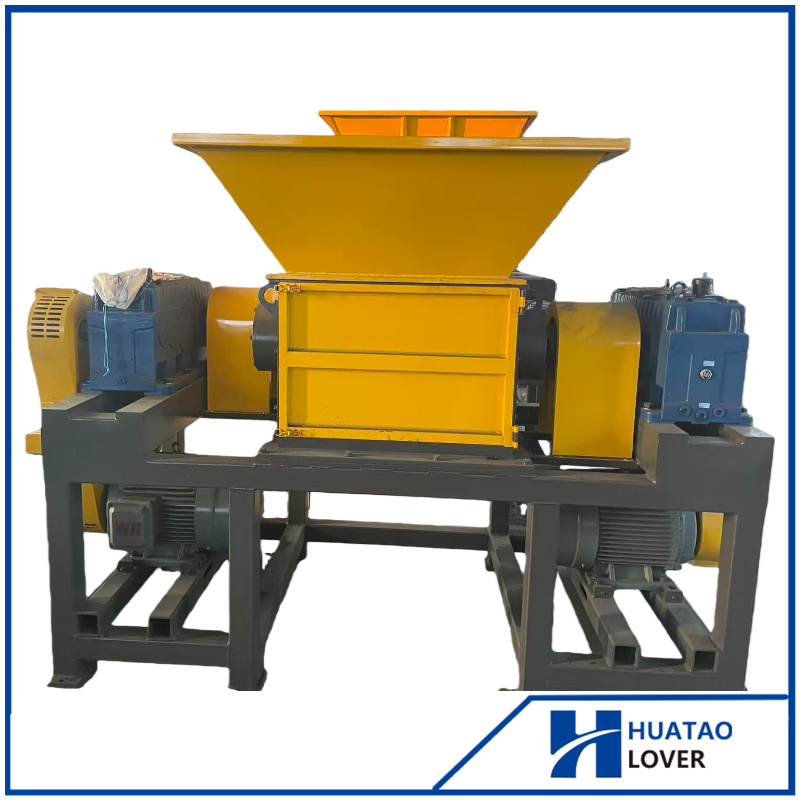
The manufacturer should explain how each configuration relates to the tire categories you intend to process. For primary shredding options, review DOUBLE SHAFT SHREDDER MACHINE, 1200 TYPE DOUBLE SHAFT SHREDDER and 1000 TYPE DOUBLE SHAFT SHREDDER.
3. Determine the Required Output Size
Output size is one of the most important decisions because it affects the entire recycling line.
| Target product |
Typical processing approach |
| Larger tire chips |
Primary shredding |
| Smaller tire chips |
Primary and secondary shredding |
| Steel-separated rubber |
Shredding and magnetic separation |
| Rubber granules |
Further size reduction and material separation |
| Fine rubber powder |
Additional grinding or milling |
A primary shredder should not be expected to produce fine rubber powder directly. If your final product is rubber granules or powder, the equipment proposal should include the necessary downstream machinery. For secondary crushing, see CRUSHER MACHINE. For steel recovery, review TYRE WIRE EXTRACTOR DRAWING MACHINE.
4. Plan the Complete Tire Recycling Process
A typical tire recycling process includes:
-
Tire feeding and preparation: Whole tires are inspected and prepared for processing.
-
Primary shredding: The tire shredder reduces whole tires into larger pieces.
-
Secondary shredding or granulation: Additional size reduction prepares material for separation.
-
Magnetic separation: Magnetic equipment recovers ferrous steel from the processed material.
-
Fiber separation: Separation equipment removes textile fibers where required.
-
Rubber granulation or grinding: Further processing produces the required rubber particle size.
-
Screening and classification: Screening separates material into different size fractions.
-
Product collection and conveying: Finished rubber products and recovered materials are conveyed and collected.
The actual process flow depends on the required product quality, tire feedstock and production capacity. Not every plant needs every stage in the same configuration. The primary shredder must therefore be selected with the next process stages in mind. For a complete line, see WASTE TIRE CRUSHING AND GRINDING PRODUCTION LINE and UNLOCKING VALUE FROM WASTE DOUBLE SHAFT SHREDDERS DRIVING THE CIRCULAR ECONOMY IN TIRE RECYCLING.
5. Calculate the Required Tire Shredding Capacity
Capacity should be calculated from the plant’s actual material supply and production schedule. Consider daily waste tire availability, planned operating hours, number of shifts, feedstock distribution by tire category, planned maintenance and downtime, and required output and downstream processing capacity.
For an initial production estimate:
Required hourly input = Daily tire input ÷ Operating hours per day
For example, a plant planning to process 40 tons of tires during an 8-hour production day would require an average input rate of 5 tons per hour. This is a planning calculation, not a guaranteed machine capacity. The selected machine should be evaluated under realistic operating conditions, with sufficient consideration for maintenance and production interruptions.
Ask whether the manufacturer’s capacity refers to input tire weight or finished shredded material. These figures should not be confused. For maintenance-related capacity loss, see TWIN SHAFT SHREDDER MAINTENANCE GUIDE EXTEND SERVICE LIFE CUT OPERATIONAL COST.
6. Evaluate Wear Parts and Maintenance Costs
Tire shredding creates demanding mechanical conditions. Wear components and maintenance access should be evaluated before purchase.
Key items include:
-
Cutting tools: Ask about tool material, geometry, replacement procedures and recommended inspection practices.
-
Shafts and bearings: Understand the machine’s structural design, bearing protection and lubrication requirements.
-
Drive system: Review the motor, gearbox, transmission and overload protection arrangements.
-
Spare parts: Confirm the availability and delivery time of cutting tools and other essential components.
-
Maintenance access: Check whether operators can inspect the cutting chamber and replace components safely and efficiently.
A machine with a lower purchase price may have a higher long-term operating cost if wear parts are difficult to replace or spare parts are unavailable. For blade care, see CRUSHER BLADE, OPTIMIZING SHREDDER BLADE USAGE A COMPREHENSIVE GUIDE TO EFFICIENCY AND LONGEVITY and INDUSTRIAL KNIFE GRINDING MACHINE.
7. How to Compare Tire Shredder Manufacturers
A professional supplier should be able to explain its equipment recommendation using your actual tire data.
Request the following information:
| Document or information |
Why it matters |
| Technical specification |
Confirms the proposed machine configuration |
| Feedstock requirements |
Defines compatible tire dimensions and types |
| Capacity assumptions |
Explains the basis of the throughput estimate |
| Output-size information |
Confirms compatibility with downstream equipment |
| Process flow diagram |
Shows how the machine fits into the recycling line |
| Wear-part list |
Supports maintenance planning |
| Installation requirements |
Helps assess site preparation |
| Spare-parts proposal |
Supports long-term operation |
A material test is particularly valuable when your plant handles mixed tires, truck tires or unusually large feedstock. During the test, evaluate feeding stability, processing behavior, output dimensions and throughput. Ask the supplier to document the test conditions so the results can be compared fairly. For common issues, see COMMON ISSUES WITH DOUBLE SHAFT SHREDDERS HUATAO A QUICK GUIDE.
8. Common Tire Shredder Purchasing Mistakes
Avoid these common mistakes:
-
Selecting a machine without identifying the largest tire dimensions.
-
Comparing capacity figures based on different feedstock types.
-
Choosing a primary shredder without defining the final product.
-
Ignoring the need for steel and fiber separation.
-
Underestimating cutting tool replacement and maintenance.
-
Failing to check the compatibility of downstream equipment.
-
Purchasing based only on the initial quotation.
-
Accepting performance claims without understanding the test conditions.
A complete technical evaluation can help prevent equipment mismatches and unexpected additional investment. For cost control, review FOCUS ON COST EFFICIENCY LONG TERM OPERATION LOW MAINTENANCE AUTOMATIC ELECTROMAGNETIC LINEAR GRINDING EQUIPMENT.
9. Frequently Asked Questions
1. What is the best tire shredder for a recycling plant?
The best tire shredder depends on tire dimensions, construction, production capacity and target output size. A primary two-shaft shredder is commonly considered for whole-tire size reduction, but the final configuration should be confirmed through feedstock evaluation and technical testing.
2. Can one tire shredder process car and truck tires?
Some machines may handle both categories, but the supplier must confirm the maximum tire dimensions, cutting configuration, feeding arrangement and expected capacity.
3. Can a tire shredder process OTR tires?
OTR tires can be much larger and heavier than passenger or truck tires. They may require specialized handling, pre-cutting, feeding and shredding arrangements. Buyers should provide exact tire dimensions and weights before requesting a machine proposal.
4. What is the difference between primary and secondary tire shredding?
Primary shredding reduces whole tires into larger pieces. Secondary shredding or granulation further reduces those pieces to smaller sizes. The required number of stages depends on whether the final product is tire chips, rubber granules or fine rubber powder.
5. How do I calculate tire shredding capacity?
Estimate the daily tire tonnage and divide it by the planned operating hours to establish an initial hourly input requirement. Then confirm the actual throughput with the manufacturer using your tire categories, feedstock dimensions and required output.
6. Why does a tire recycling plant need a magnetic separator?
Steel reinforcement is present in many tires. Magnetic separation helps recover ferrous steel from shredded tire material. The recovered steel can be collected separately, while the rubber continues to downstream processing.
7. What factors affect tire shredder maintenance costs?
Important factors include cutting tool wear, bearing condition, lubrication, drive components, operating hours and feedstock characteristics. Ask suppliers for maintenance recommendations and a list of consumable parts.
8. Should I buy a complete tire recycling line or only a shredder?
A primary shredder may be sufficient if your business only produces larger tire chips. If you plan to manufacture rubber granules or powder, you should evaluate the additional shredding, separation, screening and grinding equipment required.
9. How can I verify the actual capacity of a tire shredder?
Request a material test using representative tires. Confirm the feedstock type, tire dimensions, operating conditions, measurement period and output criteria. These details make the test results more useful for evaluating actual plant performance.
10. What information should I provide when requesting a tire shredder quotation?
Provide tire categories, maximum diameter and width, estimated weight range, daily processing target, operating hours, target output size and final product requirements. Photographs or samples can help the manufacturer assess the application more accurately.
Conclusion
Choosing a tire shredder for your recycling plant requires a complete understanding of the feedstock, production target and downstream process. Tire dimensions determine machine compatibility, capacity affects production planning, and output size determines the additional equipment required.
Before purchasing, compare technical configurations, evaluate maintenance requirements and verify performance under realistic conditions. A well-matched tire shredder can provide a reliable foundation for an efficient tire recycling operation.
Contact HUATAO
Website: https://www.huataoshredder.com/
Email: marketing@huataogroup.com
Mobile / WhatsApp / WeChat: +86 13383116640



 WhatsApp